

Table of Contents
- What Affordable Luxury Home Decor Actually Means
- How to Make Home Look Expensive Without the Price Tag
- Luxury Home Decor on a Budget: The 70/30 Rule and Beyond
- Affordable Interior Design Hacks for a Curated Look
- Color Palettes That Convey Wealth and Sophistication
- Organic Materials and Sustainable Luxury
- Maintenance and Longevity: Protecting Your Investment
- Conclusion
Last Updated: August 18, 2026
What Affordable Luxury Home Decor Actually Means
Affordable luxury home decor means creating a high-end aesthetic without spending like a billionaire. It's about strategic choices, quality where it counts, and smart layering that makes your space feel curated and intentional.
The psychology behind luxury isn't complicated. Your brain registers certain signals as "expensive": texture, lighting, spatial breathing room, and intentional curation. A $40 mirror positioned to reflect light can feel as luxurious as a $400 one. A $15 linen throw draped across a sofa reads as elevated when paired with thoughtful accessories. The difference between a room that feels expensive and one that feels cluttered isn't always the price tag, it's the strategy.
At Caltucky Creations, we understand that building a beautiful home shouldn't require an inheritance. Our curated collection of home essentials is designed to help you layer affordable pieces into a cohesive, sophisticated aesthetic. The key is knowing which investments matter and which don't.
Most people approach home decor backwards. They buy randomly, hoping things will work together. Then they wonder why their space feels disjointed. The real strategy is understanding the principles that make luxury feel like luxury, and applying them systematically.
How to Make Home Look Expensive Without the Price Tag
Making your home look expensive comes down to three fundamentals: texture, lighting, and intentional spacing. These three elements create the visual weight and sophistication that signals quality, regardless of actual price points.
Master Texture Layering and Textile Quality
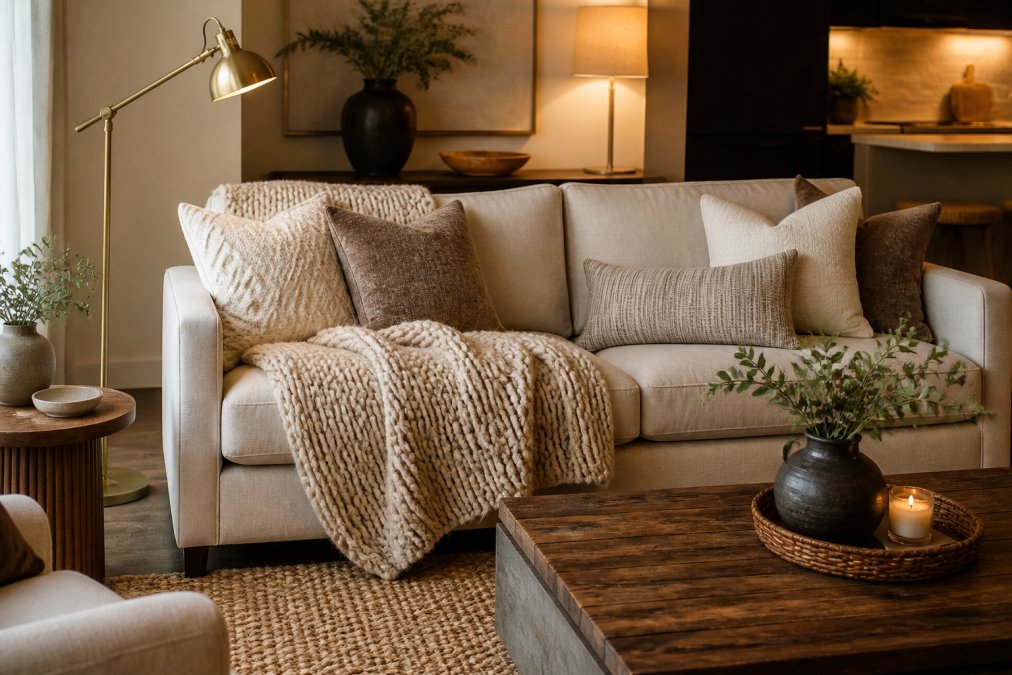
Texture layering is the single most important technique for creating an expensive-looking space. A room with only smooth surfaces feels flat and cheap. A room with mixed textures, linen, velvet, wool, cotton, leather, feels rich and intentional.
Start by identifying your base textiles. These are the pieces that anchor your room: your sofa, area rug, and curtains. Invest slightly more here because they're visible constantly. A mid-range linen sofa ($600-1,200) looks far more expensive than a cheap polyester one. The fabric drapes differently, ages better, and signals quality immediately.
Layer secondary textures on top. Throw blankets in chunky knit, linen, or faux fur. Accent pillows in velvet, boucle, or textured cotton. A woven jute rug under your main rug adds depth. These layered pieces don't need to be expensive, many excellent options exist under $50 each, but together they create visual richness.
The mistake most people make is using too many textures. Stick to 4-5 distinct textures maximum in one room. Mixing linen, velvet, cotton, wool, and leather works. Adding suede, mohair, silk, and corduroy in the same space feels chaotic.
Upgrade Your Lighting for Ambient Impact
Lighting temperature and layering separate expensive-looking spaces from ordinary ones. A single overhead light makes any room feel institutional. Multiple light sources at different heights and warmth levels create sophistication.
Invest in at least three types of lighting per room: ambient (overhead or ceiling), task (desk or reading lamp), and accent (wall sconces or uplighting). This doesn't require expensive fixtures. A $25 brass floor lamp, a $30 desk lamp, and two $15 wall sconces create the layering effect that reads as designed.
Pay attention to color temperature. Warm white light (2700K) feels luxurious and intimate. Cool white (4000K) feels clinical. Most affordable luxury spaces use warm white throughout. Dimmers are essential, they cost $10-20 per switch and transform how your space feels at different times of day.
Statement lighting works when it's intentional. A sculptural brass floor lamp, a geometric pendant, or an interesting wall sconce becomes a focal point. It doesn't need to be expensive, but it should feel deliberate.
Refresh Hardware and Fixtures
Hardware is the jewelry of your home. Upgrading cabinet pulls, door handles, and faucet finishes creates an immediate sense of refinement. These are small investments with outsized visual impact.
Brass, matte black, and brushed nickel finishes read as expensive. Chrome and shiny brass feel dated. Spend $5-15 per pull or handle, upgrading all the hardware in a room costs $50-150 total and transforms how the space feels.
Light fixtures also matter. Replace builder-grade ceiling fixtures with something intentional. A simple drum shade, a geometric pendant, or a sculptural fixture costs $40-100 and elevates the entire room.
Luxury Home Decor on a Budget: The 70/30 Rule and Beyond
The 70/30 rule is your framework for strategic spending. Invest 70% of your budget in foundational pieces that stay: quality furniture, good lighting, durable textiles. Spend 30% on accessories and accent pieces that you can rotate or update.
How the 70/30 Rule Works
Your 70% goes to pieces that form the backbone of your room: a solid sofa, quality area rug, good window treatments, proper lighting, and storage solutions. These pieces anchor your aesthetic and last years. They don't need to be luxury brands, but they should be durable and well-made.
Your 30% covers accessories: throw pillows, blankets, artwork, decorative objects, plants, and accent pieces. This is where you can be playful and trend-conscious without breaking the budget. Rotating these pieces seasonally keeps your space feeling fresh.
The math is simple. If you have $2,000 to spend on a living room, invest $1,400 in foundational pieces and $600 in accessories. This approach prevents the common mistake of spending equally across everything, which usually results in a room where nothing feels substantial.
Strategic Investment in Statement Pieces
A statement piece is one intentional focal point that anchors your room's personality. It might be a bold area rug, a sculptural chair, an interesting bookshelf, or a large piece of wall art. One statement piece per room prevents visual chaos while adding sophistication.
The statement piece should represent about 15-20% of your room's budget. If you're spending $1,500 on a bedroom, your statement piece might be $225-300. This could be a distinctive headboard, an interesting pendant light, or a patterned area rug.
The rest of your room should support this statement piece through complementary but neutral choices. If your statement piece is a bold geometric rug, keep furniture relatively simple. If it's a sculptural chair, use neutral textiles elsewhere.
Affordable Interior Design Hacks for a Curated Look
A curated look means every piece serves a purpose and fits into a cohesive whole. It's the opposite of random accumulation. Achieving this requires intentional decisions about color, style, and spacing.
Decluttering and Minimalism
Minimalism is the fastest path to a luxury aesthetic. Empty space signals confidence and wealth. Crowded spaces signal clutter and disorder, regardless of how expensive your pieces are.
Start by removing 30% of what's currently in your room. Be ruthless. If it doesn't serve a function or bring genuine joy, it goes. This includes decorative objects, books, plants, and furniture pieces that don't earn their space.
What remains should be arranged with breathing room. A shelf with 5 carefully chosen books and 2 decorative objects feels curated. A shelf packed with 30 books and 15 objects feels chaotic. Leave negative space. Let your eye rest.
This principle applies to furniture arrangement too. Don't push everything against walls. Float your sofa. Leave space between pieces. Arrange furniture to create conversation areas rather than facing a TV. Intentional spacing makes rooms feel larger and more sophisticated.
Wall Treatments and Accent Walls
Wall treatments don't require expensive wallpaper or paint. Strategic wall paneling, accent colors, or textured treatments create focal points without major investment.
An accent wall painted in a deeper, richer color than the rest of the room creates depth. Choose a warm neutral (taupe, greige, soft charcoal) rather than a bold color for a sophisticated look. Paint costs $30-50 and transforms the entire room.
Shiplap or simple wall paneling (even temporary peel-and-stick versions) adds texture and visual interest. A single wall of paneling costs $100-300 in materials and creates the effect of a designer-curated space.
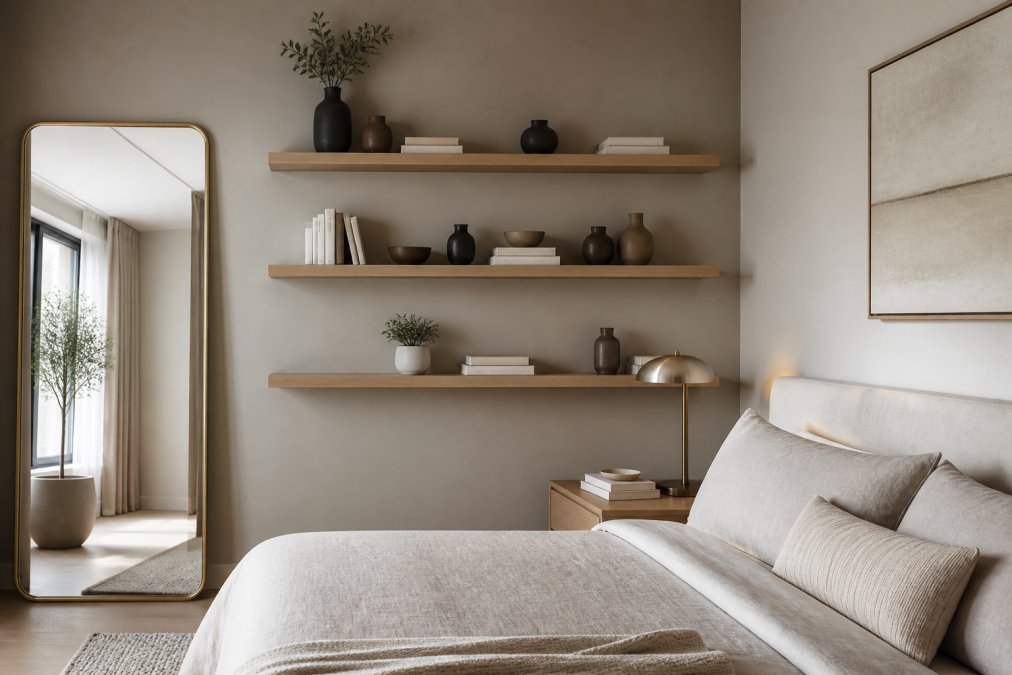
Floating shelves with carefully arranged books and objects create visual interest while maintaining minimalism. Arrange books horizontally and vertically, alternate with decorative objects, and leave space between items.
Mirrors and Reflected Light
Mirrors are the secret weapon of luxury design. They amplify light, create the illusion of space, and add visual interest without cluttering.
A large mirror opposite a window reflects natural light throughout the room, making it feel brighter and more expansive. Position mirrors to reflect artwork, architectural features, or outdoor views. This creates depth and draws the eye.
Mirrors don't need to be expensive. A $30-60 mirror in a simple frame (brass, wood, or matte black) positioned strategically transforms a room. Group smaller mirrors together for visual impact, or use one large statement mirror as a focal point.
Mirrored surfaces on furniture (mirrored nightstands, console tables) also reflect light and create sophistication. These pieces often cost less than solid wood equivalents and read as more intentional.
Color Palettes That Convey Wealth and Sophistication
Color choice is fundamental to whether a space feels expensive or budget. Certain palettes inherently read as luxurious; others read as cheap.
Neutral color palettes, cream, taupe, greige, soft gray, warm white, are the foundation of luxury design. These colors create calm and allow textures and lighting to shine. They also age well and feel timeless rather than trendy.
Monochromatic schemes (multiple shades of the same color) create sophistication and visual cohesion. A room in various shades of gray, cream, and taupe feels intentional and curated. The eye moves smoothly across the space rather than getting jarred by color contrasts.
If you want color, use it strategically. A single accent color in artwork, a throw pillow, or a plant adds personality without overwhelming the space. Deep jewel tones (emerald, navy, burgundy) feel more luxurious than bright primary colors.
Avoid color trends. Millennial pink, sage green, and other trendy colors date quickly. Stick with colors that have been sophisticated for decades: navy, charcoal, warm whites, soft greens, and warm grays.
Organic Materials and Sustainable Luxury
Luxury increasingly means sustainability. Natural materials, wood, linen, wool, leather, stone, ceramic, feel expensive and age beautifully. They also align with growing preferences for sustainable design.
Real wood furniture costs more upfront but lasts decades. Plywood and particle board look cheap and fall apart. A $400 solid wood side table is a better investment than a $150 particle board one.
Natural textiles, linen, wool, cotton, silk, feel luxurious and improve with age. Synthetic fabrics look shiny and cheap. Invest in natural fiber pieces for your foundational textiles.
Ceramic, glass, and stone accessories feel more expensive than plastic. A ceramic vase, glass candleholder, or stone coaster costs slightly more but reads as intentional and sophisticated.
Sustainable luxury doesn't mean spending more overall. It means making conscious choices about materials and longevity. A $60 linen pillow cover that lasts 10 years is better than a $15 polyester one that falls apart in two.
Maintenance and Longevity: Protecting Your Investment
Affordable luxury requires protecting what you buy. Maintenance and proper care extend the life of your pieces and keep them looking expensive.
Natural textiles require gentle care. Linen softens with washing. Wool resists staining. Leather needs occasional conditioning. Follow care instructions and your pieces will age beautifully rather than deteriorate.
Dust regularly. A dusty room looks neglected regardless of how expensive your furniture is. Weekly dusting keeps everything looking fresh and intentional.
Protect your investment from direct sunlight, which fades colors and damages textiles. Use curtains or sheer panels to filter light. Rearrange furniture occasionally to prevent uneven fading.
Deep clean seasonally. Steam clean upholstery, wash windows thoroughly, condition leather, and organize your space. This maintenance keeps everything looking new and prevents the "tired" feeling that creeps in over time.
Frequently Asked Questions
What is the 70/30 rule in decorating?
The 70/30 rule means allocating 70% of your decor budget to foundational pieces (furniture, neutral wall colors, basics) and 30% to statement pieces and accents. This approach creates a cohesive, sophisticated look without overspending. It prevents your space from feeling either too trendy or too bland, allowing affordable luxury home decor to feel intentional and curated rather than random.
How can I make my living room look expensive without spending much?
Focus on texture layering, strategic lighting, and decluttering. Invest in quality textiles like a good area rug and throw blankets, add ambient lighting from multiple sources, and remove visual clutter. Upgrade hardware on existing furniture, hang curtains floor-to-ceiling, and use mirrors to reflect light. These affordable interior design hacks create visual weight and sophistication without major expenses. Caltucky Creations offers curated pieces designed to work together for this exact effect.
What makes a home look wealthy?
Wealthy-looking homes share several traits: intentional spacing and minimal clutter, quality textiles and organic materials, layered lighting (ambient, task, and accent), cohesive color palettes, and high-quality hardware and fixtures. The psychology of luxury relies on restraint and curation rather than abundance. Symmetrical arrangement, statement pieces that anchor rooms, and well-maintained surfaces all signal investment and care. These elements work together to create a bespoke feel on any budget.
How do I know if pieces from different sources will work together as a cohesive look?
Build around a consistent color palette and shared aesthetic principles. Choose a base of 2-3 neutral colors, then add accent colors intentionally. Focus on texture and material consistency: if you choose brass finishes for hardware, repeat that throughout. Select pieces with similar visual weight and style direction. Caltucky Creations's curated collections are designed to work together, reducing the guesswork. Start with foundational pieces, then layer accessories that share your chosen palette and design sensibility.
Creating an affordable luxury aesthetic is entirely achievable. The principles are simple: invest in quality foundational pieces, layer textures and lighting intentionally, declutter ruthlessly, and choose timeless colors and materials. Caltucky Creations helps you build this curated look with a carefully selected collection of home essentials designed to work together. Explore our catalog to find the pieces that will elevate your space without overwhelming your budget.
This article was written using GrandRanker