

Table of Contents
- Why Balancing School and Extracurriculars Feels Impossible (And Why You're Not Failing)
- Time Management Tips for Students Who Are Overcommitted
- The Hidden Cost of Extracurriculars: What You're Actually Giving Up
- How to Create a Study Schedule That Survives Practice Days
- Signs of Student Burnout: When to Pump the Brakes
- Post-Burnout Recovery: Getting Back on Track Without Quitting Everything
- Your Balancing School and Extracurriculars Game Plan
- Frequently Asked Questions
Last Updated: September 8, 2026
Why Balancing School and Extracurriculars Feels Impossible (And Why You're Not Failing)
Balancing school and extracurriculars often feels like juggling flaming torches on a unicycle: chaotic, yet somehow expected to look easy. The struggle isn't a personal failure, it's a math problem where the hours don't multiply. Between classes, homework, practice, and eating, something has to give, and usually it's your sanity.
This guide from Caltucky Creations offers practical tips for balancing school and extracurriculars without sacrificing your grades, hobbies, or ability to function. We're not here to say "just manage your time better." We'll get tactical about schedules and real about burnout.
The good news? You don't need to be perfect, you need a system that works with your brain. Below are nine real strategies that help overcommitted students find their footing. The goal isn't to do everything; it's to do what matters without falling apart.
Time Management Tips for Students Who Are Overcommitted
Most time management advice assumes your brain works like a well-organized filing cabinet. If you have ADHD, anxiety, or a brain that rebels against rigid schedules, "just use a planner" can feel like a personal attack. Let's get tactical about what actually works for non-linear brains.
Work With Your Energy Waves, Not Against Them.
Forget the perfect hour-by-hour schedule. Map out your "energy waves", most students have two or three daily peaks of high focus. Schedule your hardest subjects during those windows. During low-energy dips, handle low-cognitive-load tasks like organizing your backpack or reviewing flashcards.
The "Body Double" Technique for Executive Dysfunction.
If starting a task feels overwhelming, you're not lazy, you're experiencing executive dysfunction. The "Body Double" method works by sitting near someone else who is also working, without interacting. The presence of another focused human creates gentle social pressure that shifts your brain into "work mode." It's a well-known ADHD coaching strategy.
The 5-Minute Rule for Task Initiation.
When a task feels like climbing a mountain, your brain avoids it. The 5-Minute Rule bypasses that resistance: tell yourself you'll work for just five minutes and set a timer. If you stop, you've still made progress. Usually, starting is the hardest part, and once in motion, you'll likely continue.
Visual Timers Over Digital Calendars.
Digital calendars are great for appointments but terrible for showing time passing. A visual timer, like a Time Timer or hourglass, makes time tangible. Watching the disk shrink helps your brain see that a study block has a definitive end, reducing anxiety. Use it for study sprints with physical breaks.
The "Good Enough" Standard.
Perfectionism is a silent killer of schedules. If you spend 45 minutes making history notes look like art, you're burning rest time. For most assignments, "good enough" is perfectly acceptable. Ask: "Does this need to be perfect, or does it need to be done?" That distinction saves hours weekly.
The Pomodoro Technique, Modified for Real Life.
The classic Pomodoro Technique (25 minutes work, 5-minute break) isn't for everyone. If 25 minutes feels too long, try 15; if too short, extend to 45. The key is the principle: focused bursts with deliberate breaks. During breaks, don't scroll your phone, stretch or look out a window to reset your attention.
When Your Schedule Falls Apart (Because It Will)
No schedule survives a pop quiz, rehearsal change, or family obligation. When your plan derails, don't spiral into "I ruined it, might as well give up." Use the "Next Best Action" rule: ask yourself the single most useful thing you can do right now, one math problem, one page, or packing your bag. One small action stops the spiral.
And when you do find a rhythm that works, celebrate it. Wear your brain a little treat. A funny graphic tee that says "I'm not procrastinating, I'm prioritizing my mental health" is the perfect uniform for a student who has mastered the art of the tactical study session.
The Hidden Cost of Extracurriculars: What You're Actually Giving Up
Extracurriculars are valuable, but they aren't free. Every hour at practice is an hour not spent sleeping, studying, or decompressing. That's the hidden cost: trade-offs you don't notice until you're exhausted.
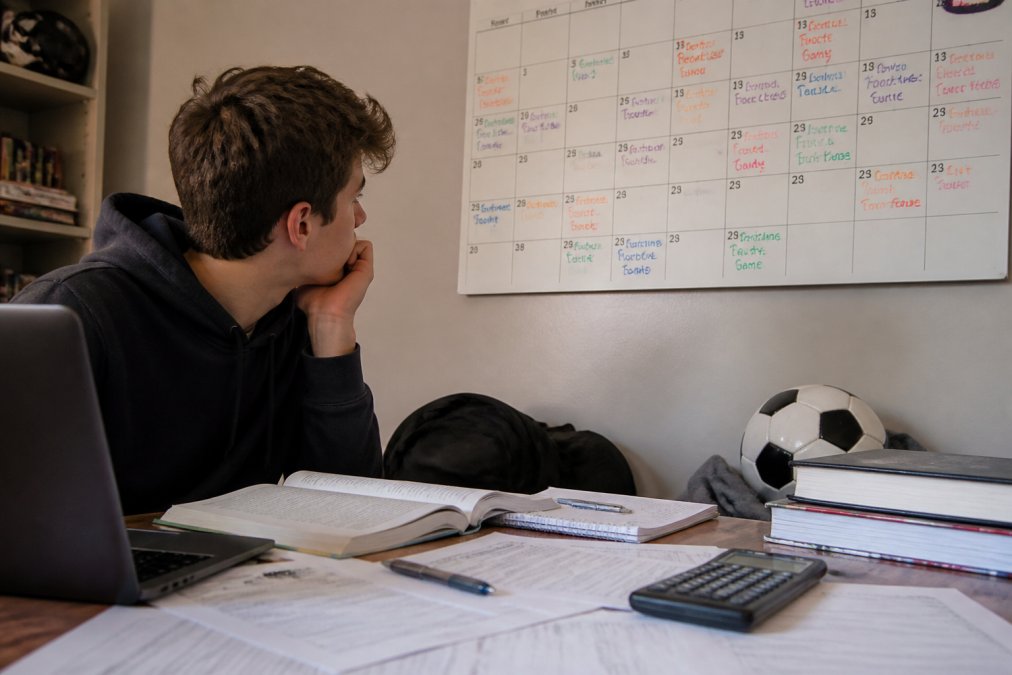
Committing to a demanding activity means less time for everything else. Academic performance suffers not from laziness but from maxed-out cognitive load. Your brain needs downtime to consolidate learning and manage stress, sacrificing it for an overstuffed resume is a poor trade.
Before saying yes to another club or team, ask yourself what you're saying no to. If you're skipping sleep to attend a meeting, the cost is your health and your focus in class tomorrow. It's okay to be selective. An extracurricular resume with two meaningful commitments beats one with five shallow ones. The American Academy of Pediatrics guidance on activity balance suggests that free, unstructured time is essential for a child's development, which applies to high schoolers too.
How to Create a Study Schedule That Survives Practice Days
A study schedule that ignores your extracurriculars is a fantasy. A working schedule bends around practices and rehearsals, a flexible framework, not a rigid prison.
Start with your fixed commitments, classes, practices, recurring obligations. These are non-negotiable. Then look at the gaps: they're your study time, but not all equal. A 20-minute gap suits flashcards, not essay writing.
Use a digital calendar to manage moving parts. Color-coding activities, blue for classes, red for extracurriculars, green for study, helps you visualize the week and spot overcommitment before it happens.
| Schedule Element | How to Plan It | What to Avoid |
|---|---|---|
| Fixed Commitments | Block classes, practice, and work first | Scheduling study over them |
| Short Gaps (10-20 min) | Review notes, make flashcards, read one page | Starting a task that takes 45 minutes |
| Long Blocks (1+ hours) | Deep work: essays, math problems, projects | Trying to do deep work in noisy, short bursts |
| "Flex" Time | Leave 1-2 unscheduled blocks for catch-up | Filling every waking minute with a task |
Signs of Student Burnout: When to Pump the Brakes
Burnout isn't just being tired, it's chronic stress that leaves you emotionally drained, cynical, and ineffective. It's the difference between needing a nap and needing a sensory deprivation tank. Ignoring the signs leads to a crash affecting grades, relationships, and health. Here's how to spot it early.
The American Psychological Association describes burnout as emotional, physical, and mental exhaustion from excessive, prolonged stress (apa.org). It builds slowly, like water you don't realize is boiling until it scalds. Recognizing early signs is your best defense.
The Three-Stage Climb into Burnout
Burnout rarely appears suddenly, it's a gradual climb with distinct stages:
- The Honeymoon Phase: You're excited, energized, and feel invincible, but ignoring small stress signs like skipped meals or lost sleep.
- The Onset of Stress: Excitement fades. Physical symptoms appear: headaches, trouble sleeping, irritability. You're functioning, but with more effort, and may dread activities you once loved.
- The Chronic Stress Stage: Real damage happens. You feel emotionally exhausted, detached, and see a drop in academic performance. Nothing feels good enough, and you may withdraw socially or start missing deadlines.
The Physical and Emotional Red Flags
Beyond the general feeling of being overwhelmed, look for these specific signs:
- Sleep Disruption: You're exhausted but can't fall asleep, or you're sleeping 10+ hours and still waking up tired.
- Frequent Illness: Chronic stress weakens your immune system (the NIH). If you're getting every cold that goes around, your body is telling you it's overwhelmed.
- Loss of Interest: You find yourself making excuses to skip practice or club meetings. The activity that used to bring you joy now feels like a chore.
- Irritability and Mood Swings: You're snapping at your parents, siblings, or friends over small things. You feel like you're on a short fuse.
- Cognitive Fog: You can't focus on your homework, you forget assignments, and you feel like your brain is moving through molasses.
- Physical Tension: You have frequent headaches, stomachaches, or muscle tension, especially in your neck and shoulders.
The "Cost-Benefit" Self-Check
Not sure if you're burned out or just having a bad week? Draw a line down a paper. List what each activity gives you (fun, resume, connection, skills) on one side and what it costs (sleep, family time, peace, focus) on the other. If costs consistently outweigh benefits, something needs to change.
The Immediate Response: What to Do Right Now
If you recognize these signs, don't panic, you don't need to quit everything today. Start with three steps:
- Declare a 24-Hour Moratorium: Tell your parents, coaches, and teachers that you need 24 hours of no obligations. No practice, no homework, no club meetings. Just sleep, eat, and do something mindless that you enjoy.
- Talk to One Trusted Adult: This could be a parent, a school counselor, or a favorite teacher. Tell them you're struggling and need help adjusting your load. They can help you advocate for extensions or find ways to lighten your schedule.
- Identify One Thing to Drop (Temporarily): Pick one commitment that you can pause for a week. It doesn't have to be permanent. Just give yourself permission to take a break from one thing to create breathing room.
And when you're on the other side of burnout, protect your peace. A cozy blanket with a sarcastic slogan like "Current Mood: Do Not Disturb" is the perfect armor for a well-earned mental health day on the couch.
Post-Burnout Recovery: Getting Back on Track Without Quitting Everything
Recovery requires a different approach than pushing through. A weekend off won't fix it, you need to rebuild energy and your relationship with commitments.
First, rest without guilt, take a full day off from all obligations, including homework. Sleep, eat well, and do something unrelated to school or activities. This isn't wasted time; it's the foundation of recovery.
Next, evaluate commitments with fresh eyes. Which genuinely bring joy or serve a purpose? Which are just stress? You don't have to quit everything, but dropping one or two things creates breathing room. Return with a lighter load and gradually add tasks as energy returns.
Your Balancing School and Extracurriculars Game Plan
The actual game plan combines honest assessment, flexible planning, and protecting your well-being. Balancing school and extracurriculars is a continuous adjustment, not a one-time fix.
Audit your week to see where time goes. Build a schedule with fixed commitments first, then fill gaps with realistic study blocks. Use a digital calendar. Most importantly, build in rest and say no to new commitments when your plate is full.
Academic goals and personal development both matter. An overpacked schedule that leaves you miserable isn't success, it's busyness. When you find a working rhythm, you'll be more present in class and more effective at practice.
And when your schedule is sorted, make sure your gear is too. A bag that fits your laptop and books smooths the class-to-practice shuffle. Caltucky Creations offers backpacks and bags for exactly this. The Dolphins Leaping at Sunset Fabric Backpack is lightweight and waterproof. Need something smaller? The HOW DO YOU DO Canvas Lunch Bag With Strap is a friendly companion for your food.


Frequently Asked Questions
How can I effectively balance school and extracurricular activities?
Start by writing down every fixed commitment: classes, practice, work, family obligations. Then block out study time in the gaps instead of hoping it appears. Use a digital calendar with alerts so you remember transitions. Review your schedule weekly and cut anything that consistently drains you without adding value. Balancing school and extracurriculars gets easier when you treat your calendar as a budget for your energy, not just your time.
What are the signs of student burnout I should watch for?
Common signs of student burnout include dreading activities you used to enjoy, feeling exhausted even after sleep, dropping grades despite more effort, and getting irritable with teammates or family. Physical clues include frequent headaches, trouble sleeping, and getting sick more often. If you notice several of these for more than two weeks, it's time to reduce your extracurricular load. Talk to a parent, counselor, or coach about dropping one commitment before your body makes the decision for you.
What matters more, GPA or extracurriculars?
For most college admissions, GPA matters more because it shows consistent academic performance over four years. Strong grades signal you can handle the core job of being a student. Extracurriculars matter most when they show depth: a few activities where you took real leadership or made an impact beat a long list of casual memberships. Aim for solid grades first, then choose two or three extracurricular activities you genuinely care about and commit to those.
How do I know if I'm overcommitted to extracurriculars?
You're overcommitted if you regularly skip homework to attend activities, if you can't remember your last free weekend, or if you feel anxious just looking at your calendar. Another clue: you're involved in more than three major activities that each demand over five hours weekly. Try the two-week test. Track how you feel after each commitment. If most sessions leave you drained rather than energized, drop the ones that don't spark joy and keep your schedule realistic.
Finding balance is a skill, and like any skill, it takes practice. You'll have weeks where everything clicks and weeks where you wonder how you'll survive until Friday. The difference between surviving and thriving comes down to giving yourself grace and using systems that reduce decision fatigue. Get started with Caltucky Creations and grab gear that keeps up with your busy schedule, so you can focus on what really matters: getting through the week with your humor intact.