

Table of Contents
- Why Cozy Bedroom Essentials Matter for Sleep Quality
- 1. Best Bedding for Temperature Regulation
- 2. Bedroom Lighting for Better Sleep
- 3. Ergonomic Pillows for Neck and Head Support
- 4. Weighted Blankets for Stress Relief
- 5. White Noise and Sound Machines
- How to Create a Sleep Sanctuary
- Putting It All Together: Your Cozy Bedroom Checklist
Last Updated: August 21, 2026
Why Cozy Bedroom Essentials Matter for Sleep Quality
Quality sleep is foundational to your health, mood, and productivity. Your sleep environment directly shapes how well you rest: when your bedroom addresses your body's physical needs (temperature, support, darkness, sound), you fall asleep faster and wake more refreshed.
At Caltucky Creations, we understand that creating a cozy bedroom means thoughtfully selecting essentials that work together to optimize sleep. This guide covers the seven most impactful cozy bedroom essentials, plus how to layer them into a cohesive sleep sanctuary.
1. Best Bedding for Temperature Regulation
Your bedding is the foundation of sleep comfort. The right sheets and layers regulate your body temperature throughout the night, critical because your core temperature naturally dips during sleep.
Breathable Fabrics and Thread Count
Temperature regulation starts with fabric choice. Breathable fabrics like cotton, linen, and high-quality blends allow heat and moisture to escape, preventing the trapped-heat feeling that wakes you at 3 a.m. The sweet spot is 480-600 thread count; beyond 800, fabrics become dense and retain heat.
The National Sleep Foundation's sleep environment research emphasizes that breathable bedding reduces nighttime temperature fluctuations, directly improving sleep continuity. Look for 100% long-staple cotton (Pima or Egyptian cotton) or linen blends.
Brooklinen's Luxe Core Sheet Set exemplifies this balance: 480-thread count 100% long-staple cotton with a sateen weave that feels soft while staying breathable. OEKO-TEX certified for chemical safety and fits mattresses up to 16 inches deep, starting from $169.
Layering for Comfort
Layering your bedding gives you temperature control without overheating. Use a base sheet layer, a lighter blanket or quilt, then a heavier blanket or duvet you can kick off if needed.
Parachute's Cloud Cotton Quilt works beautifully as a mid-layer. Made from 100% organic Turkish cotton with a 3-ply gauze weave, it's light enough not to overheat but warm enough to provide real comfort. Pair it with breathable sheets underneath and a duvet on top for a temperature-responsive sleep system. Pricing for the quilt starts from $259.
2. Bedroom Lighting for Better Sleep
Lighting is invisible until it's wrong. Proper bedroom lighting supports your natural circadian rhythm during the day and eliminates disruption at night.
Ambient Lighting and Circadian Rhythm
Your circadian rhythm responds to light exposure. Morning light signals your body to wake and produce cortisol; evening darkness signals melatonin production and sleep readiness. Bedroom lighting should support this cycle.
Blue light from phones, laptops, and cool-toned bulbs suppresses melatonin, making sleep harder. Research from the American Academy of Sleep Medicine on light and sleep shows that exposure to blue light in the evening delays sleep onset by an average of 30-90 minutes. Warm amber light in the hour before bed accelerates melatonin production and shortens time to sleep.
Install dimmable warm-white bulbs (2,700K color temperature) in your bedroom. Use them at full brightness in the morning, then dim them to 30-50% in the evening. Blackout curtains eliminate external light pollution, essential if you live on a busy street or near streetlights.
Smart Light Options
The Hatch Restore 2 combines a sunrise alarm, sound machine, and dimmable smart light. It simulates a gradual sunrise over 20-40 minutes, waking you gently. In the evening, program it to dim amber light as a wind-down signal. The Hatch Restore 2 costs $170.
The Philips SmartSleep Wake-up Light HF3520/60 focuses specifically on sunrise simulation and gentle wake-up. For a lower-cost approach, install smart bulbs (like Philips Hue or LIFX) and set them on a schedule: bright white (5,000K) at 6 a.m., gradually shifting to warm amber (2,700K) by 8 p.m., then dimming further by 10 p.m. The Philips SmartSleep Wake-up Light HF3520/60 is available for around $76 to $179.95.
3. Ergonomic Pillows for Neck and Head Support
Your pillow's job is critical: keep your neck aligned with your spine while you sleep. Misalignment causes morning stiffness, neck pain, and sleep disruption.
Pillow support depends on sleep position. Side sleepers need firmer pillows to fill the gap between shoulder and head. Back sleepers need medium support to prevent the head from tilting forward. Stomach sleepers need thinner pillows to avoid twisting the neck.
The Casper Original Pillow uses a pillow-in-pillow design: a supportive inner core surrounded by a soft outer layer. This design adapts to multiple sleep positions without clumping. The down-alternative fill mimics down's softness while resisting clumping, and the breathable cotton cover with percale weave promotes airflow. The Casper Original Pillow is available for $75.
For sleepers who want to customize firmness, the Nest Bedding Easy Breather Pillow lets you adjust fill by removing or adding material. The blend of precision-cut memory foam and fiber provides both support and breathability, and the entire pillow is machine washable. The Nest Bedding Easy Breather Pillow starts at $59.
4. Weighted Blankets for Stress Relief
Weighted blankets use deep pressure stimulation to activate your parasympathetic nervous system, your body's "rest and digest" mode. The gentle, even pressure reduces cortisol and anxiety while promoting faster sleep onset and deeper rest.
The weight should be approximately 10% of your body weight (the NIH). A 150-pound person uses a 15-pound blanket; a 200-pound person uses a 20-pound blanket.
The Gravity Blanket uses fine-grade glass beads distributed evenly through gridded stitching, ensuring consistent weight throughout. The premium micro-plush duvet cover is removable and machine washable. The Gravity Blanket is available for $149.
If you sleep hot, look for cooling versions or pair your weighted blanket with breathable, moisture-wicking sheets.
5. White Noise and Sound Machines
Sound machines mask environmental noise that disrupts sleep: traffic, neighbors, pets, wind. They provide consistent auditory input that prevents your brain from focusing on irregular sounds.
The Yogasleep Dohm Nova uses a real fan motor to generate natural white noise. You adjust fan speed across 10 settings to customize volume and tone. An adjustable amber night light provides gentle illumination without disrupting sleep, and the optional sleep timer lets you set it for 45 minutes, 90 minutes, or 8 hours. The Yogasleep Dohm Nova is available for $64.99 to $74.99.
For those who want more sound variety, the Hatch Restore 2 includes a library of sleep sounds beyond white noise: rain, ocean waves, thunderstorms, and ambient music. The tradeoff is price ($170) and complexity.
How to Create a Sleep Sanctuary
A cozy bedroom is the intentional combination of elements into a cohesive environment that signals sleep time to your brain.
Declutter and Minimize Visual Noise
Visual clutter creates cognitive load. Your brain registers every object in your visual field, and a cluttered bedroom keeps your mind partially activated even when lying down.
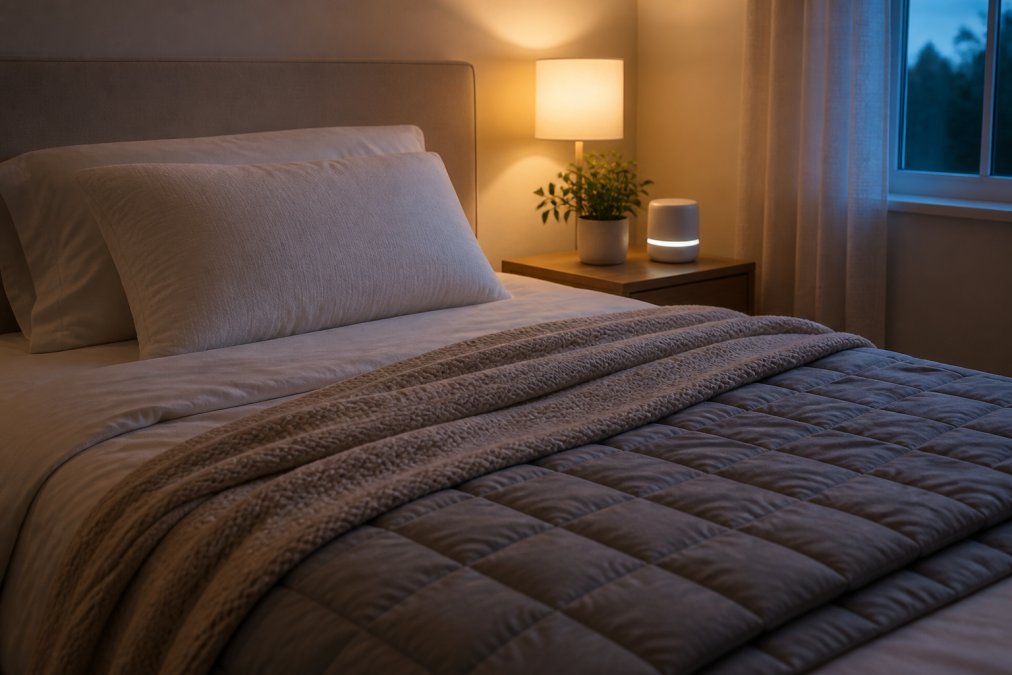
Remove non-sleep items from your bedroom: work materials, exercise equipment, stacks of laundry, excessive furniture. Keep only what serves sleep or immediate comfort. A nightstand with a lamp, sound machine, and water glass. Everything else goes elsewhere.
A minimal bedroom signals rest; a cluttered one signals unfinished tasks.
Optimize Bedroom Layout and Soft Furnishings
Position your bed so you have a clear view of the door, this reduces unconscious anxiety. Avoid placing your bed directly opposite a window or under a ceiling fan.
Soft furnishings, rugs, curtains, upholstered headboards, absorb sound and create acoustic comfort. A rug under the bed dampens footsteps and creates a softer feel underfoot. Blackout curtains eliminate light pollution and provide thermal insulation.
Caltucky Creations offers curated soft furnishings and textural elements designed to layer into a cohesive cozy aesthetic, focusing on fresh, stylish pieces that work together.
Add Texture and Hygge Elements
Texture engages your tactile sense and creates the sensory richness that defines "cozy." Layer different textures: smooth cotton sheets, a plush duvet cover, a woven throw blanket, a textured pillow.
Hygge, the Danish concept of cozy contentment, combines warmth, softness, and intimate comfort. Implement it through warm lighting, soft textures, and minimal visual clutter. A small plant on your nightstand adds life and improves air quality. A throw blanket draped over a chair invites you to settle in.
Every item should either support sleep or contribute to the cozy feeling.
Putting It All Together: Your Cozy Bedroom Checklist
Bedding & Temperature:
- Breathable sheets (480-600 thread count cotton or linen)
- Mid-layer blanket or quilt for temperature flexibility
- Duvet or top blanket you can adjust or remove
- Weighted blanket if you experience anxiety or restlessness
Pillows & Support:
- Ergonomic pillow matching your sleep position
- Extra pillow for backup or positional support
- Breathable, machine washable pillow covers
Lighting:
- Blackout curtains or shades to eliminate external light
- Dimmable warm-white bulbs (2,700K) for evening use
- Optional: smart light or sunrise alarm for circadian support
Sound:
- White noise machine or sound app if you live in a noisy environment
- Optional: smart speaker for sleep sounds or meditation audio
Environment:
- Minimal furniture and clutter
- Soft furnishings (rug, curtains, throw) for acoustic comfort
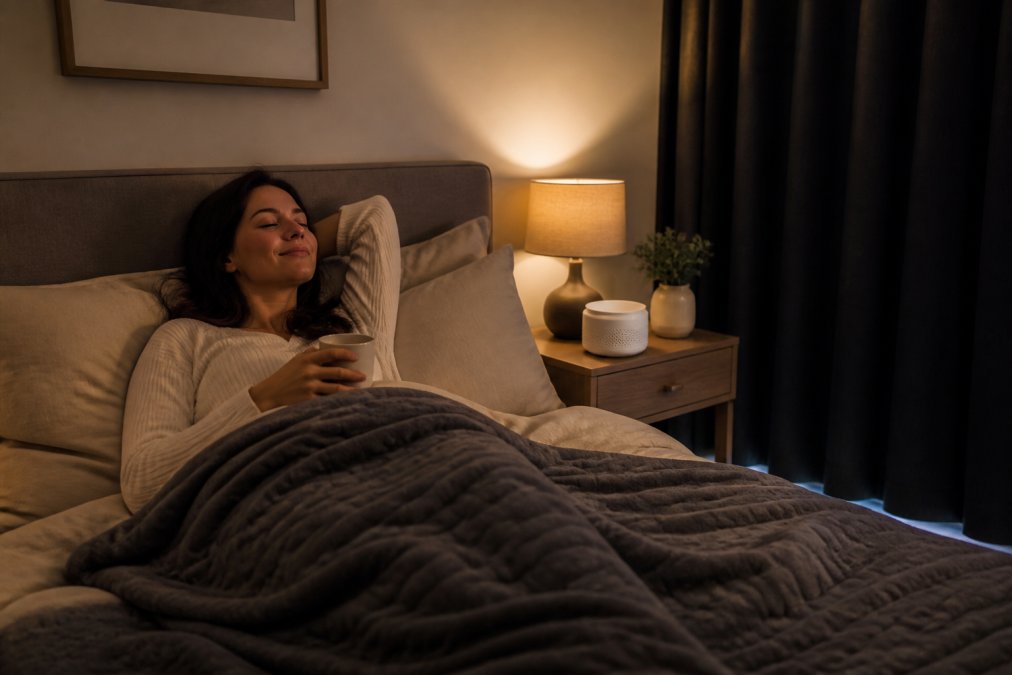
- Nightstand with lamp, water, and sound machine only
- Room temperature between 60-67°F
Optional Enhancements:
- Small plant for air quality and visual softness
- Textured throw blanket for layering
- Aromatherapy diffuser with calming scents (lavender, chamomile)
| Essential | Why It Matters | Budget Option | Premium Option |
|---|---|---|---|
| Breathable sheets | Regulates temperature, improves sleep continuity | Cotton blend, 400-500 tc | Brooklinen Luxe Core, $169 |
| Ergonomic pillow | Maintains neck alignment, prevents morning pain | Nest Easy Breather, $59 | Casper Original, $75 |
| Weighted blanket | Reduces anxiety, accelerates sleep onset | Budget brand, pricing depends on quantity, dates, and delivery | Gravity Blanket, $149 |
| White noise machine | Masks environmental noise, reduces awakening | Yogasleep Dohm Nova, $64.99 | Hatch Restore 2, $170 |
| Blackout curtains | Eliminates light pollution, supports circadian rhythm | Basic blackout, pricing depends on quantity, dates, and delivery | Premium thermal blackout, pricing depends on quantity, dates, and delivery |
| Dimmable lighting | Supports circadian rhythm, signals sleep time | Smart bulbs, pricing depends on quantity, dates, and delivery | Hatch Restore 2 or Philips SmartSleep |
| Minimal clutter | Reduces cognitive load, signals rest mode | Free (declutter now) | Ongoing (maintain weekly) |
Better sleep starts with intention. The cozy bedroom essentials covered here, breathable bedding, supportive pillows, proper lighting, sound control, and visual calm, work together to create an environment where sleep happens naturally. Start with the two or three that address your biggest sleep obstacles, then layer in others over time.
Caltucky Creations specializes in curating these exact elements: fresh, stylish home essentials that combine comfort with aesthetic appeal. Explore their collection to find the textures, colors, and designs that make your bedroom feel like a genuine refuge. A better night's sleep is closer than you think.
Frequently Asked Questions
Q: What are the best cozy bedroom essentials for someone new to decorating?
A: Start with the basics: quality breathable bedding, a supportive pillow, and soft ambient lighting. These three elements create a foundation for better sleep and comfort. Add a weighted blanket or sound machine based on your specific sleep challenges. The key is choosing items that address your personal needs rather than buying everything at once. Quality matters more than quantity when building a restful sleep environment.
Q: How does bedroom lighting for better sleep affect circadian rhythm?
A: Light exposure controls your body's circadian rhythm, which regulates when you feel alert or sleepy. Bright, cool-toned light during the day signals your body to stay awake, while warm, dim lighting in the evening triggers melatonin production. Smart lighting systems and sunrise alarm clocks mimic natural light patterns, helping your body transition smoothly into sleep. Blackout curtains prevent disruptive light during sleep, further supporting your natural sleep-wake cycle.
Q: What makes best bedding for temperature regulation important for sleep quality?
A: Your body temperature naturally drops as you fall asleep, and bedding that actively regulates temperature prevents night sweats and restless tossing. Breathable fabrics like long-staple cotton with appropriate thread count allow air circulation, while layering lets you adjust warmth without overheating. Temperature-regulating materials keep you in the optimal sleep zone, which research shows improves sleep continuity and deeper rest stages. The right bedding adapts to seasonal changes and individual preferences.
Q: How do I know if I'm creating a proper sleep sanctuary?
A: A true sleep sanctuary feels inviting, quiet, and free of visual clutter. Your space should be dark enough to support melatonin production, cool (around 65-68°F), and equipped to mask disruptive sounds. Soft textures, minimal distractions, and a consistent nighttime routine signal to your brain that this room is for rest only. If you fall asleep faster and wake fewer times during the night, your sanctuary is working. Personal touches that bring you comfort, whether hygge elements or minimalist design, matter as much as the functional features.
This article was written using GrandRanker