

Table of Contents
- Start by Decluttering: Your Wardrobe Decluttering Checklist
- Define Your Capsule Wardrobe Essentials
- How to Style Graphic Tees Without Looking Random
- Smart Shopping Strategies That Save Money
- Stop the Impulse Buy Spiral: Psychology and Prevention
- Organize and Maintain What You Have
- Frequently Asked Questions
Last Updated: September 29, 2026
Start by Decluttering: Your Wardrobe Decluttering Checklist
Curating a closet on a tight budget starts with one brutal truth: you probably own clothes you'll never wear. Before you spend a single dollar on new pieces, clear out what's actually taking up space. This isn't about minimalism for its own sake, it's about seeing what you actually have so you can build on it strategically.
The best part? You might find hidden gems you forgot about, or realize you have gaps worth filling. Either way, you're working with real information instead of guessing.
The Keep, Donate, Sell Method
Sort your clothes into three piles: keep, donate, and sell. The keep pile gets easy, anything that fits well, makes you feel good, and you've worn in the last year stays. Donate pieces that are still wearable but you genuinely don't love. Sell items in great condition that might fetch a few dollars on Poshmark, Depop, or Mercari.
This method works because it forces you to be honest. You're not keeping things "just in case." You're keeping pieces that actually work in your life right now.
How to Spot Pieces You'll Actually Wear
Here's the insider trick: ask yourself one question for every item. "Would I buy this again today?" If the answer is no, it goes. This filters out impulse buys from three years ago and pieces that looked good in the store but never actually fit your real life.
Look for versatility too. Does this shirt work with three different bottoms? Can you wear this in two seasons? Pieces that work harder stay. Pieces that sit in the back of your closet go.
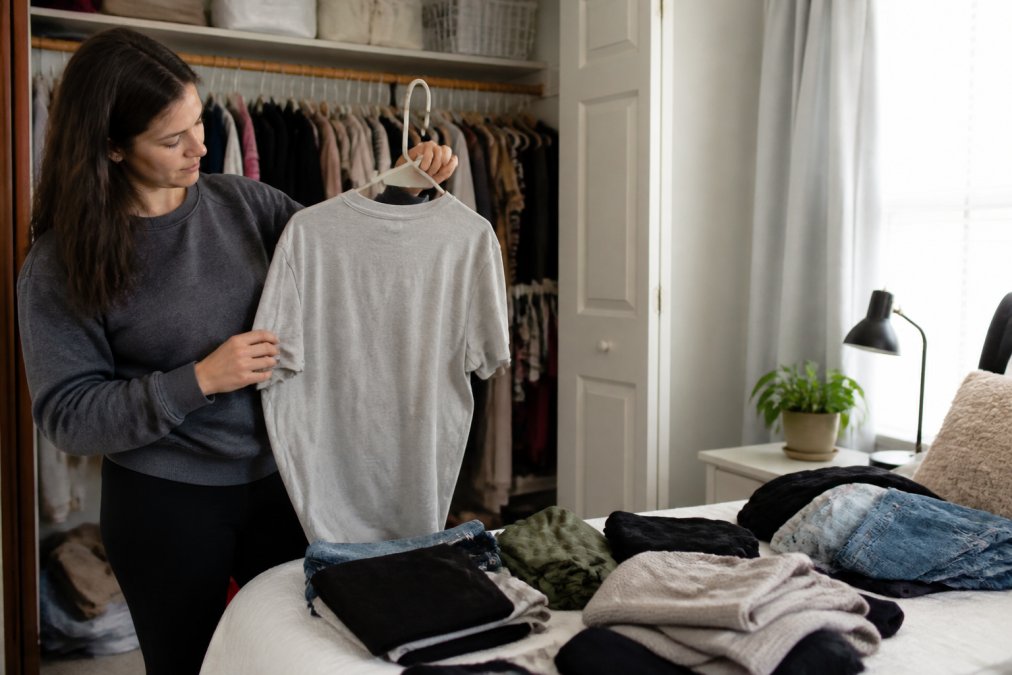
Define Your Capsule Wardrobe Essentials
Once you've cleared the clutter, build your foundation. A capsule wardrobe is just a fancy term for "clothes that actually work together." You're aiming for a small collection of versatile pieces that mix and match without thinking too hard.
The goal isn't to own fewer clothes, it's to own clothes that earn their space. When you're curating a closet on a tight budget, this matters because every dollar counts.
The Core Pieces That Do the Heavy Lifting
Start with neutral basics: plain white tee, gray tee, black tee, dark jeans, and a pair of neutral pants. Add one cardigan or blazer. These five pieces are your foundation. They're boring on purpose. They're the canvas everything else builds on.
Then add one or two statement pieces, maybe a patterned shirt, a colored sweater, or something with personality. This is where a graphic tee from Caltucky Creations shines. A well-designed funny tee with a solid joke adds character without demanding coordination. It works because the humor carries the outfit.

The math is simple: five neutral basics plus two statement pieces gives you way more outfit combinations than buying random items that don't talk to each other.
Building Mix-and-Match Foundations
Think in terms of color families. If your jeans are dark blue, your pants are black, and your basics are white and gray, everything coordinates. Add one warm-toned piece (tan, rust, olive) and you've got flexibility without chaos.
Avoid trendy colors in basics. Stick with neutrals for the foundation. Save color for pieces you can swap out when trends shift. This is how you build a wardrobe that lasts years, not seasons.
How to Style Graphic Tees Without Looking Random
This is where curating a closet on a tight budget gets fun. A quality graphic tee is one of the cheapest ways to add personality to your rotation, but styling it matters. The difference between "I grabbed this from a pile" and "I meant to wear this" is about 30 seconds of thought.
Pair a graphic tee with neutral bottoms and a neutral layer. Jeans and a cardigan. Black pants and a blazer. White pants and a denim jacket. The tee becomes the focal point, not the whole outfit. This is the mix-and-match formula that actually works.
Keep the rest of your outfit simple. If your tee has a bold design or lots of color, skip the patterned bottoms. If your tee is more subtle, you have more freedom. The rule is: one statement piece per outfit. Everything else plays supporting role.
Smart Shopping Strategies That Save Money
Now comes the fun part, actually adding to your closet without going broke. The strategy here is patience plus intention. You're not shopping your feelings. You're shopping your gaps.
Where to Hunt for Budget-Friendly Pieces
Thrift stores, discount retailers, and end-of-season sales are your friends. But here's the real trick: only buy things that work with what you already own. Before you buy anything, picture three outfits you'd make with it. If you can't, leave it.
Online marketplaces like Poshmark, Depop, and Mercari let you buy secondhand directly from other people. You get better prices and more unique pieces than retail. The selection is huge, and the environmental impact is way lower than buying new. But secondhand shopping requires a different skill set than retail browsing.
The Secondhand Curation Strategy
When shopping resale platforms, search by color and fit first, not by brand or trend. This keeps you anchored to your actual capsule foundation. If you're hunting for a neutral layer that works with your existing basics, search "cream cardigan" or "tan blazer" rather than scrolling endless feeds. Specificity saves time and prevents impulse adds.
Read descriptions carefully. Check measurements against pieces you already own that fit well. Ask sellers questions about fabric content, wear, and washing history. A secondhand piece is only a bargain if it actually lasts. Avoid anything with stains, pilling, or odors you can't assess in photos.
Use filters to your advantage. Most platforms let you sort by size, color, price range, and condition. Set a maximum price per item and stick to it. The discipline of a budget forces better decision-making than unlimited retail shopping ever could.
Thrift stores work differently. You're hunting rather than searching. Go with a list of specific gaps ("I need a neutral cardigan in size medium") rather than browsing for inspiration. Thrift stores reward focused shopping. Wander aimlessly and you'll leave with three things you didn't need. Know what you're looking for and you'll find deals.
Check thrift store pricing by weight or discount days. Many stores offer percentage discounts on certain colors or days of the week. Some have loyalty programs that stack savings. A little research on your local thrift store's policies can cut costs by 20-30 percent without any coupon codes.
The Psychology of "Good Enough" vs. Perfect
Secondhand shopping requires releasing perfectionism. That cardigan has a small snag you could easily fix? It's probably half the price of retail. That vintage band tee has fading? That's character, not a flaw. The best budget curators embrace imperfection because it's where the real savings live.
Set a rule: if a piece is 80 percent of what you want and costs 40 percent of retail, it's a win. You're not building a magazine spread. You're building a functional wardrobe.
Stop the Impulse Buy Spiral: Psychology and Prevention
This is the section that saves you the most money. Impulse buys feel good in the moment. They feel terrible when they're still sitting unworn six months later.
Organize and Maintain What You Have
You've decluttered, built a foundation, and shopped smart. Now protect your investment by actually taking care of your clothes. This is where most people fail. They buy pieces and let them fall apart. Maintenance is the hidden multiplier of a tight-budget wardrobe. Every month you extend a piece's life is a month you don't need to replace it.
Storage Hacks for Small Spaces
Use slim hangers to maximize hanging space. Store off-season items in clear bins so you can see what you have. Fold heavier items to prevent stretching. Keep your most-worn pieces at eye level so you actually reach for them.
Garment Care That Extends Piece Life
Read the care labels. Wash in cold water. Air dry when possible. Fold instead of hanging for knits so they don't stretch. Use a lint roller to extend the life between washes. These small habits add years to your clothes.
Frequently Asked Questions
How do I start curating a wardrobe on a budget?
Begin by decluttering what you own, keep only pieces you genuinely wear. Then identify 5-7 core neutral pieces (jeans, plain tees, basics) that form your foundation. Shop secondhand platforms and sales for additional items that match your existing colors. Focus on versatile pieces over trendy ones. A capsule wardrobe of 20-30 intentional pieces beats a closet full of random items you never wear.
What are the essential pieces for a capsule wardrobe?
Start with basics: two pairs of jeans (one light, one dark), three plain tees, a white button-up, a neutral sweater, and one blazer. Add one pair of comfortable everyday shoes and one dressier option. Include one graphic tee or statement piece that reflects your personality, something from Caltucky Creations works perfectly here since quality designs hold up through countless washes. These 10-12 pieces form the skeleton; everything else should coordinate with them.
How can I stop impulse buying clothes I never wear?
Before buying, ask: Does this match at least three pieces I already own? Will I wear it within two weeks? Do I need it or just want it in the moment? Wait 48 hours before purchasing anything over $30. Unfollow brands that trigger impulse buys, and unsubscribe from sale emails. Track what you actually wear for a month, you'll spot patterns in your real style versus what you think you should wear.
Is it possible to build a stylish closet for under $200?
Yes, but it takes strategy. Allocate roughly $100-120 for five basic pieces (plain tees, jeans, basics from budget retailers), $40-50 for secondhand finds (thrift stores, Poshmark, Depop), and $30-40 for one statement piece or graphic tee that ties everything together. Buy quality basics that last; cheap basics pill and fade. One well-made graphic tee at $15 beats three thin ones at $5 each because it actually survives the washing machine.