

Table of Contents
- Eco Friendly Halloween Craft Projects for Kids: Start Here
- What You'll Need: Your Eco Craft Supply Kit
- Recycled Halloween Crafts for Kids: 5 Projects to Try
- Sustainable Halloween Activities for Families Beyond the Craft Table
- DIY vs. Store-Bought: What You Actually Spend
- Sensory-Friendly Eco Crafts for Kids Who Hate Mess
- How to Dispose of Every Eco Friendly Halloween Craft Project
- Conclusion: Craft, Laugh, Repeat Next Year
- Frequently Asked Questions
Last Updated: October 2, 2026
Eco Friendly Halloween Craft Projects for Kids: Start Here
Eco friendly Halloween craft projects for kids turn your recycling bin into a costume party. Cardboard tubes become bats, paper scraps become ghosts, and nobody buys a single plastic spider. This guide covers projects, your supply kit, and how to clean up without trashing the planet.
Here's the part most craft guides skip: the average store-bought Halloween decoration is plastic, shipped from overseas, and headed for a landfill after one season. The EPA's facts on municipal solid waste notes that holiday waste spikes every October and November. So we're doing the opposite. Everything below comes from stuff you already own.
What You'll Need: Your Eco Craft Supply Kit
That's your whole kit. No foam, no plastic googly eyes, no glitter.
Recycled Halloween Crafts for Kids: 5 Projects to Try
Recycled Halloween crafts for kids work best when materials are free, steps are short, and the mess stays on one tray. Here are five projects plus two bonus ideas, with real instructions instead of vague hand-waving.
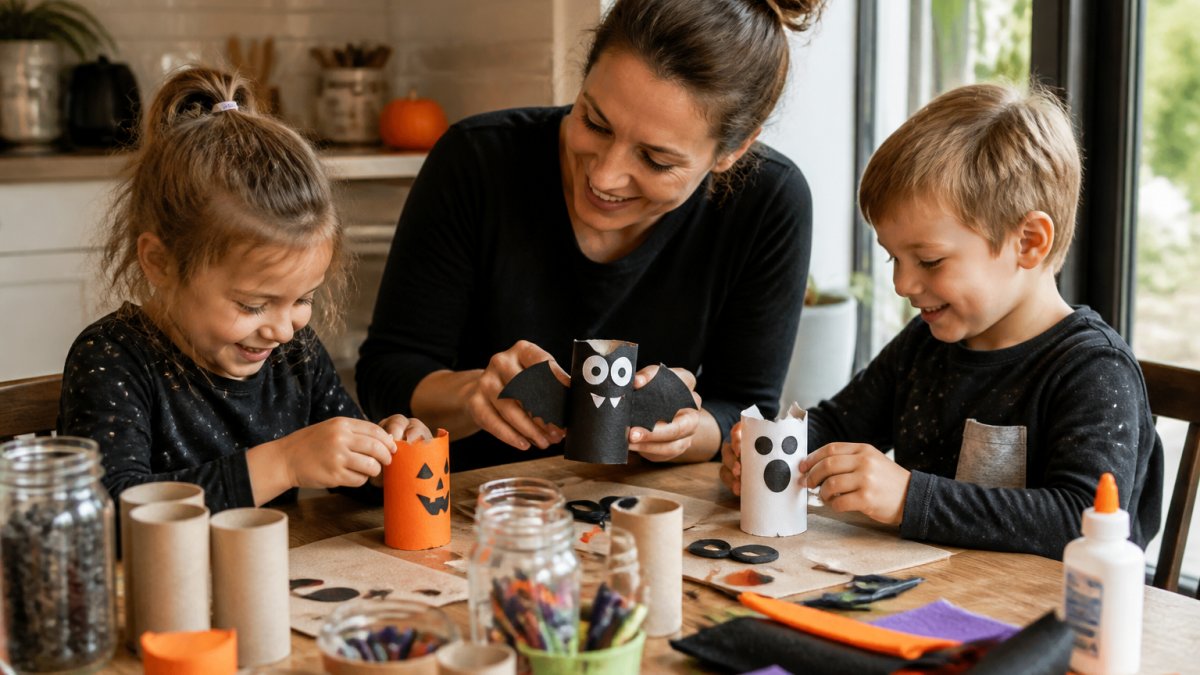
Cardboard Tube Bats and Paper Scrap Ghosts
Cardboard tube bats are the fastest win in this whole article.
- Paint a paper towel or toilet paper tube black with washable paint. Let it dry about 10 minutes.
- Fold one end of the tube inward to make a wing, then fold the other end the same way so the folds face each other.
- Cut two small triangles from scrap paper for ears and glue them to the top.
- Add two dots for eyes with a marker. Done.
No black paint? Wrap the tube in black construction paper or color it with a black beeswax crayon. Same bat, zero drying time.
Paper scrap ghosts use every torn bit of white paper in your house.
- Crumple a scrap into a ball for the head.
- Drape a larger scrap over the ball so the edges hang down like a sheet.
- Pinch the paper under the head and tie it with twine around the neck.
- Draw two eyes and a mouth with a marker, then hang the ghost from a string across a doorway.
Both take about 15 minutes, cost nothing, and look genuinely spooky when the lights are low.
Mason Jar Lanterns and Upcycled Fabric Pumpkins
Mason jar lanterns are the crowd-pleaser.
- Mix a spoonful of washable orange paint with a splash of water so it's thin enough to spread.
- Paint the outside of a clean mason jar and let it dry completely, usually 20 to 30 minutes.
- Drop in an LED tea light and set the jar on a porch step or windowsill.
To skip paint entirely, wrap the jar in torn paper and twine. The glass still glows, and there's nothing to dry.
Upcycled fabric pumpkins use old t-shirts and socks.
- Cut a fabric square about the size of a dinner plate.
- Pile fabric scraps in the center for stuffing.
- Gather the corners up and tie them off with twine.
- Tuck a cinnamon stick into the top for a stem.
No sewing needed. An old athletic sock works even better than a t-shirt square because the ribbing holds the shape.
Bonus: Egg Carton Spiders and Cereal Box Bats
Two more that use the stuff already in your recycling bin:
- Egg carton spiders: Cut one cup from a cardboard egg carton, paint it black, poke four pipe cleaners through each side for legs, and glue on two paper eyes. The cup shape gives the spider a body without any stuffing.
- Cereal box bats: Cut a bat silhouette from the front panel of a cereal box, paint it black, and tape it to a dowel or a stick from the yard. These make great photo-booth props and pack flat for storage.
The Paste Recipe That Replaces Hot Glue
Most craft guides say grab a hot glue gun. Skip it. A flour-and-water paste is non-toxic, cheap, and safe for kids to spread with their fingers.
Basic flour paste:
- Mix 1 part flour with 2 parts cold water in a bowl until it's smooth with no lumps.
- Stir in a pinch of salt to keep it from spoiling if you store it.
- Use it within a day or two, and keep it in a covered jar in the fridge between sessions.
It's not as strong as hot glue, so it works best on paper, cardboard, and light fabric, exactly what these projects use. For heavier joins, a dab of non-toxic white glue is fine. The point is avoiding the plastic-heavy adhesives and glitter that turn a compostable craft into landfill fodder.
A Quick Difficulty Guide
Not every project fits every kid. The honest ranking:
- Easiest (ages 3-5 with help): Paper scrap ghosts, egg carton spiders.
- Middle (ages 6-9): Cardboard tube bats, cereal box bats.
- Most involved (ages 8+): Mason jar lanterns, upcycled fabric pumpkins.
If a kid gets frustrated, drop down a level. The craft still counts.
Sustainable Halloween Activities for Families Beyond the Craft Table
The USDA guidance on reducing food waste points out that pumpkins are one of the most-thrown-away foods of the year. Composting yours keeps it out of the landfill.
DIY vs. Store-Bought: What You Actually Spend
DIY wins on cost, but not always on time. The honest breakdown:
THREE GREEDY GHOST HALLOWEEN Scented Soy Candles with Black Lid, (4 and 9oz) →
| Factor | DIY Eco Crafts | Store-Bought Decor |
|---|---|---|
| Upfront cost | Nearly nothing | Adds up fast |
| Time per project | 15-30 minutes | Instant |
| Waste after season | Compostable or recyclable | Mostly landfill |
| Kid involvement | High | Low |
| Reusability | Varies by project | Often one season |
The real trade-off is your Saturday afternoon. Two hours and a full recycling bin? DIY wins. Slammed? Buy one or two sturdy items you'll actually reuse.
Most families land somewhere in the middle. That's fine.
Sensory-Friendly Eco Crafts for Kids Who Hate Mess
Sensory-friendly eco crafts matter for kids who hate sticky hands and loud textures. Good news: natural materials are gentler than plastic and foam.
Try these swaps:
- Glue sticks instead of liquid glue. Less mess, less sticky.
- Twine and string instead of tape. Quieter, easier to control.
- Paint with a sponge, not a brush. Fewer drips.
- Work outside or on a tray. Contains the chaos.
- Offer gloves. Some kids just don't want goo on their hands.
Let kids opt out of any step that feels gross. The craft still works.
How to Dispose of Every Eco Friendly Halloween Craft Project
Disposal is where most craft guides stop, and it's the part that matters. A craft isn't eco-friendly if it hits a landfill on November 1. Here's where each project goes and how to break it down so it actually gets processed.
The Two-Stream Rule
Before you sort anything, know the difference:
- Compost takes food scraps, plain paper, natural fibers (cotton, wool, linen), and untreated wood. It does not take glue, paint, tape, or anything plastic.
- Recycling takes clean cardboard, glass, and rigid plastic. It does not take greasy pizza boxes, painted glass, or anything with mixed materials stuck together.
When in doubt, throw it out. One contaminated item can send a whole bin to the landfill.
Project-by-Project Breakdown
Cardboard bats and cereal box bats
- Pull off any tape, plastic eyes, or pipe cleaners first. Those go in the trash.
- Flatten the cardboard and put it in the recycling bin.
- If the cardboard is painted with washable paint, it's usually fine for recycling once dry. If it's soaked through or has glitter, it goes in the trash.
Paper scrap ghosts
- Plain paper with no glue or paint: compost it, or recycle it.
- Paper with glue or marker on it: recycle it if your local program accepts it, otherwise trash it. Flour paste is compostable; white glue is not.
- Twine: natural cotton or jute twine can be composted. Synthetic twine goes in the trash.
Mason jar lanterns
- Wash the jar with warm water and a little dish soap to loosen the paint.
- Scrape off remaining paint with a plastic scraper. Washable paint comes off easily; acrylic does not.
- Reuse the jar for next year's lantern, or recycle it. Glass is infinitely recyclable.
- The LED tea light: pull the battery, recycle the battery at a drop-off, and trash the plastic housing.
Upcycled fabric pumpkins
- Untie the twine and pull out the stuffing.
- Natural fiber stuffing (cotton, wool) can be composted. Polyester stuffing goes in the trash.
- The fabric: if it's cotton or another natural fiber and free of paint, compost it or cut it into rags. If it's a synthetic blend, donate it or trash it.
- The cinnamon stick: compost it.
Egg carton spiders
- Cardboard egg cartons: compost or recycle.
- Pipe cleaners: trash. They're metal wrapped in synthetic fiber and not recyclable curbside.
- Paper eyes: compost if plain, trash if glued.
Nature walk items
- Leaves, acorns, and pinecones: return them to the yard or compost them. Don't put them in recycling, they're not packaging.
- If you glued them to paper, separate what you can and compost the natural bits.
What Never Goes in Either Bin
- Glitter. It's microplastic. It contaminates compost and recycling alike. Trash only.
- Plastic tape. Not recyclable. Peel it off before recycling anything.
- Foam. Not recyclable curbside. Trash.
- Painted glass. The paint contaminates the glass stream. Reuse the jar instead.
- Mixed-material crafts. If you can't separate the parts, it's trash.
A Note for Next Year
Build your supply kit around compostable and recyclable materials, cardboard, paper, natural fabric, twine, flour paste, and disposal becomes a five-minute job instead of a guilt spiral. Projects that survive the season (mason jars, fabric pumpkins) get stored in a labeled bin. The rest goes back to the earth or the recycling stream. That's the whole point.
Conclusion: Craft, Laugh, Repeat Next Year
And when the crafting is done and the kids are finally in bed, Caltucky Creations has you covered. Our Three Greedy Ghost Halloween Scented Soy Candles come in Spiced Pumpkin Ginger and other fall scents, hand-poured with natural soy wax and a cotton wick. Pair one with a funny Halloween graphic tee or a cozy blanket, and you've got the grown-up version of trick-or-treat.

Get started with Caltucky Creations and make this the year your Halloween is funny and cozy.
Frequently Asked Questions
What are some natural materials to use for Halloween crafts?
Leaves, acorns, pinecones, twigs, dried orange slices and cinnamon sticks all work well. For adhesives, try a flour-and-water paste or a cornstarch-based glue instead of standard white glue. These natural elements give eco friendly Halloween crafts a rustic look and break down in compost when the season ends.
How can I make recycled Halloween crafts for kids using things I already have?
Cardboard tubes become bats, paper scraps become ghosts, and mason jars turn into lanterns with a tea light inside. Old t-shirts can be cut into fabric strips for pumpkins. Most households already have these supplies, so the only thing you might need to buy is a non-toxic adhesive or some natural twine.
How do I dispose of Halloween craft waste properly?
Separate your scraps: paper and cardboard go in recycling, fabric scraps can be composted if they are natural fibers, and food-based items like dried orange slices belong in the compost bin. Any plastic glitter or foam pieces should go in the trash since they do not break down. Planning disposal before you start keeps the whole project zero-waste.
Are there eco-friendly alternatives to plastic Halloween decorations?
Yes. Paper plate masks, felt banners, mason jar lanterns and real pumpkins replace plastic versions well. Real pumpkins can be roasted or composted after Halloween, while plastic ones sit in landfills for decades. For treats, choose candy wrapped in paper or foil rather than individual plastic wrappers when possible.