

Table of Contents
- What a Sustainable Capsule Wardrobe Actually Is
- Assess Your Current Wardrobe and Define Your Personal Style
- Declutter and Choose Your Color Palette
- Identify Essential Pieces and the Magic Number
- How to Style Graphic Tees Within Your Capsule
- Master Layering and Second-Hand Shopping
- Your Capsule Wardrobe Checklist and Maintenance
- Overcome the Psychological Barriers to Minimalism
- Frequently Asked Questions
Last Updated: September 24, 2026
What a Sustainable Capsule Wardrobe Actually Is
A sustainable capsule wardrobe is a small collection of high-quality, versatile pieces that work together to create multiple outfits while minimizing waste and fast fashion consumption. Think of it as intentional minimalism, you own fewer items, but each one earns its place through durability, style, and versatility.
The goal isn't to own the fewest clothes possible. It's to own clothes that last, fit your actual life, and reduce the guilt of mindless shopping. Most people approach fashion backwards: they buy constantly and wear little. A capsule flips that equation. You buy thoughtfully and wear everything repeatedly.
Assess Your Current Wardrobe and Define Your Personal Style
The wardrobe audit
Start by pulling everything out. Yes, everything. This sounds dramatic, but it works.
Sort into three piles: wear constantly, wear sometimes, and never wear. Be honest. If you haven't worn it in a year and you don't have a specific occasion coming up, it goes.
Look at the "wear constantly" pile. These pieces reveal your actual style, not the style you think you should have, but the one you actually live in. Notice the colors, fabrics, and silhouettes that appear most. That's your starting point.
The "never wear" pile teaches you something too. Did you buy it because you liked it or because you felt like you should? That's the impulse to break.
Finding your aesthetic
Your personal style is the intersection of three things: what you actually wear, what makes you feel confident, and what fits your lifestyle.
If you work from home, a capsule full of business blazers doesn't serve you. If you have kids, pieces that wrinkle easily create stress. If you live somewhere warm, heavy knits waste closet space. Your capsule should reflect reality, not fantasy.
Write down three adjectives that describe how you want to feel in your clothes. Comfortable? Confident? Playful? Sophisticated? Let those guide your choices moving forward.
Declutter and Choose Your Color Palette
The decluttering process
Decluttering isn't about shame. It's about respect, for your space, your money, and your time.
Keep pieces that:
- Fit your body right now (not in six months)
- Align with your defined aesthetic
- Are in good condition or easily repaired
- Make you feel good when you wear them
Donate or sell the rest. Holding onto "someday" clothes wastes mental energy and closet space.
Building your color foundation
Choose 3-4 neutral base colors that work with your skin tone and reflect your environment. Most people go with black, white, gray, navy, or beige, but pick what actually suits you.
Then add 2-3 accent colors that make you happy. These are your joy colors. They appear in smaller pieces: scarves, shoes, accessories.
The magic of a color palette is that everything coordinates. You're not mixing random colors, you're working within a system. This makes outfit building automatic.
Identify Essential Pieces and the Magic Number
The "magic number" is how many items you actually need. There's no universal answer, but research into minimalism suggests 30-50 pieces works for most people. Some thrive with 20. Others need 60. The number matters less than the principle: own only what you wear.
Essential pieces vary by lifestyle, but most capsules include:
- 5-7 tops (mix of long and short sleeve)
- 3-4 bottoms (jeans, trousers, skirts)
- 2-3 dresses or jumpsuits
- 1-2 cardigans or lightweight layers
- 1-2 structured jackets
- 7-10 pairs of shoes (work, casual, athletic, formal)
- Undergarments and basics
- 1-2 outerwear pieces (coat, blazer)
This isn't a checklist to follow blindly. It's a framework. Your capsule should reflect your actual life, not some imaginary life you think you should be living.
How to Style Graphic Tees Within Your Capsule
Graphic tees are the secret weapon of capsule wardrobes. They add personality to neutral bases and break up the "boring minimalism" stereotype that kills most people's capsule attempts.
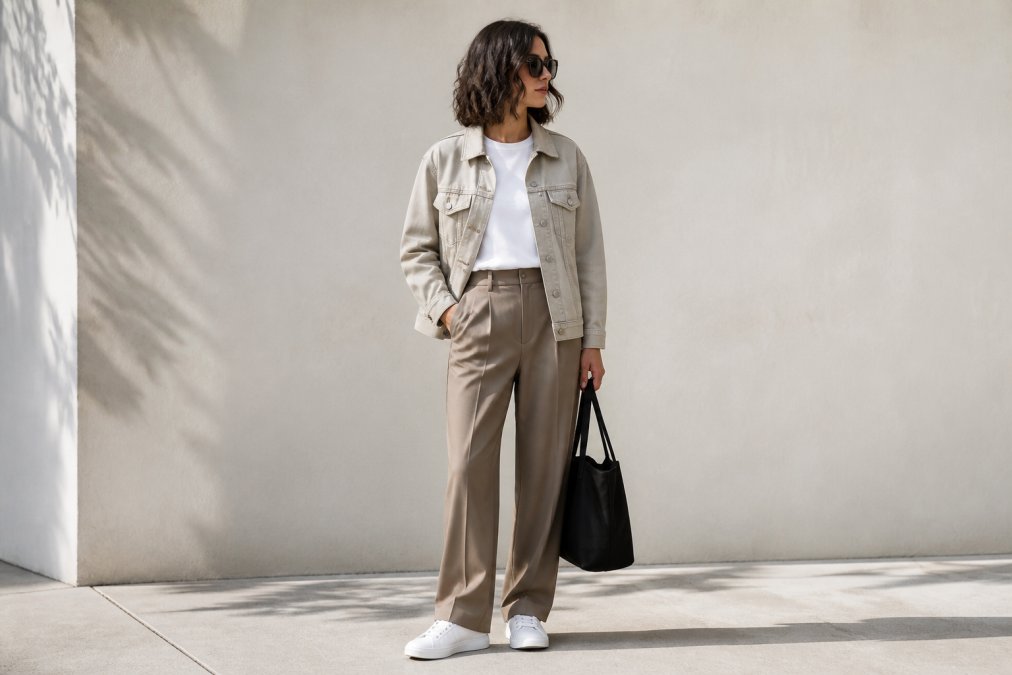
Here's how to make them work: pair a bold graphic tee with neutral bottoms and a structured layer. A funny tee with tailored trousers and a blazer reads polished. The same tee with jeans and a cardigan reads casual. One piece, infinite outfits.
The key is choosing tees that reflect your humor and personality, the kind that make people smile when they read them. At Caltucky Creations, we design graphic tees that do exactly that: funny, original designs that spark conversation. A well-chosen graphic tee becomes the anchor of your outfit, so pick ones that genuinely make you laugh.
Limit graphic tees to 2-3 in your capsule. They're impact players, not everyday basics. Rotate them with solid tees to maximize outfit combinations.
Master Layering and Second-Hand Shopping
Layering for versatility
Layering transforms a small wardrobe into dozens of outfits. A t-shirt becomes three different looks depending on what you layer over it.
Master these layering combinations:
- Tee + cardigan + structured jacket
- Tee + button-up shirt (worn open or closed)
- Tank + long-sleeve shirt + vest
- Dress + tights + boots + jacket
Layering also extends the seasons. A lightweight layer works in spring and fall. A heavier one handles winter. You're getting more wear from fewer pieces.
Shopping second-hand and ethical fashion
Second-hand shopping is the most sustainable way to build a capsule. You're extending garment longevity, keeping clothes out of landfills, and usually paying less.
Shop thrift stores, consignment shops, and online resale platforms. Look for quality fabrics and construction, not brand names. A well-made piece from an unknown brand outlasts a poorly-made designer item.
When shopping second-hand, apply the same rules as new purchases: Does it fit your color palette?
Your Capsule Wardrobe Checklist and Maintenance
Use this checklist to ensure your capsule covers your actual needs:
| Category | Quantity | Purpose |
|---|---|---|
| Neutral tops | 5-7 | Everyday basics |
| Graphic or patterned tees | 2-3 | Personality and interest |
| Bottoms (jeans, trousers, skirts) | 3-4 | Versatile base pieces |
| Dresses or jumpsuits | 1-2 | Quick outfit options |
| Cardigans or lightweight layers | 2-3 | Warmth and versatility |
| Structured jackets | 1-2 | Polished layering |
| Shoes (work, casual, athletic, formal) | 7-10 | Lifestyle coverage |
| Outerwear | 1-2 | Seasonal protection |
Maintenance: The Sustainability Multiplier
A sustainable capsule wardrobe isn't just about buying less, it's about making every piece last. Garment longevity is the ultimate sustainability metric, and most people underestimate how much control they have over it.
Overcome the Psychological Barriers to Minimalism
Most people fail at capsule wardrobes not because the concept is flawed, but because psychology sabotages execution. Understanding these barriers, and naming them, is half the battle.
Decision Fatigue and the Paradox of Choice
You'd think fewer options would feel limiting. Instead, most people report relief. Here's why: every morning, your brain makes thousands of micro-decisions. What to wear shouldn't be one of them.
The Sunk-Cost Fallacy and "Someday" Clothes
You spent $80 on those pants three years ago. You've never worn them. They don't fit your aesthetic or your body. But you keep them because throwing away $80 feels like admitting a mistake.
Identity Attachment and the "What If" Anxiety
Clothes are tied to identity in ways we don't always acknowledge. That blazer represents "professional you." Those party heels represent "fun you." That oversized sweater represents "cozy you."
Start Small to Build Confidence
If jumping into a full capsule feels overwhelming, build one for a single season first. Pick fall, for example. Curate 15-20 pieces that work together. Wear only those pieces for eight weeks. Prove to yourself that you can get dressed with fewer options.
Frequently Asked Questions
What is the 3-3-3 rule for a capsule wardrobe?
The 3-3-3 rule is a simple framework: 3 bottoms, 3 tops, and 3 layers that mix and match to create multiple outfits. This minimalist approach forces you to choose versatile, high-quality pieces that work together. It's an entry point to sustainable capsule thinking, though most people expand beyond this once they understand the concept of intentional purchasing and garment longevity.
How do you start a sustainable capsule wardrobe on a budget?
Start by auditing what you already own and building around pieces you love. Focus on quality basics in neutral colors that last multiple washes. Shop second-hand for designer pieces and unique items at a fraction of retail cost. Prioritize cost-per-wear: a $60 jacket worn 100 times costs 60 cents per wear, while a $20 shirt worn twice costs $10 per wear. Invest gradually rather than buying everything at once.
How many items should be in a sustainable capsule wardrobe?
Most sustainable capsule wardrobes contain 25-40 pieces, though the 'magic number' depends on your lifestyle and climate. Quality matters more than quantity. A smaller, thoughtfully curated wardrobe with high-quality fabrics and versatile pieces beats a larger closet of impulse buys. Focus on pieces that work together across seasons through layering and mix-and-match potential rather than hitting a specific item count.
How do you maintain a capsule wardrobe without getting bored?
Rotate seasonal pieces and experiment with layering and styling combinations. Add one or two statement pieces annually, like a graphic tee with a design that makes you laugh, rather than overhauling your entire wardrobe. Focus on garment care to extend longevity; proper washing, storage, and minor repairs keep pieces fresh longer. The key is conscious consumerism: each new piece should integrate with existing items and reflect your evolving style.