

Table of Contents
- Why Texture Matters in Small Spaces
- Understanding Scale and Proportion for Small Rooms
- How to Mix Textures in Small Living Rooms Without Clutter
- Small Living Room Decor Ideas Using Texture
- Mixing Patterns and Textures in Living Rooms
- Lighting's Role in Texture Perception
- Maintenance and Durability for High-Traffic Small Spaces
- Common Mistakes to Avoid
Last Updated: August 11, 2026
Why Texture Matters in Small Spaces
Texture transforms a small living room from cramped and flat into a space that feels intentional and inviting. Layering different tactile surfaces, chunky knit against smooth leather, matte finishes next to glossy ones, creates the illusion of dimension and keeps the eye moving without adding physical clutter. This guide from Caltucky Creations breaks down how to mix textures in small living rooms without overwhelming the space, from selecting your base layer to balancing patterns and solids for maximum impact.
Understanding Scale and Proportion for Small Rooms
Scale determines whether a textured piece feels right or oversized. A chunky knit throw perfect on a full-size sectional can dominate a small loveseat. The principle is straightforward: smaller rooms need smaller-scale textures and accents. One oversized statement piece can work, but it needs breathing room around it.
Think about proportion relative to your furniture. If your sofa is small to medium, pair it with throw pillows in modest sizes rather than floor cushions. If you're adding a woven rug, ensure it defines the seating zone without extending wall-to-wall. Natural elements like branches or potted plants should be vertical rather than sprawling, drawing the eye upward without consuming floor space. Caltucky Creations offers curated pieces specifically designed with proportion in mind for small spaces.
How to Mix Textures in Small Living Rooms Without Clutter
Clutter isn't caused by texture; it's caused by lack of intentionality. Follow these steps to mix textures strategically.
Step 1: Start with Your Base Layer
Your base layer is your foundation: the largest, most neutral textured element in the room. This is typically your sofa, area rug, or wall color. Choose something substantial but not competing for attention. The base layer should occupy the most visual real estate and set the tone for everything else. In a small room, choose a base that's visually calm, solid color, consistent texture, no competing patterns.
Step 2: Add Contrast with Smooth and Rough Surfaces
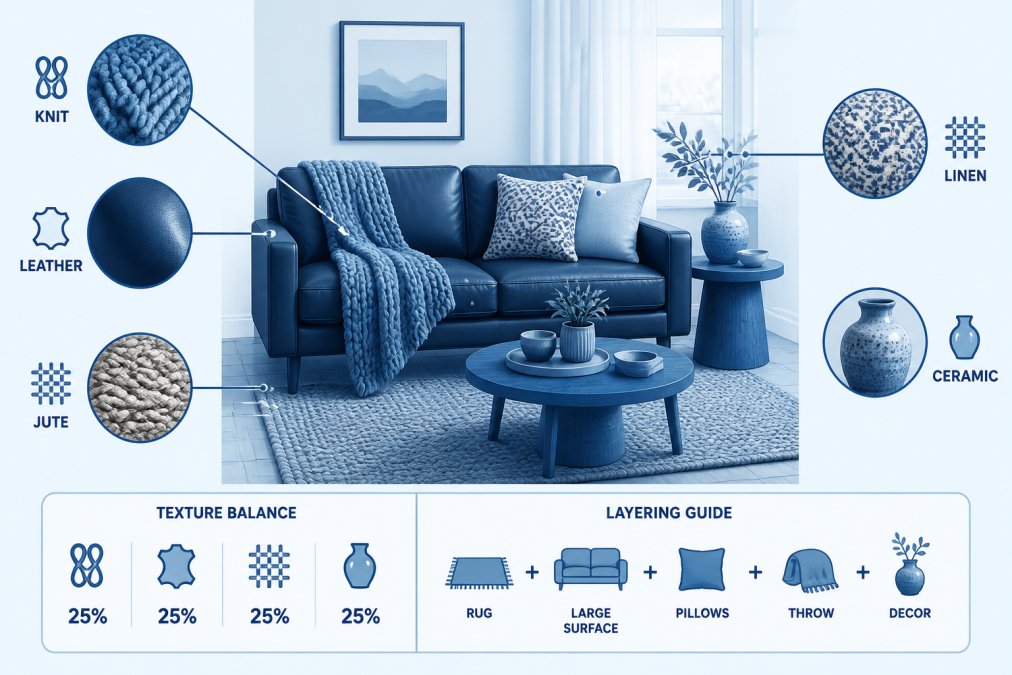
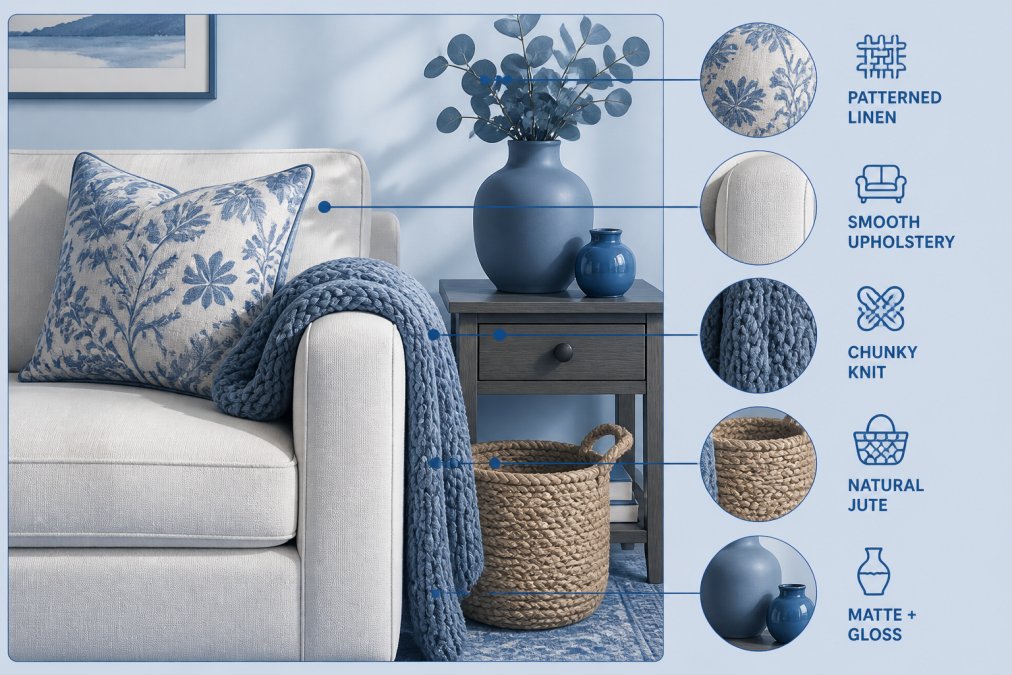
Once your base is set, introduce contrast by pairing opposing surface finishes. Smooth leather next to a chunky knit throw. A matte wood side table paired with a glossy ceramic vase. These pairings work because each piece has a reason to be there, and the contrast makes both more interesting.
In small spaces, concentrate this contrast in one or two areas, perhaps on your sofa with pillows and throws, or on a side table with mixed objects. This creates focal points without diffusing texture everywhere.
Step 3: Layer Textiles Strategically
Textiles are your primary tool for layering texture. A soft furnishings strategy might look like this: your base upholstery, plus one chunky knit throw, plus two to three throw pillows in varying textures. Natural fibers, linen, wool, cotton, jute, layer beautifully together because they share a visual family even when their textures differ. This is the secret to mixing patterns and textures without chaos: choose materials that belong to the same category, then vary their surface finish and scale.
Step 4: Incorporate Natural Elements
Natural elements add organic texture that feels grounding without appearing cluttered. One or two natural pieces, thoughtfully placed, feel intentional. In small rooms, choose vertical natural elements, tall plants or branches in a tall vase, rather than sprawling ones. This draws the eye upward and creates spatial flow.
Small Living Room Decor Ideas Using Texture
Budget-Friendly Texture Hacks
You don't need to replace your furniture to add texture. Throws and pillows are the fastest, most affordable way to introduce layering. Thrift stores and secondhand markets are goldmines for textured pieces at far less cost than new items. Repurposing what you own is another approach: that blanket in your closet becomes a throw, mason jars become vessels for branches. Caltucky Creations offers curated selections of textured pieces.
Using Rugs to Define Zones and Add Depth
A rug does double duty in a small living room: it defines the seating zone and adds texture underfoot. For small spaces, choose a rug that anchors your seating without extending edge-to-edge. A 5x7 or 6x9 rug typically works, with the front legs of your seating on the rug and the back legs off it. Texture in rugs matters, a woven or shag surface feels different than smooth, flat. Layering rugs is also an option in very small spaces, creating depth without overwhelming.
Mixing Patterns and Textures in Living Rooms
Pattern and texture are different tools that work together. Understanding their relationship is crucial for small living room decor that actually works.
The Balance Between Pattern and Solid Textures
Pattern is bolder than texture alone. In small rooms, too much pattern creates visual noise. The rule is simple: use pattern as an accent, not a foundation. Your base layer should be solid. Your textiles can include one or two patterned pieces, but most should be solid with interesting texture. When you do use pattern, choose one that echoes colors already in your room.
Color Palette and Visual Weight
A small living room benefits from a restricted color palette, typically three to four colors maximum. Within that palette, vary texture and tone rather than introducing new colors. Cream linen, cream wool, cream cotton in different textures creates cohesion while maintaining visual interest. Concentrate texture in key areas, your sofa, rug, side table, rather than spreading it throughout.
Lighting's Role in Texture Perception
Lighting changes how texture reads. The same textured surface looks completely different under harsh overhead light versus warm ambient lighting. Soft, layered lighting, a combination of ambient light, task lighting, and accent lighting, makes texture more visible and appealing. If your small living room relies on overhead lighting, add a table lamp or floor lamp to create softer light. This single change makes textured pieces more visually interesting by creating shadows that add depth.
Maintenance and Durability for High-Traffic Small Spaces
Texture choices have practical implications. Smooth surfaces like leather are easier to clean than rough, woven fabrics. Natural fibers like wool and linen are durable and age beautifully, but they can show wear differently than synthetics. For small living rooms with pets or children, smooth leather and tightly woven fabrics resist damage better than loose knits or delicate textures.
Common Mistakes to Avoid
The most common mistake is adding texture without a plan. Another is choosing textures that don't work together, mixing natural fibers is safe; mixing natural fibers with slick synthetics can feel disjointed. Overscaling texture is a third error: multiple large-scale pieces in a small room feel overwhelming. Finally, ignoring your actual lighting is a mistake, a textured piece that looks beautiful in the store might disappear in your room's actual light conditions.
Creating a small living room that feels both textured and intentional requires strategy. Establish a calm base layer, introduce contrast through opposing surfaces, layer textiles that work together, and incorporate natural elements with restraint. Texture becomes a tool for creating depth and visual interest rather than a source of clutter.
Caltucky Creations offers carefully selected home essentials designed to layer beautifully in small spaces: textured throws, patterned pillows, woven baskets, and natural accessories. Start with pieces that complement your existing furniture, then build from there. The result is a small living room that feels curated, intentional, and genuinely comfortable. Continue shopping to find the pieces that transform your space.
Frequently Asked Questions
How do you add texture to a small room without cluttering it?
Focus on vertical layering rather than spreading items across the floor. Use a textured throw draped over furniture, hang woven wall art, and stack books with varied covers on shelves. Choose pieces that serve dual purposes, a chunky knit ottoman provides seating and tactile interest. Stick to a cohesive color palette so mixed textures read as intentional rather than chaotic. Quality over quantity prevents visual overwhelm while maintaining depth and dimension.
What is the best way to mix textures in a small living room?
Start by pairing contrasting surfaces: smooth leather with chunky knit, matte wood with glossy metal accents, and soft natural fibers with sleek upholstery. Layer textiles strategically using rugs to define zones and throws to add softness. Incorporate organic elements like plants or woven baskets to create visual interest without bulk. Keep your color palette limited to three to four main hues so mixed textures enhance rather than distract. This approach builds dimension while maintaining spatial flow in tight quarters.
How can I make a small living room look more expensive using texture?
Curated texture choices signal quality and intentionality. Invest in one standout piece with premium tactile appeal, a high-quality leather chair or natural linen upholstery, then layer complementary textures around it. Mix matte and gloss finishes to add sophistication; smooth leather paired with brushed metal creates visual contrast that feels refined. Use ambient lighting to highlight textural details, which enhances perceived value. Strategic placement of natural fibers and organic elements elevates the overall aesthetic without requiring a large budget.
Should I mix wood and metal textures in a small space?
Yes, mixing wood and metal creates visual balance and prevents monotony in tight spaces. Pair warm wood tones with brushed or matte metal accents for cohesion, or contrast cool metal with rich wood for dramatic effect. Keep the mix intentional: one metal side table with wooden shelving, or metal frame with wood top rather than scattered pieces. The key is maintaining spatial awareness by using these contrasting finishes as focal points rather than filling every surface. This approach adds dimension without overwhelming the room.
This article was written using GrandRanker