

Table of Contents
- What You'll Need Before You Start Decorating
- Small Apartment Decorating Ideas on a Budget That Actually Work
- Multifunctional Furniture for Small Spaces: Shop Smarter, Not More
- Renter-Friendly Small Apartment Decor You Can Take With You
- DIY Apartment Decor on a Budget: Stretch Every Dollar
- Maximizing Small Space Storage Without Sacrificing Style
- The Psychology of Small Space Living (and How to Style a Small Apartment on a Budget With It)
- Common Mistakes to Avoid When Decorating a Small Apartment
Last Updated: July 30, 2026
Knowing how to style a small apartment on a budget is one of the most practical skills a first-time renter can develop. This guide from Caltucky Creations breaks down exactly how to create a space that feels intentional, cozy, and distinctly yours without spending a fortune. The biggest mistake people make is buying before planning. Fix that first, and everything else gets easier.
According to the American Housing Survey conducted by the U.S. Census Bureau, the majority of first-time renters in the U.S. occupy units under 800 square feet. That's not a limitation, it's a design constraint that forces creativity.
Small-space styling is a series of decisions about visual weight, zoning, and light, not a series of product purchases. Get those decisions right first, and the products almost choose themselves.
What You'll Need Before You Start Decorating
Smart small apartment decorating starts with two things most people skip: accurate measurements and a realistic budget.
Measure Your Floor Plan First
A floor plan is a scaled drawing of your apartment's layout, showing walls, doors, windows, and fixed fixtures. Sketching one before you buy a single item prevents the most common and expensive decorating mistake: furniture that doesn't fit.
Use a tape measure and graph paper, or a free app like Magicplan. Record every wall's length, ceiling height, window placement, and door swing radius. Note where outlets are. A few measurements worth knowing before you shop:
- Standard sofa depth runs 30-36 inches; anything deeper will dominate a room under 12 feet wide
- A dining table needs at least 36 inches of clearance on every side for chairs to pull out comfortably
- Knowing stud placement before you buy shelving saves a trip back to the hardware store
Set a Realistic Decorating Budget
The budget needs categories, not just a total. A practical framework prevents the common trap of spending everything on decorative items while sitting on a bare floor with no task lighting.
| Category | Priority | Suggested Allocation |
|---|---|---|
| Multifunctional anchor furniture | Highest | 40% of total budget |
| Lighting (floor lamp, task light) | High | 15% of total budget |
| Rugs and textiles | Medium-High | 20% of total budget |
| Wall decor and accents | Medium | 15% of total budget |
| Botanicals and accessories | Low | 10% of total budget |
Small Apartment Decorating Ideas on a Budget That Actually Work
Small apartment decorating ideas work best when they serve a functional purpose at the same time.
Use Color to Define Zones Without Walls
Open-concept layouts and studio apartments share a problem: everything bleeds into everything else. Color is the cheapest zoning tool available.
A cohesive color palette typically works in three layers: a dominant neutral on walls and large furniture, a secondary tone in textiles and rugs, and one or two accent pieces that carry the eye around the room. Keep the dominant neutral consistent throughout the entire apartment. Changing wall colors between rooms in a small space makes both feel smaller, not distinct.
Zoning through color works like this: a deep-toned rug under a sofa and coffee table defines the living zone, a lighter rug or bare floor in the dining area signals a different function, and a consistent accent color repeated in both zones creates visual continuity.
Rug Placement for Space Separation
Rug placement is one of the most misunderstood tools in small-space design. The rule that actually works: in a living area, all front legs of the sofa and chairs should sit on the rug. If the budget doesn't stretch to a large enough rug, rug layering (a smaller patterned rug over a larger neutral base) creates the same visual effect at lower cost.
For studio apartments, a rug is the primary way to separate a sleeping zone from a living zone on a shared floor plan. Place the rug to define the living area only, and the bed area becomes its own distinct space by contrast.
Multifunctional Furniture for Small Spaces: Shop Smarter, Not More
Every piece of furniture in a small apartment should do at least two jobs. The most useful multifunctional pieces include storage ottomans that serve as coffee tables and hidden storage, sofa beds that convert a living room into a guest room, dining tables with drop leaves that shrink when not in use, and bed frames with built-in drawers that eliminate the need for a separate dresser.
Choosing Small-Scale Furniture With Low Visual Weight
Visual weight is how heavy a piece of furniture looks, regardless of its actual mass. Furniture with exposed legs allows light to pass underneath, making the floor appear larger. Glass or acrylic surfaces reflect light and disappear visually. Sofas with slim arms take up the same square footage as bulkier versions but read as less imposing.
Small-scale furniture doesn't mean cheap or flimsy. It means proportionate. A loveseat scaled for a 10-by-12-foot room will look more intentional than a standard three-seat sofa crammed into the same space.
Renter-Friendly Small Apartment Decor You Can Take With You
Renter-friendly small apartment decor is defined by one principle: every change you make should be reversible. That constraint forces you toward solutions that are easy to update as your taste evolves.
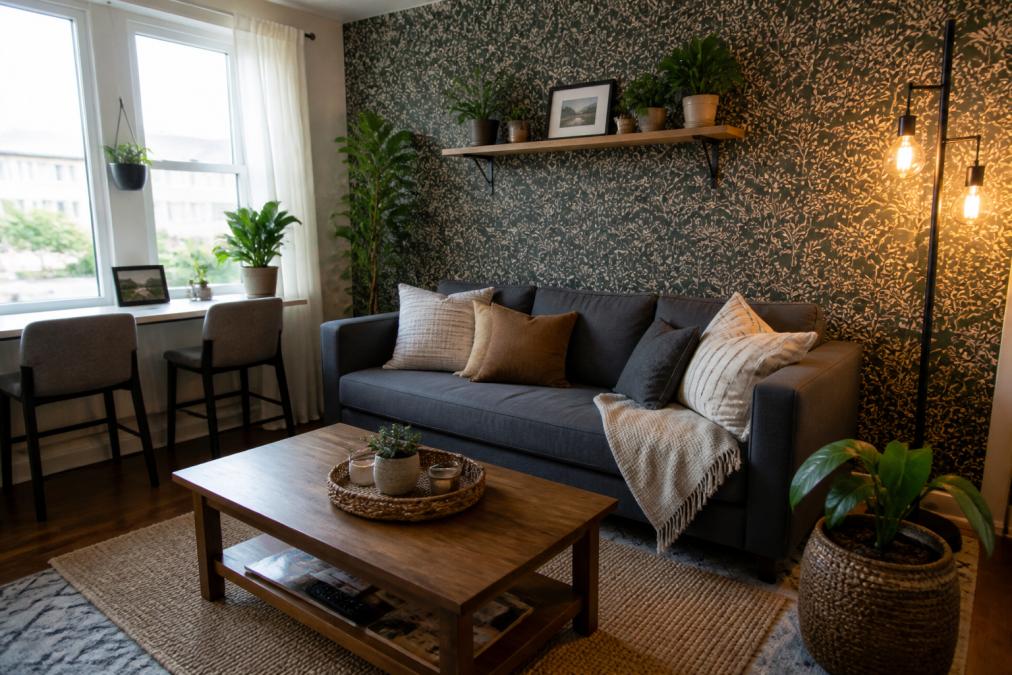
Removable Wallpaper and Peel-and-Stick Wall Treatments
Removable wallpaper is the single biggest upgrade available to renters. One accent wall with a bold pattern transforms a room's entire feel without touching the underlying paint. Quality peel-and-stick options now come down cleanly without damaging drywall when removed correctly.
Installation tips that make the difference: clean and dry the wall completely before applying, start from a corner or vertical plumb line, use a credit card to press out air bubbles as you go, and when removing, pull at a 45-degree angle slowly rather than straight out from the wall.
Beyond wallpaper, peel-and-stick tiles work on kitchen backsplashes and bathroom walls. Command strips and adhesive hooks handle art and shelving without nails.
Lighting Layers and Warm Metallic Accents
Most apartments come with one overhead light per room. Lighting layers fix this flat, unflattering light.
Three layers of lighting work together in a small apartment:
- Ambient light: the overhead fixture or ceiling lamp providing general illumination
- Task light: a desk lamp or reading lamp positioned for specific activities
- Accent light: a floor lamp or LED strip that adds warmth and depth
Warm bulbs in the 2700K-3000K color temperature range make a small apartment feel significantly cozier than cool-white alternatives. Warm metallic accents, brass, brushed gold, and antique bronze, pair naturally with warm lighting and add a curated aesthetic. Pick one metal finish and repeat it in two or three small pieces rather than mixing multiple finishes.
As noted by the Lighting Research Center at Rensselaer Polytechnic Institute, color temperature has a measurable effect on perceived comfort and mood in residential spaces.
DIY Apartment Decor on a Budget: Stretch Every Dollar
DIY apartment decor on a budget doesn't require artistic talent. It requires a willingness to spend time instead of money.
DIY Wall Art and Botanical Displays
Wall art is one of the easiest places to save money without sacrificing quality. Gallery walls with thrifted frames painted the same color create a cohesive look from disparate pieces. Oversized single prints in simple frames make more visual impact than clusters of small pieces and cost less in total. Textile wall hangings, a piece of fabric, vintage scarf, or macrame panel hung from a dowel rod, add texture and warmth without framing cost.
Sustainable and Second-Hand Sourcing Tips
Second-hand sourcing is the most underrated strategy in small apartment styling. Buy solid wood furniture, ceramic and glass decorative pieces, picture frames, and rugs without hesitation. Avoid upholstered furniture unless you can verify its condition in person, mattresses, bedding, and anything with visible mold or structural damage.
The Environmental Protection Agency's guidance on indoor air quality notes that certain older furnishings can off-gas volatile organic compounds, which is a practical reason to prioritize solid wood and hard-surface pieces when sourcing second-hand.
Maximizing Small Space Storage Without Sacrificing Style
Storage solutions in a small apartment need to work harder, which means every storage choice should also contribute to the room's visual aesthetic.
Vertical storage is the most underused resource in most apartments. Floating shelves above a sofa, tall bookcases that draw the eye upward, and over-door organizers all reclaim vertical space without touching the floor plan.
A few storage principles that hold up in practice: keep visual noise behind cabinet doors and use open shelves only for items that genuinely contribute to the room's aesthetic. Furniture that doubles as storage, beds with under-bed drawers, benches with interior compartments, and coffee tables with lower shelves, adds storage without adding footprint. Declutter before decorating; a curated aesthetic in a small space requires fewer items, not more.
The Psychology of Small Space Living (and How to Style a Small Apartment on a Budget With It)
The psychology of small space living centers on perceived spaciousness, which is not the same as actual square footage. A room can feel larger or smaller based entirely on how it's arranged and lit.
Visual continuity reduces perceived clutter. When colors, materials, and finishes repeat across a room, the eye moves smoothly. That smooth movement reads as calm and spacious.
Mirrors amplify perceived space. A large mirror on a wall reflects light and creates the impression of depth. Placed opposite a window, a mirror effectively doubles the amount of natural light in a room.
Minimalism is about editing intentionally. The goal isn't an empty apartment. It's a space where every visible element has been chosen rather than defaulted to.
Understanding these principles shifts your approach. You stop asking "what should I add?" and start asking "what should I keep?"
Common Mistakes to Avoid When Decorating a Small Apartment
Buying furniture before measuring. A sofa that's six inches too wide for a wall changes the entire floor plan.
Using too many small decorative items. Three well-chosen pieces make more impact than twelve random ones.
Ignoring the ceiling. Painting a ceiling a slightly lighter shade than the walls draws the eye upward and makes the room feel taller.
Choosing curtains that hang too low. Hang curtain rods as close to the ceiling as possible and let panels drop to the floor. The vertical line makes the room read as taller.
Skipping the rug or choosing one that's too small. A correctly sized rug grounds a space and makes it feel finished.
As documented by the National Association of Realtors' home staging research, staged and well-decorated spaces consistently create stronger emotional responses in viewers, a finding that applies equally to renters making a space feel like home.
Every mistake on this list is fixable without starting over. Small apartment styling is iterative.
Pulling together a cohesive, stylish small apartment on a limited budget is genuinely achievable when decisions are made in the right order: plan the space, set a budget by category, choose multifunctional pieces, and layer in personality through lighting, textiles, and curated accents. Caltucky Creations offers a selection of fresh, stylish home essentials, including home decor and accent pieces, designed to bring that final layer of comfort and unique flair to a space you've already thoughtfully planned. If you're ready to add the finishing touches that make a small apartment feel like a real home, continue shopping the Caltucky Creations catalog and find the pieces that fit your space and your style.
Frequently Asked Questions
How can I make my small apartment look expensive on a budget?
Focus on a cohesive color palette, quality textiles like throw pillows and curtains, and strategic lighting layers. Swapping out generic hardware, adding a statement rug, and grouping curated accent pieces creates a polished, intentional look without a large spend. Thrift stores and secondhand marketplaces are great sources for elevated pieces at a fraction of retail cost. Consistency in your color palette and visual weight does more for a high-end feel than any single expensive item.
What are some renter-friendly decorating ideas for small apartments?
Renter-friendly small apartment decor focuses on changes that leave no permanent marks. Removable wallpaper, peel-and-stick tile, and adhesive hooks let you transform walls without losing your security deposit. Freestanding shelving units, floor lamps instead of hardwired fixtures, and area rugs to define zones are all deposit-safe options. When you move, everything comes with you, making it a smart investment in your personal style regardless of how long you stay.
How do I maximize storage in a small apartment without cluttering the space?
Maximizing small space storage means thinking vertically. Use tall bookshelves, wall-mounted floating shelves, and over-door organizers to keep floor space open. Choose multifunctional furniture for small spaces, like ottomans with hidden storage or beds with built-in drawers. Regular decluttering is equally important: a minimalism mindset ensures you only keep items that serve a purpose or bring genuine joy, which keeps your functional layout looking clean and intentional rather than cramped.
How do you make a small apartment feel cozy without spending a lot?
Coziness in small apartment decor comes from layering warm textures and soft lighting rather than filling every corner. Add throw blankets, woven rugs, and cushions in complementary tones. Swap harsh overhead lights for warm-toned bulbs or plug-in floor lamps to create a softer ambiance. Incorporating botanicals, even low-maintenance pothos or succulents, adds life and warmth. DIY apartment decor projects like framed prints or hand-painted pots personalize the space without straining your budget.
Can I decorate a small apartment stylishly if I'm not a design person?
Absolutely. Start with a simple two- or three-color palette and stick to it across your textiles, wall art, and accent pieces, this creates a cohesive design without needing formal training. Choose one focal point per room, like a statement rug or a gallery wall, and build outward from there. Multifunctional furniture for small spaces simplifies your floor plan decisions. Following a budget breakdown, even a rough one, keeps impulse buys from disrupting your overall aesthetic.
This article was written using GrandRanker