

Table of Contents
- Step 1: Choose Your Color Palette and Paint
- Step 2: Plan Your Entryway Lighting Trends for Ambiance
- Step 3: Add Best Entryway Storage Solutions
- Step 4: Select and Position Your Mirror and Accent Wall
- Step 5: Arrange Furniture and Define Traffic Patterns
- Step 6: Incorporate Small Entryway Decor Ideas That Work
- Step 7: Style Your Entryway with Texture, Scent, and Warmth
- Common Mistakes to Avoid When Styling Your Entryway
Last Updated: August 9, 2026
Step 1: Choose Your Color Palette and Paint
The color you choose for your entryway sets the emotional tone for your entire home. Before you pick up a brush, think about what feeling you want visitors to experience the moment they walk through your door. A warm, inviting color story creates immediate comfort, while cooler tones can feel more contemporary and calm.
Start by identifying your base color. Neutral palettes, warm whites, soft grays, or gentle beiges, work well in smaller spaces because they reflect light and make the area feel larger. If you want more personality, consider a soft accent wall in a deeper shade. Sage green, warm terracotta, or muted blue-gray are popular choices that add visual interest without overwhelming the space.
The key is considering how natural light affects your chosen colors throughout the day. A color that looks perfect in the store's fluorescent lighting might feel entirely different in your home's actual lighting conditions. Paint a large sample swatch on your entryway wall and observe it at different times of day before committing.
According to the American Paint Association's 2026 color trends report, warm, nature-inspired palettes dominate residential design choices. This aligns with the broader shift toward creating spaces that feel grounded and welcoming rather than trendy or cold.
Step 2: Plan Your Entryway Lighting Trends for Ambiance
Proper lighting transforms an entryway from a dark, transitional space into a warm, inviting gateway to your home. The best entryway lighting combines task lighting (functional illumination for finding keys or checking your appearance) with ambient lighting (the overall warmth that makes the space feel welcoming).
Sconces on either side of a mirror provide excellent task lighting and visual balance. Position them at eye level, roughly 60-66 inches from the floor, to minimize harsh shadows on your face. If you have limited wall space, a single pendant light centered above a console table works beautifully and draws the eye upward, making the space feel taller.
Ambient lighting comes from layered sources. A ceiling fixture provides general illumination, while accent lighting, perhaps a small uplighter behind a potted plant or soft light highlighting an accent wall, adds depth and visual interest. The combination creates spatial flow and guides visitors naturally through your entryway.
Dimmer switches are essential. They allow you to adjust lighting intensity based on the time of day and mood you want to create. Morning light can be bright and energizing, while evening light should feel softer and more welcoming.
Step 3: Add Best Entryway Storage Solutions
Storage is the practical backbone of a functional entryway. Without it, clutter accumulates and the space feels chaotic no matter how stylish your décor is. The best entryway storage solutions balance function with aesthetics, they hold what you need while looking intentional, not like a coat closet exploded in your foyer.
A console table with drawers provides hidden storage for keys, mail, and small items. Choose one that's proportional to your space; a narrow entryway needs a slim table, while a wider foyer can accommodate something more substantial. Baskets beneath the console table add texture and contain shoes, bags, or seasonal items without looking cluttered.
Vertical storage is crucial in small spaces. A wall-mounted coat rack keeps jackets off the floor and creates visual interest. Floating shelves above a console table offer display space for decorative items while keeping functional storage below. This vertical approach maximizes your space and creates a sense of order.
An entryway cabinet with closed storage hides less attractive items, pet supplies, maintenance tools, extra hangers, while open shelving displays curated pieces. This mix of visible and hidden storage prevents visual overwhelm while maintaining functionality.
| Storage Solution | Best For | Visual Impact |
|---|---|---|
| Console table with drawers | Small to medium entryways | Elegant, functional |
| Wall-mounted coat rack | Limited floor space | Minimalist, practical |
| Baskets and bins | Organizing visible items | Warm, textured |
| Floating shelves | Vertical display | Modern, organized |
| Entry cabinet | Large entryways | Substantial, defined |
Step 4: Select and Position Your Mirror and Accent Wall
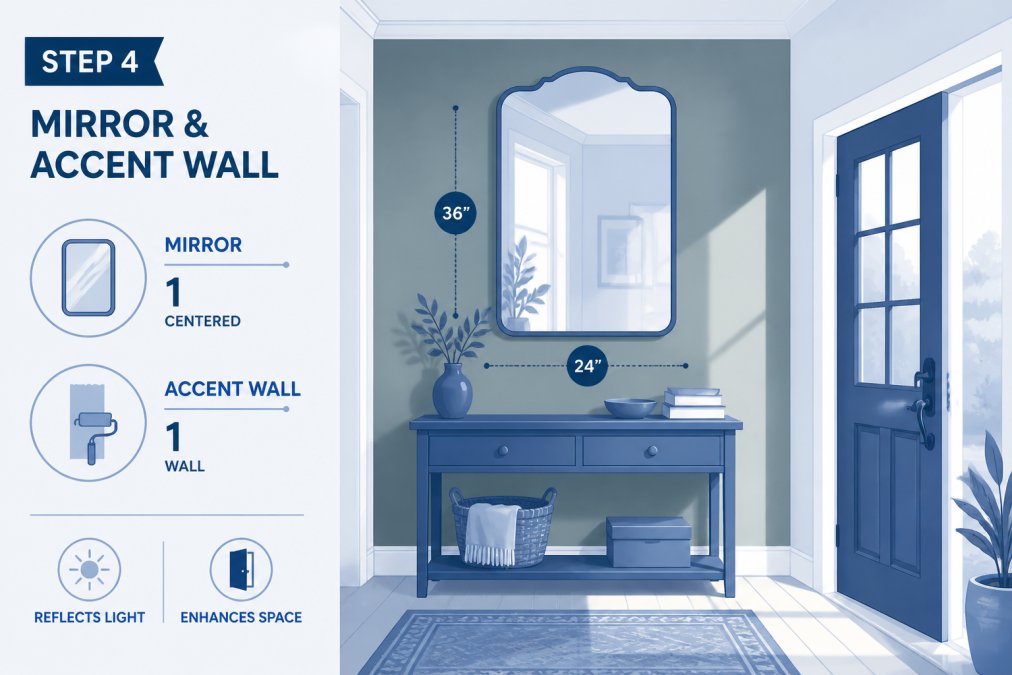
A strategically placed mirror is one of the most powerful tools in entryway design. It reflects light, making the space feel larger and brighter. More importantly, it serves a practical purpose, people need to check their appearance before leaving home. Position your mirror at eye level, typically 60-66 inches from the floor, and ensure it's large enough to see your full face and upper body.
An accent wall draws the eye and creates a focal point in your foyer. This is where you can experiment with color, texture, or pattern. A deep jewel tone, a subtle wallpaper, or even a shiplap treatment can transform the space. The accent wall works best opposite the entry door, so it's the first thing visitors see when they walk in.
Pairing a mirror with an accent wall creates visual interest and depth. A large mirror hanging on your accent wall reflects light and makes the statement even stronger. Alternatively, a mirror on a neutral wall with an accent wall opposite creates balance without overwhelming the space.
Consider the material of your mirror frame. A natural wood frame adds warmth, while a metal frame feels more contemporary. A frameless mirror works in minimalist spaces, while an ornate frame adds personality and visual weight.
Step 5: Arrange Furniture and Define Traffic Patterns
The way you arrange entryway furniture determines how people move through the space. Clear traffic patterns prevent the space from feeling cramped or cluttered. Think about how foot traffic naturally flows from the door into your home, then position furniture to guide that movement rather than block it.
A console table positioned against the wall (not in the center of the foyer) keeps the pathway open. Pair it with an entryway bench on the opposite wall or perpendicular to the table. This arrangement creates a welcoming vignette while maintaining clear spatial flow. If your entryway is very small, choose one piece instead of multiple items.
The entryway bench serves multiple purposes: it's a place to sit while removing shoes, storage for bags and coats, and a visual anchor that defines the space. Position it where someone naturally pauses when entering. A console table works best near the door for keys and mail, while a bench fits better in a slightly deeper entryway where people have room to sit comfortably.
Lighting and mirrors should be positioned to complement your furniture arrangement. A mirror above the console table creates a natural focal point, while sconces flanking the mirror provide task lighting and visual symmetry. This arrangement feels intentional and curated rather than random.
Step 6: Incorporate Small Entryway Decor Ideas That Work
Small decor items are where your entryway transforms from functional to personal. These pieces tell visitors who you are and make the space feel intentionally designed rather than hastily assembled. The key is curating items thoughtfully rather than filling every surface.
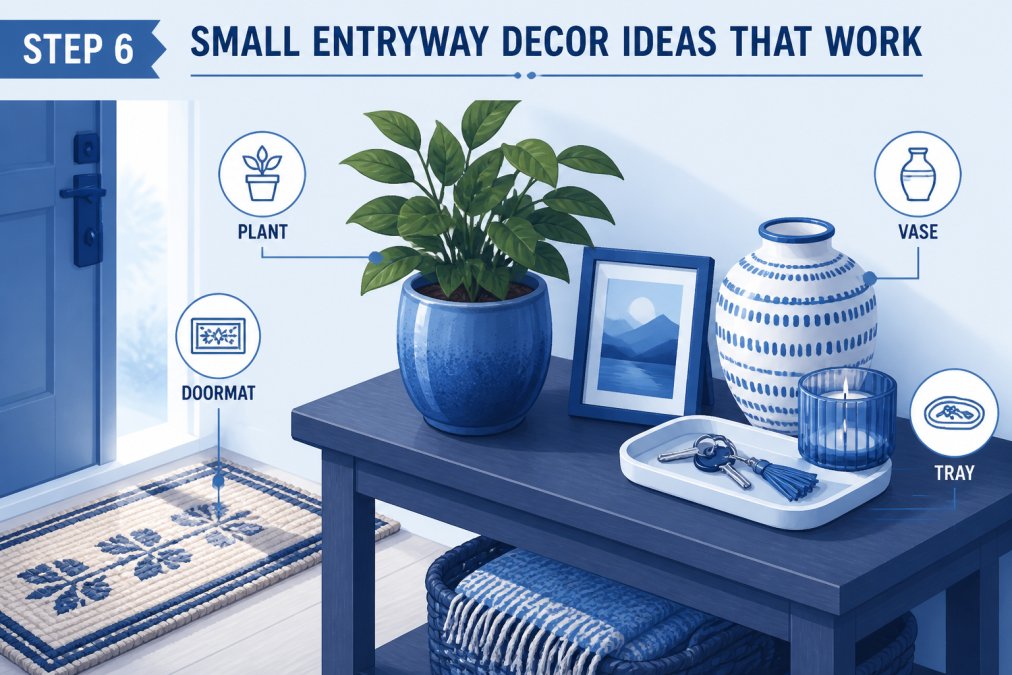
Potted plants add life, texture, and warmth to an entryway. A tall plant in the corner draws the eye upward and fills dead space, while smaller plants on a console table add greenery without overwhelming the area. Choose low-maintenance varieties if you're not a plant person, they still provide visual interest and improve air quality.
A welcome mat is both practical and decorative. It catches dirt from shoes, defines the entry point, and sets the tone for your home's personality. Choose a mat that complements your color palette and reflects your style, whether that's minimalist, playful, or elegant.
Decorative items on your console table should be intentional. A vase with fresh flowers, a decorative bowl for keys, a small stack of books, or a framed photo creates visual interest without clutter. Odd numbers (three items, five items) tend to feel more balanced than even numbers. Leave negative space on the table so it doesn't feel overcrowded.
A small piece of wall art or a gallery wall adds personality and visual interest. Keep it simple in a small space, one statement piece often works better than multiple items. Position artwork at eye level so it engages visitors immediately.
Step 7: Style Your Entryway with Texture, Scent, and Warmth
Texture layering creates visual depth and makes a space feel more sophisticated and inviting. Mix materials intentionally: natural wood from your console table, soft fabric from your bench cushion, woven texture from baskets, and smooth ceramic from a vase. This variety keeps the eye engaged and prevents the space from feeling flat or one-dimensional.
Rugs add warmth and define the entryway as a distinct zone within your home. A runner or small area rug anchors the space and provides a soft surface underfoot. Choose a rug that complements your color palette and can withstand foot traffic, natural fibers like jute or wool work well in high-traffic areas.
Scent is an often-overlooked element of entryway design. A subtle, welcoming fragrance, whether from fresh flowers, a diffuser, or a candle, creates an emotional connection the moment someone enters. Avoid overwhelming scents; you want guests to notice the aroma subconsciously, not be hit with a wall of fragrance.
Warmth comes from your color choices, lighting, and the materials you select. Warm wood tones, soft lighting, and natural textures all contribute to an inviting feeling. Cold, hard surfaces and harsh lighting make an entryway feel sterile and uninviting, no matter how stylish the décor.
At Caltucky Creations, we understand that an entryway reflects your home's personality. Our curated selection of home essentials, from unique console tables to textured baskets and decorative accents, helps you create a space that feels both welcoming and authentically yours. Every piece is chosen to balance style with function, so your entryway doesn't just look good; it works for your daily life.
Common Mistakes to Avoid When Styling Your Entryway
Many people overcomplicate their entryway by adding too many pieces at once. The result is a cluttered, visually overwhelming space that defeats the purpose of a welcoming entry. Start with essential furniture, a console table or bench, and add decor gradually. This approach lets you see what works and what doesn't before committing to more items.
Another common mistake is ignoring traffic patterns. Furniture positioned in the center of the foyer or blocking the natural flow of movement makes the space feel cramped and uninviting. Always consider how people move through the space before placing items.
Poor lighting is a frequent culprit in unwelcoming entryways. A single, harsh overhead light creates shadows and doesn't set a warm tone. Invest in layered lighting with dimmers so you can adjust the mood throughout the day.
Neglecting maintenance and durability is another pitfall. An entryway experiences high foot traffic and is exposed to dirt, moisture, and wear. Choose materials that can withstand this use, sealed wood, washable rugs, and durable storage solutions. A beautiful entryway that falls apart after six months isn't worth the investment.
Finally, many people fail to define the space as distinct from the rest of the home. An entryway should feel intentional and curated, not like an afterthought. Use color, lighting, furniture, and décor to create a clear transition from outside to inside, signaling to visitors that they're entering a special, welcoming space.
Creating a welcoming entryway doesn't require a large budget or design expertise. By following these seven steps, choosing your color palette, planning your lighting, adding functional storage, selecting a mirror and accent wall, arranging furniture thoughtfully, incorporating meaningful décor, and layering texture and warmth, you'll transform your foyer into a space that genuinely welcomes people into your home. The pieces you choose matter, which is why Caltucky Creations focuses on curating home essentials that combine style with lasting quality. Explore our collection of console tables, storage baskets, mirrors, and decorative accents to find the pieces that match your vision and bring your entryway to life.
Frequently Asked Questions
What should be in a welcoming entryway?
A welcoming entryway needs functional storage (coat rack, shoe cabinet), good lighting (sconce or pendant), a mirror to reflect light, comfortable seating or a bench, and curated decor like potted plants or a vase. The key is balancing form with function, each piece should serve a purpose while creating a warm first impression for guests.
How do you make a small entryway look inviting on a budget?
Focus on vertical storage to maximize space without clutter. Add a mirror to create visual interest and reflect light. Paint an accent wall in a warm color, hang a simple sconce for ambient lighting, and incorporate affordable statement pieces like a welcome mat or potted plants. These budget-friendly moves create spatial flow and warmth without expensive furniture.
What color works best for how to style a welcoming entryway?
Warm, neutral tones like soft white, cream, or warm gray create an inviting atmosphere. If you want more personality, consider muted earth tones or a soft sage green for your accent wall. The goal is a color story that feels calm and welcoming, avoid overly dark or cold shades that can make small entryways feel cramped or unwelcoming.
How do I know if my entryway pieces will work together as a cohesive look?
Start by choosing 2-3 colors for your color story and stick to them throughout. Select pieces with complementary textures (wood, metal, fabric) rather than matching everything exactly. Group items by function and style, if you curate decor thoughtfully, pieces naturally complement each other. When in doubt, a console table or entryway bench serves as a visual anchor that ties the space together.
This article was written using GrandRanker