

Table of Contents
- Step 1: Choose the Best Reading Nook Chair for Your Space
- Step 2: Layer in Reading Nook Lighting Ideas
- Step 3: Add Soft Textiles and Textural Layers
- Step 4: Organize Small Space Reading Nook Storage
- Step 5: Define Your Nook with a Rug and Side Table
- Step 6: Add Personal Decor and Styling Touches
- Step 7: Manage Acoustics and Create Your Reading Sanctuary
- Common Mistakes to Avoid When Styling Your Nook
Last Updated: August 13, 2026
Step 1: Choose the Best Reading Nook Chair for Your Space
Your seating choice determines whether the space becomes a sanctuary you actually use or furniture that sits empty. The best reading nook chair balances comfort, size, and style while fitting your room's layout and personal aesthetic.
An ergonomic reading chair supports your lower back, neck, and arms during extended reading sessions. Look for adequate cushioning, armrests at elbow height, and a seat depth that allows your feet to touch the floor comfortably. Lumbar support prevents slouching and back pain.
Size matters significantly. Measure your nook dimensions before shopping. An accent chair typically measures 28-32 inches wide, while a full armchair ranges from 32-40 inches. In tight spaces, a smaller wingback chair or cushioned bench delivers coziness without overwhelming the room.

Texture and upholstery influence both comfort and maintenance. Linen and cotton feel soft but show wear quickly. Velvet offers durability and luxurious texture. Leather ages beautifully and resists stains. At Caltucky Creations, we offer accent chairs in diverse fabrics that match your home's style while prioritizing comfort for marathon reading sessions.
Neutral tones like cream, gray, and soft taupe create a calming backdrop. Bold jewel tones add personality. Consider how the chair's color interacts with your walls and lighting, a dark chair in bright natural light becomes sophisticated, while the same chair in dim corners can feel cave-like.
Step 2: Layer in Reading Nook Lighting Ideas
Proper lighting transforms a reading nook into a functional, inviting space. Task lighting, the light you read by, differs from ambient lighting that sets mood. Most successful reading nooks use both layered together.
A floor lamp positioned beside your chair delivers focused task lighting without harsh shadows. Swing-arm floor lamps work particularly well in small spaces because the arm extends light exactly where you need it. Position the light source slightly behind and to the side of your reading position to minimize glare on pages.
Table lamps on a side table offer another approach. A lamp with a fabric shade diffuses light softly, while clip-on reading lights mount directly to your chair or headboard, ideal for renters.
Ambient lighting sets the nook's atmosphere. String lights create a whimsical, relaxing environment. Wall sconces add elegance while freeing up floor space. Dimmable overhead lights allow you to adjust brightness throughout the day.
A window-adjacent reading nook captures daylight for free. In winter months when daylight fades early, supplemental lighting becomes essential. Layer multiple light sources so you can adjust as seasons change.
Avoid harsh, bright white light that strains eyes. Warm white bulbs (2700K color temperature) create the cozy atmosphere most readers crave and signal relaxation to your brain.
Step 3: Add Soft Textiles and Textural Layers
Textiles transform a functional seating area into a genuine cozy reading nook. Throw pillows, blankets, and layered fabrics create the tactile comfort that makes readers want to settle in for hours.
Start with throw pillows in varying sizes and textures. Combine smooth linen with chunky knit, add velvet for luxury, and include patterned options that complement your color scheme. Pillows should feel inviting to touch.
A quality throw blanket draped over your chair's armrest serves practical and aesthetic purposes. Knit blankets offer breathable warmth for cool evenings. Woven throws in natural fibers work for warmer months. Faux fur blankets add luxe texture and coziness. Layer multiple blankets of different weights to create visual depth and practical options for varying temperatures.
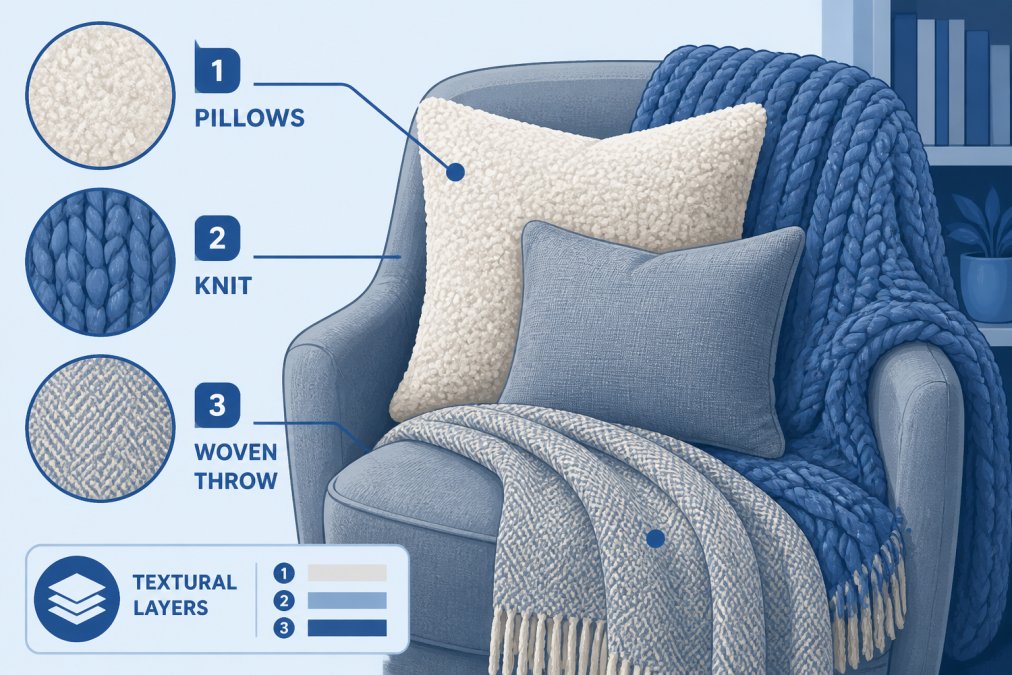
Cushions and seat pads add comfort to hard surfaces. A chair cushion in memory foam makes extended sitting more enjoyable. Window seat cushions transform a hard bench into an inviting perch. These pieces should coordinate with your throw pillows and blankets to create a cohesive look.
Caltucky Creations offers a selection of soft textiles, from chunky knit throws to plush pillows, designed specifically to build the layered, tactile comfort that makes a reading nook genuinely cozy.
Consider how different fabrics interact. Smooth velvet paired with chunky knit creates contrast. Linen combined with faux fur adds unexpected texture. Patterned pillows balanced with solid blankets prevent chaos.
Step 4: Organize Small Space Reading Nook Storage
Strategic storage keeps books and reading essentials organized while maintaining the cozy aesthetic.
Vertical storage maximizes limited floor space. Wall-mounted floating shelves above your reading chair create accessible storage without consuming square footage. Tall, narrow bookcases fit snugly into corners. Leaning shelves offer a casual look while holding surprising volume.
Built-in shelving, if your space allows, creates a permanent reading sanctuary. Shelves flanking a window seat or filling a corner alcove integrate storage seamlessly into the room's architecture.
Store only books you actively read or genuinely treasure. A small, carefully chosen collection displayed beautifully beats an overflowing pile. Group books by color, size, or genre. Spine-out shelving displays titles, while face-out shelving showcases particularly beautiful volumes.
Baskets and storage containers corral reading-related items: bookmarks, reading glasses, notebooks. Woven baskets in natural materials coordinate with cozy aesthetics. A small side table provides surface space for your current book and a beverage.
Magazine holders, vintage crates, or wall-mounted racks keep periodicals organized without consuming shelf space.
Step 5: Define Your Nook with a Rug and Side Table
A rug anchors your reading nook visually and physically, defining the space as a distinct zone. A well-chosen rug transforms a corner into a destination.
Size matters significantly. A small rug (4x6 feet) works for tight corners, while larger rugs (5x8 or 6x9 feet) create a more generous, defined space. The rug should extend at least partially under your chair so the space feels intentionally designed.
Color and texture coordinate with your overall aesthetic. A neutral rug provides a calm foundation. Patterned rugs add visual interest. Textured rugs in jute, sisal, or chunky wool contribute to the layered, cozy feeling. Avoid high-pile rugs that shed excessively; medium-pile wool or wool-blend rugs offer durability and comfort.
A side table completes the functional setup. A small round table (18-24 inches in diameter) fits snugly beside a chair. The table should be tall enough that your arm rests comfortably when seated, typically 20-24 inches high.
Table surfaces should accommodate your reading essentials: a beverage, your current book, reading glasses. Natural wood tables bring warmth. Metal frames offer industrial charm. Glass tops create a light, airy feel in small spaces.
The rug and table together create visual boundaries that make your reading nook feel intentional and separate from the rest of your room.
Step 6: Add Personal Decor and Styling Touches
Personal decor transforms a functional reading nook into a reflection of your personality and reading life.
Wall art above or beside your reading chair sets the mood. A large statement piece draws the eye and anchors the space. A gallery wall of smaller frames creates collected energy. Literary quotes, book cover art, or nature photography all work depending on your aesthetic.
Plants bring life and freshness to reading nooks. A trailing pothos cascades beautifully from a shelf above your chair. A tall snake plant adds vertical interest in a corner. Small succulents on your side table require minimal maintenance while adding color.
Decorative objects tell your story. A stack of your favorite books showcases what you love reading. A vintage globe, interesting bookends, or a small sculpture adds personality. Candles in soft scents create ambient coziness.
Lighting fixtures themselves become decor. A beautiful lamp base in ceramic, brass, or natural wood contributes to the aesthetic beyond its functional purpose.
Caltucky Creations offers home decor pieces designed to help you create a personalized reading sanctuary that reflects your style while maintaining the cozy atmosphere that makes reading restorative.
Choose pieces that genuinely speak to you rather than filling space for its own sake. A few meaningful pieces create a collected, curated look.
Step 7: Manage Acoustics and Create Your Reading Sanctuary
Sound management profoundly affects your ability to concentrate and relax. A truly restorative reading sanctuary requires attention to acoustic comfort.
Hard surfaces reflect sound, creating echoes and ambient noise. Soft furnishings absorb sound. Your throw pillows, blankets, and upholstered chair already contribute to acoustic management.
Curtains or heavy drapes over windows reduce outside noise while blocking light. In particularly noisy environments, acoustic panels disguised as fabric wall art can absorb sound without appearing institutional.
A small water fountain or white noise machine masks distracting background sounds. Many readers find gentle ambient noise more conducive to focus than complete silence. Noise-canceling headphones playing lo-fi music or nature sounds create a personal acoustic bubble.
Positioning matters. A reading nook tucked into a corner or alcove naturally feels more acoustically isolated. A bookshelf positioned as a partial wall creates acoustic separation while maintaining visual openness.
Consider the room's overall acoustic environment. Adding rugs, curtains, and soft furnishings throughout the room improves acoustic comfort for everyone.
Common Mistakes to Avoid When Styling Your Nook
Choosing style over comfort ranks as the most costly mistake. A beautiful chair that doesn't support your back properly becomes furniture you avoid using. Prioritize how the space feels over how it photographs.
Underestimating lighting needs creates a reading nook that strains your eyes. Relying solely on natural light leaves you unable to read during evening hours. Most readers need multiple lighting layers they can adjust based on time of day.
Overcrowding small spaces with too much furniture and decor makes the nook feel cramped rather than cozy. Curate deliberately, keeping only items that serve function or bring genuine joy. Empty space is breathing room that makes the nook feel intentional.
Ignoring ergonomics leads to physical discomfort that prevents extended reading sessions. Poor chair support and armrests at the wrong height create pain rather than pleasure.
Neglecting acoustic comfort undermines the sanctuary feeling. Persistent background noise prevents the mental escape that makes reading restorative.
Styling without considering your actual reading habits creates a beautiful but impractical space. Design around how you actually read, not an idealized version of yourself.
Failing to layer lighting creates spaces that feel either too dim or harshly bright. A combination of task lighting, ambient lighting, and natural light gives you flexibility to adjust throughout the day.
Creating a cozy reading nook requires thoughtful attention to comfort, functionality, and personal style. The steps outlined work together to create a genuine sanctuary rather than just a decorated corner.
At Caltucky Creations, we understand that a reading nook is more than furniture arrangement. It's a personal sanctuary where you escape into stories and ideas. Our curated collection of soft textiles, accent chairs, and home decor pieces helps you build a space that's both beautiful and genuinely comfortable. Quality pieces that prioritize both comfort and style transform how you experience reading. Continue shopping to discover the elements that will make your reading sanctuary uniquely yours.
Frequently Asked Questions
What makes a reading nook feel cozy?
A cozy reading nook combines three essential elements: comfort, proper lighting, and a sense of enclosure. Start with an ergonomic chair or window seat that supports your back during long reading sessions. Layer soft textiles like throw pillows and knit blankets to create textural depth. Add task lighting with a floor lamp or reading light positioned to reduce eye strain, and use ambient lighting to set a relaxing mood. Finally, define the space with a rug and consider adding a small ottoman or side table to complete your reading sanctuary.
How can I create a reading nook in a small apartment?
Small spaces benefit from vertical storage and strategic furniture placement. Use a corner with a window seat or compact accent chair as your foundation. Install built-in shelving or wall-mounted book storage above and beside your chair to maximize storage without taking up floor space. A narrow side table tucked beside your chair keeps essentials within reach. Define the nook with a small area rug to create visual separation. Keep the color palette minimal and cohesive to avoid overwhelming the space, and use a single focused reading light rather than multiple fixtures.
What's the best lighting for a reading nook?
Combine task lighting with ambient lighting for the most comfortable reading experience. A floor lamp or clip-on reading light positioned at a 45-degree angle behind or beside your shoulder prevents glare and reduces eye strain. Warm-toned bulbs (2700K color temperature) create a cozy atmosphere compared to harsh white light. Add soft ambient lighting with wall sconces or a small table lamp to establish mood without relying solely on your task light. If your nook is near a window, natural daylight during the day reduces the need for artificial lighting and enhances the cozy factor.
What are the absolute essentials for a reading nook?
Every reading nook needs four core elements: a comfortable seat (chair, window seat, or ottoman), proper lighting to reduce eye strain, soft textiles for comfort and coziness, and a small surface for holding books and beverages. Beyond these basics, add storage to keep your reading collection organized and accessible, a rug to define the space, and personal decor that reflects your style. Budget-friendly DIY options like repurposing a corner with cushions, using string lights for ambient lighting, and hanging floating shelves for book storage can create an effective nook without significant expense.
This article was written using GrandRanker