

Table of Contents
- Why Mixing Home Decor Styles Works
- How to Use the 80/20 Rule in Decorating
- Choosing a Primary and Secondary Style
- Mixing Modern and Vintage Furniture
- Balancing Textures in Home Decor
- Building Eclectic Interior Design Ideas Into Your Space
- Common Mistakes to Avoid When Mixing Styles
Last Updated: August 14, 2026
Why Mixing Home Decor Styles Works
The instinct to match everything perfectly is understandable. It feels safe. But a room where every piece comes from the same collection, the same era, the same design aesthetic often feels sterile and impersonal. Mixing home decor styles, on the other hand, transforms a space into something that actually reflects who you are.
The real power of mixing styles lies in creating visual interest without chaos. When you combine a modern sofa with a vintage wooden side table, or layer industrial metal accents with bohemian textiles, you're not being indecisive about your design direction. You're being intentional about creating a cohesive look that feels lived-in and curated rather than catalog-perfect.
What makes this work psychologically is the balance between familiarity and surprise. Your eye needs anchors, consistent elements that tie everything together. But it also needs moments of visual contrast to stay engaged. A room that's all one thing becomes invisible to you after a few weeks. A room where styles deliberately interact becomes a space you actually want to spend time in.
At Caltucky Creations, we understand that your home should tell your story, not someone else's design narrative. Our curated selection of home essentials is built around this principle: pieces that work individually but shine when thoughtfully combined with items from different eras and aesthetic traditions. The goal isn't to create a perfectly matched interior. It's to build a space that feels authentically yours.
How to Use the 80/20 Rule in Decorating
The 80/20 rule in decorating is straightforward: let one style dominate 80 percent of your space, then use the remaining 20 percent for accent pieces that introduce contrast and personality.
This framework prevents visual overwhelm while still allowing creative expression. If modern minimalism is your primary aesthetic, 80 percent of your room should reflect clean lines, neutral palettes, and uncluttered surfaces. The remaining 20 percent is where you introduce a vintage mirror, a bohemian throw pillow, or an industrial metal shelf. Those accent pieces become focal points precisely because they stand apart from the dominant style.
The math matters more than you might think. When the ratio tips toward 50/50, your space starts to feel confused. You're no longer mixing styles, you're just putting incompatible things in the same room. But when one style clearly leads, the secondary elements read as intentional choices rather than decorating mistakes.
Start by identifying your primary style. This should be the aesthetic that feels most natural to you, the one that would dominate if you had unlimited budget and time. Everything else becomes secondary. Your primary style might be transitional (a blend of traditional comfort with modern simplicity), minimalist, industrial, or eclectic. The specific label matters less than clarity about what you're building toward.
Once you've anchored 80 percent of your room in that primary direction, your secondary style choices become strategic. A bohemian accent chair in an otherwise modern room works because it's clearly outnumbered by the dominant aesthetic. The room still reads as modern, the bohemian piece is a deliberate flourish, not a competing design direction.
Choosing a Primary and Secondary Style
Your primary style should answer this question: if I could only choose one aesthetic direction for my space, what would it be? This becomes your throughline, the visual thread that connects everything.
Secondary styles work best when they share at least one design element with your primary aesthetic. If your primary style is industrial (exposed brick, metal fixtures, concrete), a secondary vintage style works because both embrace authenticity and raw materials. If your primary is modern, a secondary bohemian style can work if you focus on the bohemian elements that share modern values, like natural materials and organic shapes, rather than the maximalist, heavily patterned aspects of bohemian design.
The strongest mixing strategies create harmony rather than contrast for contrast's sake. This doesn't mean everything has to match. It means your choices should feel like they're in conversation with each other, not arguing.
Consider scale and proportion when selecting secondary pieces. If your primary style favors clean, geometric forms, a secondary piece should respect that visual language even if it introduces a different era or aesthetic. A vintage wooden chair with simple lines fits into a modern space. A heavily ornate Victorian chair probably doesn't, because it violates the proportion and scale expectations your primary style has established.
Your secondary style also works best when it's represented by accent pieces rather than major furniture. A secondary style becomes the focal point when it appears on your sofa, your bed, or your main wall. Keep secondary styles in accessories, smaller furniture pieces, and textiles. This maintains the visual hierarchy that makes mixed styles feel intentional.
Mixing Modern and Vintage Furniture
Mixing modern and vintage furniture creates a design dilemma for many people: how do you make pieces from different eras look like they belong together?
The answer is found in shared design principles rather than matching aesthetics. Modern and vintage pieces can coexist beautifully when they share similar proportions, materials, or color palettes. A sleek modern sofa in neutral gray pairs naturally with a mid-century wooden side table because both respect clean lines and natural materials. The sofa is contemporary, the table is vintage, but they're speaking the same visual language.
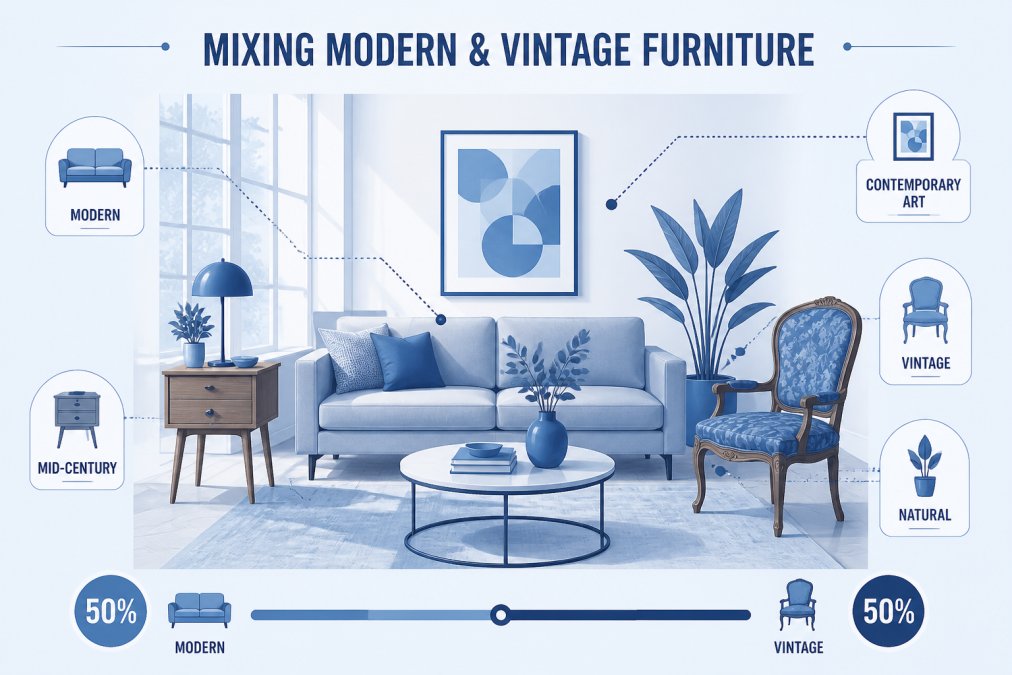
One common mistake is treating vintage pieces like museum artifacts that need to be preserved exactly as they were. Instead, think of them as design elements that can be refreshed. A vintage wooden dresser gains new life when paired with modern hardware, modern lighting above it, and contemporary art hung on the wall behind it. The piece maintains its vintage character while integrating into a modern room.
Material compatibility matters more than era compatibility. Vintage brass and modern brushed nickel don't naturally belong together. But vintage brass and warm wood tones work with modern pieces that echo those same materials. Look for vintage pieces that share material families with your modern furniture, wood with wood, metal with metal, or pieces that deliberately contrast in a way that feels intentional rather than accidental.
The scale and proportion principle applies strongly here. Oversized modern furniture can dwarf delicate vintage pieces, making the space feel unbalanced. Similarly, heavy ornate vintage furniture can overwhelm minimal modern pieces. When mixing eras, pay attention to the visual weight of each piece and how they relate spatially.
Balancing Textures in Home Decor
Texture is where many people struggle when mixing home decor styles. A room with too many textures feels chaotic. A room with no texture variation feels flat and lifeless.
The principle is simple: vary your textures, but in controlled ways. Smooth surfaces need rough ones nearby. Hard materials benefit from soft counterparts. This isn't about having every texture represented equally. It's about creating tactile variety that engages the eye and makes a space feel layered.
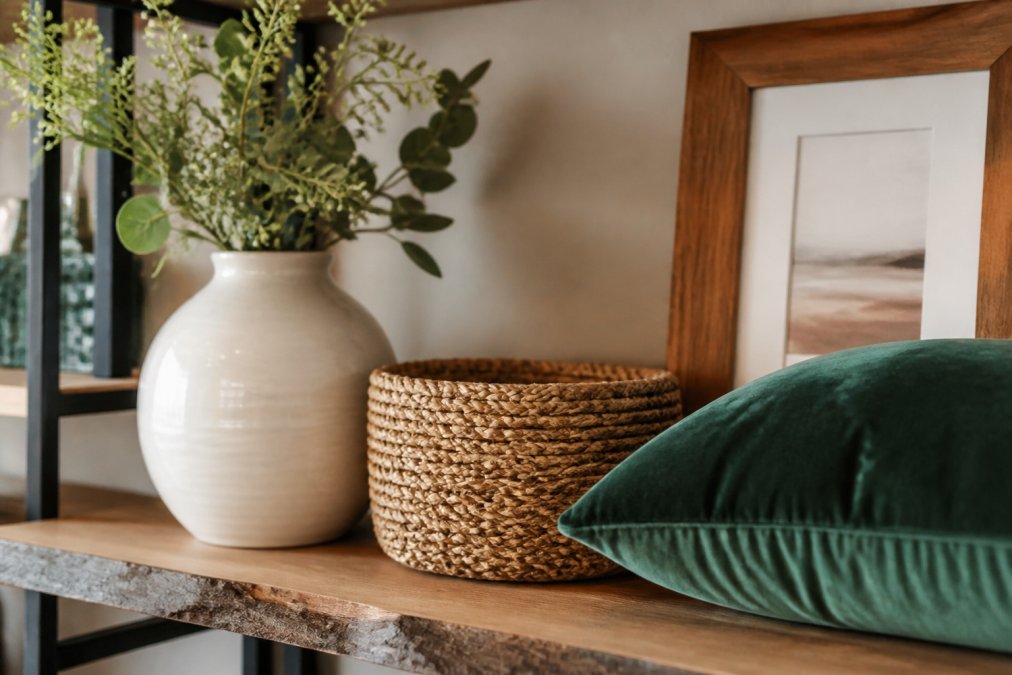
Start with your largest surfaces, walls, flooring, major furniture pieces. These should establish your base texture. If your walls are smooth drywall and your floors are hard wood, you've already created a fairly neutral textural foundation. Now layer in complexity.
Upholstery introduces texture naturally. A linen sofa feels different from a leather sofa, which feels different from a velvet one. But here's where people often go wrong: they assume they need to match textures across the room. You don't. A velvet sofa can absolutely share a room with a linen chair, a leather ottoman, and a woven rug. The variety is what makes the space interesting.
Textiles are your easiest texture tool. Throw pillows, blankets, area rugs, and curtains introduce texture with minimal commitment. Layer a smooth linen pillow next to a chunky knit one. Add a woven throw over a smooth sofa. These combinations create visual and tactile interest without overwhelming the space.
Hard materials like wood, metal, and glass provide grounding texture. A room that's all soft fabrics feels insubstantial. A room that's all hard surfaces feels cold. The balance between soft textiles and hard materials is what creates a space that feels both inviting and intentional.
Avoid texture monotony. A room where everything is smooth (smooth walls, smooth furniture, smooth accessories) feels sterile. A room where everything is rough (rough walls, rough fabrics, rough finishes) feels chaotic. The sweet spot is roughly 60 percent neutral texture with 40 percent variation.
Building Eclectic Interior Design Ideas Into Your Space
Eclectic design gets a bad reputation for being chaotic, but true eclecticism is actually highly curated. It's not about throwing everything together. It's about selecting pieces that speak to you personally while maintaining enough visual coherence that the space still reads as intentional.
Start with a color palette. This is your biggest tool for creating cohesion in an eclectic space. If you're mixing modern, vintage, and bohemian pieces, a consistent color palette ties everything together. You might choose a neutral base (creams, grays, whites) with accent colors (deep jewel tones, warm earth tones). Every piece you add, regardless of its style or era, should reference this palette.
Your throughline, the visual thread that runs through the entire space, becomes even more important in eclectic design. This might be a material (wood), a color family (warm tones), a design principle (organic shapes), or even a theme (natural materials). Whatever your throughline is, every piece should connect back to it somehow.
Eclectic interior design ideas work best when they're anchored by statement pieces. A large vintage mirror, an interesting light fixture, a bold piece of art, these become the focal points that justify the eclecticism. Smaller pieces then support these statements rather than competing with them.
One practical approach: collect pieces you genuinely love, then look for the common threads. You might notice all your favorite pieces share a natural material quality, or a certain color temperature, or a specific era. These shared characteristics become your design framework. You're not imposing a style on yourself. You're discovering the style that already exists in your preferences.
Caltucky Creations offers curated pieces that work within eclectic frameworks precisely because they're selected with this principle in mind. Rather than buying entire collections that force you into one aesthetic, you can build a personalized space by selecting individual pieces that align with your emerging design narrative.
Common Mistakes to Avoid When Mixing Styles
The first mistake is mixing styles without a clear primary direction. When everything is secondary, nothing is primary, and the space loses coherence. You end up with a room that feels like you couldn't decide rather than a room that deliberately combines aesthetics.
The second mistake is ignoring scale and proportion. A small vintage side table next to an oversized modern sectional creates visual imbalance. The pieces aren't having a conversation, they're competing for attention in incompatible ways. Always consider how the visual weight and physical size of pieces relate to each other.
Many people also underestimate the importance of color consistency. You can mix styles successfully, but if your color palette is all over the place, the space will feel chaotic regardless of how well-chosen the individual pieces are. A cohesive color palette is what makes eclectic spaces feel intentional rather than accidental.
Another common error is introducing too many secondary styles at once. Mixing two styles is manageable. Mixing three or four simultaneously usually creates visual overwhelm. Stick with one primary style and one clearly secondary style until you have confidence in how they interact.
People also make the mistake of mixing styles at the same scale. If you have a large vintage piece and a large modern piece competing in the same space, they're fighting for dominance. The more successful approach is to have one large statement piece in your primary style and introduce secondary styles through smaller accent pieces.
Finally, avoid mixing styles without considering material compatibility. A sleek modern glass table with heavy ornate wooden chairs creates a visual disconnect that feels uncomfortable rather than intentional. Look for shared materials or deliberately contrasting materials that work together (like natural wood with industrial metal).
The goal isn't perfection. It's creating a space that feels authentically yours while maintaining enough visual coherence that the mixing reads as intentional rather than indecisive. When you understand these principles, you can confidently combine pieces from different eras, aesthetics, and design traditions into a cohesive look that tells your story.
Your home should reflect who you are, not what a designer thinks you should like. Mixing home decor styles is how you build a space that's both visually interesting and genuinely yours. The pieces you choose from Caltucky Creations, our fresh and stylish home essentials designed for comfort and unique flair, work because they're selected with this principle in mind. Whether you're furnishing your first apartment or refreshing an established space, you can create a cohesive look by understanding how to balance primary and secondary styles, use the 80/20 rule, and layer textures thoughtfully. Start with one clear primary aesthetic, add secondary elements that share design principles with it, and let your personal preferences guide which pieces you bring into your space. Continue shopping to find the pieces that speak to your emerging design vision.
Frequently Asked Questions
What is the 80/20 rule in decorating?
The 80/20 rule means 80% of your space should feature your primary design style, while 20% introduces secondary styles or accent pieces. This ratio keeps your room cohesive while allowing creative mixing. For example, if modern is your main style, use modern furniture and finishes for most pieces, then add vintage or eclectic accents through artwork, throw pillows, or lighting. This formula prevents visual chaos and makes mixing home decor styles feel intentional rather than random.
How do you mix decor styles without making a room look messy?
Use a consistent color palette as your anchor, choose a dominant style to ground the space, and introduce secondary styles through smaller accent pieces rather than large furniture. Repeat design elements like texture, material, or color across different style pieces to create visual connections. Limit yourself to two or three styles maximum, and ensure each piece serves a purpose in your overall design. Editing ruthlessly is key, remove items that don't contribute to your cohesive look.
What are common mistakes when mixing interior design styles?
The biggest mistakes are trying to blend too many styles at once, ignoring color harmony, and using equal amounts of competing styles instead of establishing a clear hierarchy. Avoid mixing styles without a throughline or connecting theme, as this creates visual overwhelm. Don't overlook scale and proportion, pairing a massive statement piece with tiny accents creates imbalance. Finally, resist the urge to include every piece you love; curating your selections ensures a cohesive home that reflects your personal aesthetic rather than looking like a showroom clearance sale.
How do I create a focal point when mixing different design styles?
Choose one statement piece that embodies your primary style, then build secondary styles around it. This focal point anchors the room and gives your mixed styles a reason to exist together. You can create contrast by introducing an 'odd' piece, like a vintage rug in a modern room or an industrial shelving unit in a bohemian space, that draws the eye and adds personality. Ensure your focal point uses your dominant color palette so it feels intentional rather than out of place, and layer complementary textures and materials around it to create visual interest.
This article was written using GrandRanker