

Table of Contents
- The Fiber Math Behind Cotton Blend Hoodies That Outlast the Rest
- Cotton vs Polyester Hoodie Durability: The Honest Breakdown
- Shrinkage, Shape Retention and Pilling: Where Blends Quietly Dominate
- Breathability, Moisture-Wicking and Thermal Regulation in Real Life
- How to Wash Graphic Hoodies So the Print Outlives Your Phone
- Microplastics, Layering and the Stuff Generic Hoodie Articles Skip
- Conclusion: Buy Blends, Wash Smart, Keep the Joke Alive
- Frequently Asked Questions
Last Updated: September 12, 2026
The Fiber Math Behind Cotton Blend Hoodies That Outlast the Rest
Here's the uncomfortable truth about why cotton blend hoodies last longer: it's not magic, it's math. The exact ratio of cotton to polyester in a hoodie's fiber composition determines almost everything about how it wears, washes and survives your laundry pile. This guide from Caltucky Creations breaks down the textile science without the textbook energy.
A cotton blend hoodie is a sweatshirt made from a yarn that combines natural cotton fibers with synthetic polyester fibers, typically in a 50/50 or 80/20 ratio, to balance softness with structural stability. Pure cotton feels great but shrinks and pills. Pure polyester holds shape but feels like a gym bag. Blends split the difference.
Fiber Composition: What 50/50 and 80/20 Ratios Actually Mean
A 50/50 blend splits cotton and polyester evenly. The result is a balanced comfort profile: reasonable softness, strong abrasion resistance, and dependable shape retention across many wash cycles. Most heavy fleece hoodies land here.
An 80/20 blend leans cotton-heavy. You get a softer hand feel and better breathability, but slightly less tensile strength and faster pilling under friction. For everyday wear, 50/50 is the workhorse; 80/20 is the couch companion.
Cotton vs Polyester Hoodie Durability: The Honest Breakdown
Cotton wins on comfort and breathability. Polyester wins on tensile strength, wrinkle resistance and drying time. When you blend them, the polyester fibers act like rebar inside the cotton matrix, holding the garment's shape while the cotton keeps it wearable.
That's the whole durability argument in one sentence, and it's why cotton vs polyester hoodie durability isn't really a rivalry. It's a partnership.
Tensile Strength, Abrasion Resistance and Why Blends Win
| Property | 100% Cotton | 100% Polyester | 50/50 Blend |
|---|---|---|---|
| Tensile strength | Moderate | High | High |
| Abrasion resistance | Low | High | High |
| Hand feel | Soft | Slick | Soft-soft |
| Shrinkage resistance | Poor | Excellent | Good |
| Breathability | Excellent | Poor | Good |
| Pilling tendency | High | Low | Low-moderate |
According to CottonWorks fiber properties reference, cotton's abrasion resistance sits well below synthetic fibers, which is exactly why blending extends garment longevity.
Shrinkage, Shape Retention and Pilling: Where Blends Quietly Dominate
Blends dominate shrinkage resistance because polyester doesn't absorb water the way cotton does. Fewer swollen fibers mean less contraction in the dryer. Shape retention follows the same logic: synthetic fibers spring back, natural fibers relax.
Pilling is the sneaky one. It happens when short fibers work loose and ball up under friction, usually at the underarms and cuffs. A tight blended yarn traps those fibers better, so a quality cotton blend hoodie often outlasts a pure cotton one by a wide margin in the pilling department.
Breathability, Moisture-Wicking and Thermal Regulation in Real Life
Most hoodie guides stop at "cotton breathes, polyester wicks" and call it a day. That's like saying "cars have wheels", technically true, completely useless when you're trying to figure out why your back is sweaty on a 40-degree walk. Let's actually explain the physics.
The Physics of Heat and Moisture in a Hoodie
Cotton fibers are hollow, twisted tubes (cottonworks.com). That structure lets air pass through and absorbs water vapor into the fiber itself, up to about 7% of its own weight before it even feels damp. The trade-off: once cotton is saturated, it stays wet, and wet cotton conducts heat away from your body roughly 25 times faster than dry cotton. That's the science behind the classic "cotton kills" warning in outdoor circles.
Polyester fibers are solid, smooth rods. They don't absorb water, they move it along the surface through capillary action, which is why polyester dries fast. But because polyester doesn't absorb moisture, it also doesn't release heat well. It traps warmth against your skin, which is great for a winter layer and miserable for a summer walk.
A cotton-poly blend does something neither fiber can do alone: the cotton absorbs some moisture for comfort, while the polyester channels the rest away and keeps the fabric from collapsing into a wet rag. That's why a 50/50 blend hoodie feels dry-ish after a brisk walk while a 100% cotton hoodie feels like you fell in a lake.
What This Means for Real-Life Wear
Here's the practical breakdown:
- Cold-weather layering: A blend traps warm air in the fleece loft while letting some vapor escape. Pure cotton traps heat too, but once you sweat, it stays cold and clammy. Pure polyester traps heat and odor, you'll be warm and smell like a gym locker.
- Indoor wear: Blends win because they don't overheat you the way pure polyester does. The cotton content regulates temperature; the polyester keeps the shape.
- Active wear (dog walks, errands, chasing toddlers): A blend with a higher polyester content (60/40 or 50/50) wicks better. An 80/20 cotton-heavy blend is softer but holds more sweat.
The GSM Factor Nobody Talks About
Fabric weight, measured in grams per square meter (GSM), matters as much as fiber ratio. Most graphic hoodies land between 250 and 400 GSM. A 300 GSM 50/50 blend will outlast and out-comfort a 250 GSM 80/20 blend every time, because there's simply more fabric to absorb friction and hold its shape. Heavier isn't always better, a 400 GSM hoodie is basically a wearable blanket and you'll cook in it indoors, but if durability is the goal, don't ignore the weight number on the spec sheet.

Thermal Regulation: The Short Version
A cotton blend hoodie lasts longer partly because it manages heat and moisture better than either pure fiber. Less sweat means less fiber degradation. Less heat trapping means you wear it more often without wanting to rip it off. And a hoodie you actually wear is a hoodie that earns its keep, which is the whole point of buying one with a joke on the front.
How to Wash Graphic Hoodies So the Print Outlives Your Phone
Turn it inside out, wash cold, and skip the dryer. That's the short version, and it works for both the fabric and the DTG printing on the front. Heat is the enemy of both cotton fibers and printed graphics.
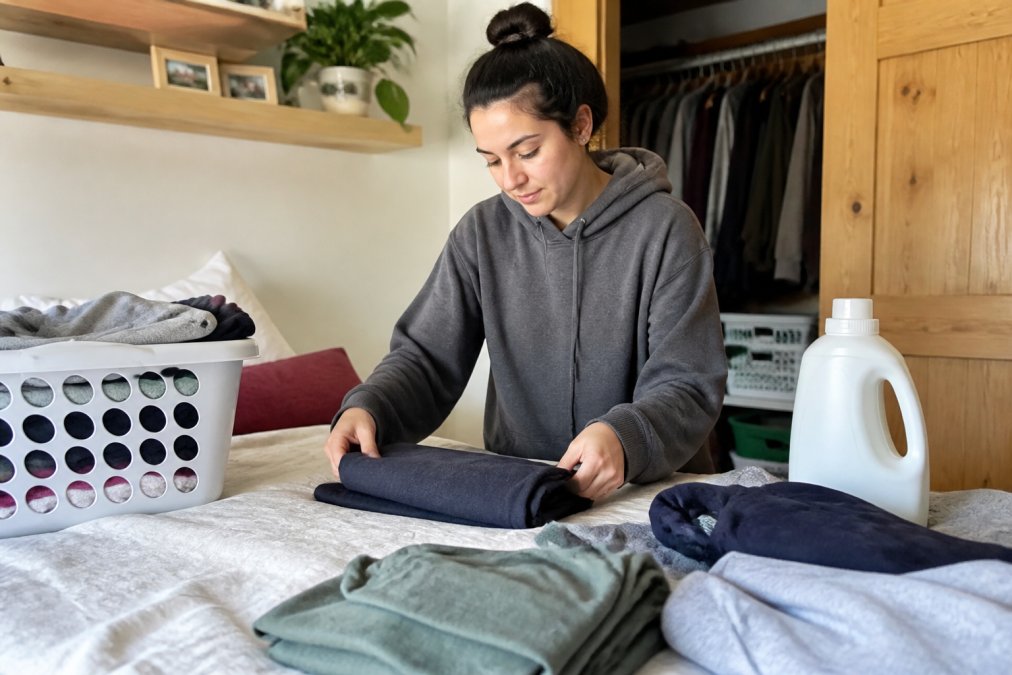
A practical routine:
- Turn the hoodie inside out before washing
- Use cold water on a gentle cycle
- Skip fabric softener, which coats fibers and dulls prints
- Hang dry or tumble on low
- Wash graphic hoodies separately from towels and jeans
The FTC care labeling rule requires manufacturers to list washing instructions, so check the tag rather than guessing. Following it is the single easiest way to protect both textile integrity and your favorite joke.
Microplastics, Layering and the Stuff Generic Hoodie Articles Skip
Every hoodie article on the internet tells you blends are durable. Almost none of them tell you what that durability costs, or how a blend actually behaves when you wear it under a jacket. Let's fix that.
The Microplastic Trade-Off (Yes, It's Real)
Polyester sheds. Every wash cycle releases tiny synthetic fibers, called microfibers, into the wastewater stream. A single load of synthetic-blend laundry can shed hundreds of thousands of microfibers, and those fibers are small enough to pass through standard wastewater treatment. They end up in rivers, oceans, and eventually the food chain. This isn't a reason to swear off blends forever, but it's a real trade-off that generic "blends are better" articles conveniently skip.
The good news: you can cut shedding dramatically with a few simple habits.
- Wash less often. Spot-clean and air out between wears. A hoodie doesn't need a full wash after one dog walk.
- Use a microfiber-catching laundry bag. These bags trap shed fibers before they hit the drain. They're widely available and cheap.
- Wash cold on a gentle cycle. Heat and agitation both increase fiber breakage.
- Air-dry when you can. Dryer lint is literally your hoodie disintegrating. Less dryer time means less shedding and a longer-lasting garment.
- Choose higher-quality blends. Tightly spun yarns shed less than loose, cheap ones. A well-made 50/50 blend will outlast and out-shed a bargain-bin version.
Layering Performance: The Friction Factor
Here's something no competitor covers: how a hoodie behaves as a layer. When you wear a hoodie under a jacket, two things happen, friction and moisture transfer.
Pure cotton against a nylon jacket creates high friction. The cotton fibers grab and pill against the synthetic shell, and the hoodie bunches up every time you move. Pure polyester against a jacket slides easily but traps sweat between the layers, leaving you clammy.
A cotton-poly blend hits the sweet spot. The polyester content reduces friction against outer layers, so the hoodie stays put without bunching. The cotton content manages moisture so you don't feel like you're wearing a plastic bag under your coat. That's why blends are the go-to mid-layer for anyone who's ever been stuck in a cold car or a drafty office.
What to Look For
If layering matters to you, aim for a 50/50 or 60/40 blend with a smooth exterior finish. Brushed fleece interiors feel great against skin but can pill faster under friction. A tighter knit on the outside means less pilling and smoother layering.
The Bottom Line
Blends last longer because they balance fiber strengths, but they're not free of trade-offs. Microfiber shedding is real, and layering performance depends on fiber ratio and finish. Knowing both lets you buy smarter, wash smarter, and keep your favorite hoodie out of the landfill a little longer. And honestly, a hoodie with a good joke on it deserves to stick around.
Conclusion: Buy Blends, Wash Smart, Keep the Joke Alive
A hoodie is only as funny as it is wearable, and a cracked print on a shrunken body kills the bit fast. Blended fabric keeps the shape, the color fastness and the punchline intact through years of wash cycles.
At Caltucky Creations, the Unisex Heavy Blend Hooded Sweatshirt is built on exactly that cotton-poly foundation, so your favorite design survives long enough to become a personality trait. Our Three-Panel Fleece Hoodie and Candy Ghost Halloween Crewneck follow the same logic: soft basics that hold up wash after wash.


Get started with Caltucky Creations and find a hoodie worth keeping around long enough to annoy your friends with the same joke every winter.
Frequently Asked Questions
Are 100% cotton hoodies worth it?
They're soft and breathe well, but 100% cotton hoodies tend to shrink more, wrinkle faster and lose shape after repeated wash cycles. A cotton blend hoodie pairs that natural softness with synthetic fibers for better shape retention and shrink resistance. If you want a hoodie that still fits after a year of laundry days, a blend is the safer bet.
Is 50% cotton 50% polyester good for a hoodie?
Yes. A 50/50 blend is one of the most common hoodie fabric ratios because it balances comfort and durability. The cotton gives you a soft hand feel and breathability, while the polyester adds tensile strength, abrasion resistance and moisture-wicking. It also handles DTG printing well, so graphic designs stay crisp wash after wash.
Does polyester make a hoodie shrink less?
Polyester fibers don't absorb water the way cotton does, so they resist shrinking during washing and drying. That's why cotton blend hoodies with a higher polyester percentage hold their size better over time. A 50/50 or 60/40 blend typically shrinks far less than 100% cotton, especially if you wash cold and tumble dry low.
How do I keep my graphic hoodie print from cracking?
Turn the hoodie inside out before washing, use cold water on a gentle cycle, and skip the dryer or use low heat. High heat breaks down the DTG print bond and speeds up pilling on the fabric surface. Following these how to wash graphic hoodies basics keeps both the joke and the fabric intact for years.