

Table of Contents
- Why Hoodies Eat Your Closet (and Why Folding Beats Hanging)
- Prep Your Hoodie Before You Fold Hoodies: Wash, Dry, Smooth
- The File-Folding Method: Vertical Storage That Actually Works
- The Rectangle Fold: The Standard, Symmetrical Go-To
- How to Fold Hoodies With the Hood Tuck (Goodbye, Lumpy Shelf)
- How to Roll Hoodies for Travel Without Wrecking the Print
- Maintaining Hoodie Print Quality While Folded and Stored
- Accessibility and Material Notes for Every Fold
- Frequently Asked Questions
Last Updated: September 14, 2026
Why Hoodies Eat Your Closet (and Why Folding Beats Hanging)
If you want to know how to fold hoodies to save space, the short answer: fold them flat, tuck the hood and sleeves in, then store them upright or in a tight rectangle. Hanging a hoodie stretches the shoulders until it looks like it gave up on life.
A single heavy fleece hogs the same rail space as three shirts, and hanging it long-term pulls the shoulders out of shape (cleaninginstitute.org). Folding wins: it keeps the shape, stacks flat, and lets you see what you own.
Once you pick a technique, a drawer that held four hoodies can hold eight or more. Below, five methods, from the file-folding trick to the travel roll, so you can stop playing hoodie Jenga every morning.
Prep Your Hoodie Before You Fold Hoodies: Wash, Dry, Smooth
Start with a clean, fully dry hoodie on a flat surface: zippers closed, hood flat, wrinkles smoothed before you fold a single sleeve.
Skipping this is the number one reason folded hoodies look like they were stored in a gym bag. Folding straight from the dryer while warm and damp traps moisture, encourages mildew, and sets creases that never come out (cleaninginstitute.org).
- Wash inside out on cold to protect any printed design
- Tumble dry low or hang until just dry, never hot
- Lay it flat and smooth the fabric with your hands
- Close the zipper so the front stays symmetrical
The care label guidance from the American Cleaning Institute is worth a glance if you're unsure about a specific fabric blend. For graphic hoodies, keeping the print facing inward during washing and drying does most of the heavy lifting for long-term garment care. Prep takes about 30 seconds. It saves you from re-folding everything later.
Prep Changes by Fabric Type
Here's the part most guides skip: prep depends on fabric. The same wash-and-dry routine doesn't behave the same on every hoodie.
- Heavy cotton fleece: Holds a fold beautifully but shrinks and stiffens under high heat. Dry on low until barely damp, then lay flat to finish, a hair of residual softness helps it drape into the fold.
- Cotton-poly blends: More wrinkle-resistant and faster-drying, but prone to static cling. A quick shake and a 30-second rest on the flat surface lets the static dissipate.
- Fleece and sherpa-lined hoodies: They shed lint and trap air, which is why they feel cozy and why they're a pain to compress. Brush the nap in one direction before folding so the pile lies flat instead of bunching at the seams.
The Warm-Fold Trap
Pull a hoodie out of the dryer and fold it immediately, and you're folding heat into the fabric. As it cools, the fibers set in whatever shape you left them, great if you nailed the fold, terrible if you didn't. Let it reach room temperature on a flat surface first.
One more prep habit: check the pockets. A hoodie folded with a phone, a pen, or last week's gas station receipt develops a weird bulge that never presses out. Empty them, then fold.
The File-Folding Method: Vertical Storage That Actually Works
File-folding means folding a hoodie into a compact rectangle, then standing it upright so you see the front edge like a file folder. It's the single best method for drawer storage.
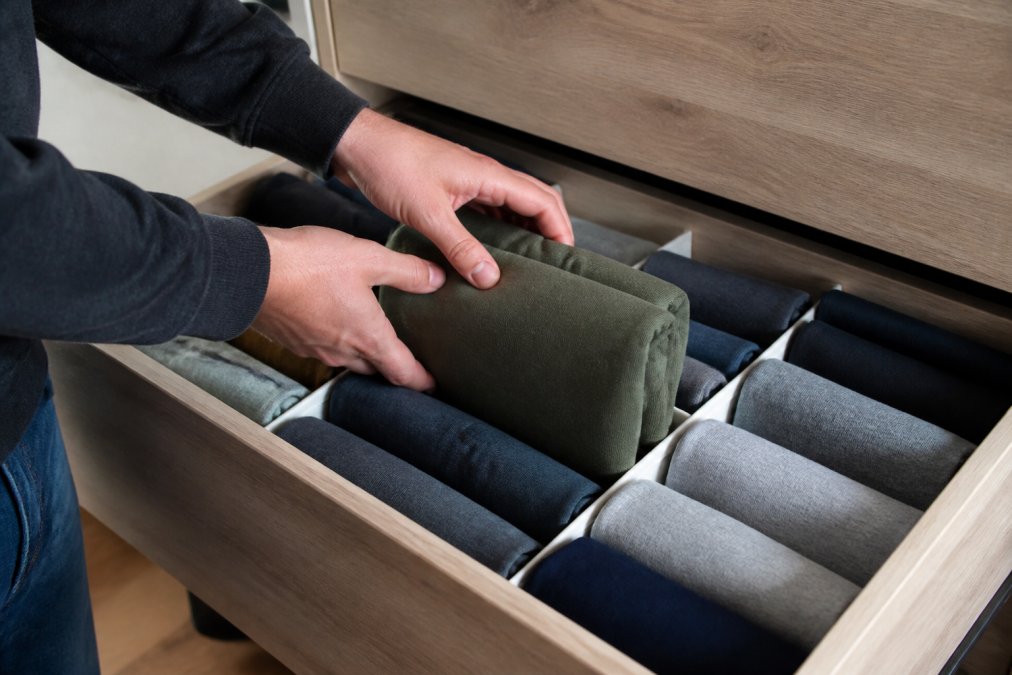
Here's how to do it:
- Lay the hoodie face down and fold both sleeves in toward the center
- Fold the hood down flat against the back
- Fold the bottom hem up to the shoulders, creating a rectangle
- Flip it so the folded edge faces up, then stand it vertically in the drawer
The payoff is real: you pull one hoodie out without disturbing the rest, and you see every design at a glance instead of digging. Add drawer dividers and the system stays put.
The Rectangle Fold: The Standard, Symmetrical Go-To
The rectangle fold is the classic technique: fold the hoodie into a neat, symmetrical rectangle that stacks flat on a shelf or in a drawer. It's the go-to when you want a tidy stack and don't have dividers.
Lay the hoodie flat, face down. Fold each sleeve in at the shoulder so they lie parallel to the body. Fold the hood back so it doesn't bunch at the neck. Then fold the bottom third up, and the top third down, or simply fold it in half once for a larger rectangle.
The result is a stackable, crease-free block. The catch: a tall stack of bulky fabric gets top-heavy and topples, so keep stacks to four or five hoodies max with the heaviest at the bottom. It pairs well with shelf storage.
How to Fold Hoodies With the Hood Tuck (Goodbye, Lumpy Shelf)
The hood tuck solves the lumpy shelf problem: fold the hood inward first so it becomes part of the rectangle instead of a bump on top. Left out, the hood adds a thick mound that makes stacking impossible. Tucked in, it disappears into the fold.
- Fold the hood flat against the back of the hoodie
- Fold the sleeves in over the hood to lock it in place
- Complete your rectangle or file fold as normal
A sleeve tuck over the hood does double duty: it holds the hood down and keeps the bundle compact. If your hood is extra thick, fold it in half before tucking.
How to Roll Hoodies for Travel Without Wrecking the Print
Rolling is the best way to pack a hoodie for travel: it compresses the fabric, resists wrinkles, and is gentler on a printed design than a hard crease.
Here's the roll:
- Lay the hoodie face down and smooth it out
- Fold both sleeves in toward the center
- Fold the hood down flat
- Starting at the bottom hem, roll upward tightly and evenly
- Tuck the rolled bundle into your bag seam-side down
Rolling squeezes out air, so a rolled hoodie takes up less room than a folded one in a suitcase. The one thing nobody tells you: roll from the bottom, not the top, so the hood ends up on the outside and cushions the print. For a heavier hoodie, roll it last and place it against the bag's spine.
Maintaining Hoodie Print Quality While Folded and Stored
Fold graphic hoodies with the print facing inward, and store them in a cool, dry place away from direct sunlight. That single habit does more for print longevity than any special product. Prints crack when creased along the same line for months or exposed to heat and light. To protect yours:
- Fold so the printed area sits on the inside of the fold, never on a sharp crease
- Avoid stacking heavy items on top of a printed hoodie
- Keep long-term storage cool and dark, and skip vacuum bags that crush the print
- Rotate your hoodies so no single one stays folded in the same spot for a year
For long-term storage, a breathable cotton bag beats a sealed plastic bin, which traps moisture. Storing a hoodie for a full season? Fold it loosely, add a cedar block for pests, and check it once in a while. Textile maintenance is mostly about avoiding heat, light, and pressure, folding smart handles all three.
If you want a hoodie worth protecting, Caltucky Creations makes soft-style basics with original funny designs that hold up wash after wash. Grab one of our Unisex Heavy Blend Hooded Sweatshirts and give it the fold it deserves.

Accessibility and Material Notes for Every Fold
Most folding guides assume you're standing at a table with two fully mobile hands and a hoodie made of one mystery fabric. Real life is messier, so here's how to fold when your body has limits and when your fabric has opinions.
Folding With Limited Mobility or Dexterity
If you fold seated, have limited hand strength, or deal with joint pain, the standard stand-and-flip methods can be genuinely painful. A few adjustments make every fold here doable from a chair:
- Work at chest height. A table, counter, or ironing board at chest height means less bending and less reaching. Folding on a bed or the floor forces you to lean, which is where most of the strain comes from.
- Use the file fold as your default. It needs the fewest big lifting motions, you fold in place and slide the bundle upright rather than flipping and stacking.
- Skip the flip. Fold the hoodie so the finished edge already faces you, then slide it upright. Same result, one less motion.
- Let gravity help. Lay the hoodie near the edge of the table and let the sleeve hang, then fold it up onto the body. You're guiding fabric instead of wrestling it.
- Use a folding board if grip is the issue. A simple plastic folding board gives you rigid edges to fold against, so you're not creasing soft fabric with tired hands. Bulky fleece may need a looser final fold.
- Sit for the roll. The travel roll is easier seated, roll toward yourself on a table and use your body weight instead of hand strength to compress.
A common pattern among people who fold seated: prep everything first (all hoodies washed, dried, and laid out), then fold in one batch. Fewer position changes, less fatigue.
Material-Specific Folding: Match the Method to the Fabric
The fabric in your hoodie decides which fold works, how tight you can go, and how long the fold holds. Here's how to match them up:
| Fabric Type | Best Fold | Roll Tightness | Watch Out For |
|---|---|---|---|
| Heavy cotton fleece | Rectangle or file fold | Loose roll only | Resists tight rolling; creases set deep |
| Cotton-poly blend | File fold | Medium roll | Static cling during folding |
| Fleece / sherpa-lined | Hood tuck + rectangle | Avoid rolling | Nap bunches at seams; very bulky |
| Technical / performance | Loose file fold | Loose roll | Shine along sharp fold lines over time |
| Thin lightweight blend | File fold | Tight roll | Packs small but wrinkles easily |
A few rules of thumb behind that table:
- Heavy fabrics hold a fold but hate a tight roll. An 8-9 oz fleece hoodie will fight you if you try to roll it as tight as a t-shirt. Roll it loose, or use the rectangle fold and accept the bulk.
- Thin fabrics roll tight and pack small but crease easily, so they're better for travel than long-term drawer storage.
- Technical blends are the divas. They resist wrinkles, which sounds great until you store one compressed for six months and find a permanent shine line down the sleeve. Fold these loose and rotate them.
- Lined hoodies are their own category. Sherpa and fleece linings add volume you can't compress away. The hood tuck method works best here because it flattens the bulkiest part.
The Space Math, Roughly
A loose pile of hoodies uses mostly horizontal space and stacks height on height, so a typical drawer holds maybe four before it won't close. File-folded and stood upright, the same drawer commonly holds roughly twice as many, because you're using the drawer's vertical depth instead of piling upward. Rolled for travel, a hoodie compresses to noticeably less volume than a flat fold, which is why rolling wins in a suitcase even though it's the worst choice for a drawer.
Exact numbers depend on your drawer, your hoodie weight, and how ruthless you are about the fold. But the direction is always the same: vertical beats horizontal, and rolled beats folded when you're short on cubic inches.
Frequently Asked Questions
How do I fold hoodies to maximize space?
Use the file-folding method: fold the hoodie into a compact rectangle, then stand it upright in a drawer or on a shelf so you see the front edge instead of a stack. This vertical storage lets you fit more hoodies in the same footprint and pull one out without toppling the rest. For bulky fabric, roll instead of fold to squeeze out extra air and save even more room.
Is it better to roll or fold hoodies?
It depends on where they're going. For everyday drawer storage, folding with a file-fold or rectangle fold keeps hoodies crease-free and easy to grab. For travel packing, rolling hoodies compresses bulky fabric and prevents deep creases. If you're short on space at home, rolling also works in deep drawers. Try both and see which fits your setup better.
What's the best way to store bulky hoodies?
Store bulky hoodies folded and upright in a drawer with dividers, or stacked on a shelf with the hood tucked in to keep the pile flat. Avoid hanging heavy hoodies on flimsy hangers, which stretch the shoulders over time. For long-term storage, use a breathable cotton bag instead of vacuum-sealed plastic, which can trap moisture and damage prints.
How do I keep hoodie prints from cracking when folded?
Always fold hoodies with the printed side facing inward so the design doesn't rub against other fabrics. Wash inside out in cold water and tumble dry low or hang dry. Avoid ironing directly on the print. When storing, don't stack heavy items on top of printed areas. These habits go a long way toward maintaining hoodie print quality over many washes.
Your closet isn't the problem. The pile is. Pick one method, file-fold or roll, and stick with it for a week; you'll wonder why you ever wrestled a hoodie onto a hanger. When you're ready to add a hoodie that's actually worth the drawer space, Caltucky Creations has you covered with original funny designs on soft-style basics. Continue shopping and find a hoodie whose joke is as good as its fold.