

Table of Contents
- Why Blank T-Shirt Quality Actually Matters
- How to Choose Fabric Weight for Graphic Tees
- Cotton vs. Polyester Blends: What Works for Printing
- Best Wholesale T-Shirt Brands for Printing
- The T-Shirt Sample Ordering Process
- Screen Printing and Sublimation Compatibility
- What to Check Before You Order in Bulk
- Frequently Asked Questions
Last Updated: September 20, 2026
Why Blank T-Shirt Quality Actually Matters
Here's the thing about blank t-shirts: they're not all created equal, and the difference between a quality blank and a cheap one will haunt you every time you do laundry. Whether you're printing custom designs, screen printing for a small business, or just sourcing basics for your merch line, the blank you choose determines whether your final product feels like something people actually want to wear or something they'll donate after one wash.
At Caltucky Creations, we've learned this lesson the hard way. When we started designing funny graphic tees, we realized that the best joke in the world looks terrible printed on a flimsy blank that falls apart. So we got serious about understanding how to source high quality blank t-shirts, because your design is only as good as the garment underneath it.
The quality of your blank affects everything: how the print looks, how long the shirt lasts, how comfortable it feels, and ultimately whether customers come back for more. A cheap blank might save a few dollars upfront, but it costs you in returns, complaints, and reputation damage.
How to Choose Fabric Weight for Graphic Tees
Fabric weight is the first real decision you'll make, and it matters more than most people think. The weight of a t-shirt determines how it drapes, how durable it is, and how it feels against skin. It also affects how well your print adheres and how sharp your design looks.
Understanding GSM and Ounce Weight
Weight is measured two ways: GSM (grams per square meter) and ounce per yard squared. GSM is the metric standard, while ounces per yard squared is common in the apparel industry. A heavier garment isn't always better, it depends on your use case and printing method.
Lightweight blanks typically run 4.0-4.5 oz/yd² (135-155 GSM). These are breathable, easy to layer, and comfortable for everyday wear. They're popular for sublimation printing because the thinner fabric accepts ink beautifully and dries fast. The trade-off: they're more delicate and can show wear faster with heavy washing.
Medium-weight blanks fall around 5.0-5.5 oz/yd² (170-190 GSM). This is the sweet spot for most screen printing operations. The fabric is sturdy enough to hold a crisp print without pilling, but still comfortable enough for regular wear. Most retail-quality tees sit here.
Heavy-weight blanks go 6.0+ oz/yd² (200+ GSM). These feel substantial, almost like sweatshirt material. They're ideal for premium tees, vintage-style designs, and situations where durability is the priority. The downside: they're less breathable and can feel stiff until they've been washed several times.
Lightweight vs. Heavy Cotton: When to Use Each
Pick lightweight blanks when you're printing detailed artwork or using sublimation. The thinner fabric lets colors pop and fine lines stay sharp. Lightweight also works for summer designs, layering pieces, or when comfort and breathability matter more than durability.
Go heavy when you want a premium feel or when the design is bold and simple. Heavy blanks hold screen-printed designs beautifully and feel more substantial in the hand. They're better for vintage-style graphics, oversized fits, and products positioned as premium basics.
The real test is how your specific design interacts with the weight. A small, detailed logo might disappear on a lightweight blank. A bold graphic that covers the chest looks incredible on heavy fabric.
Cotton vs. Polyester Blends: What Works for Printing
This is where fabric composition gets real. Pure cotton and blended fabrics behave completely differently during printing and wearing.
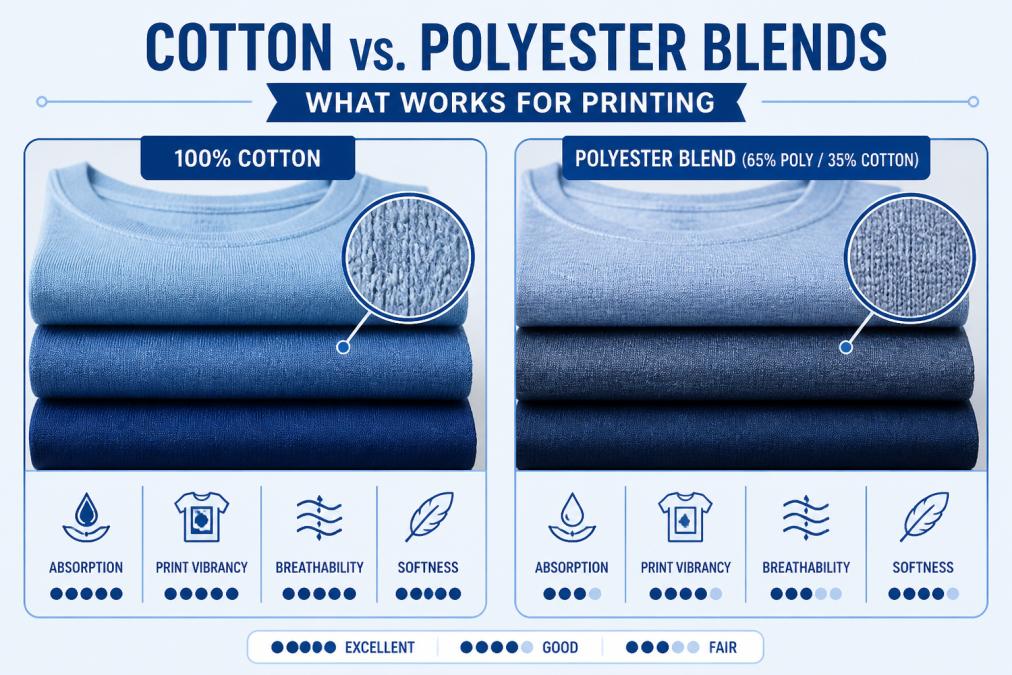
100% cotton is the traditional choice. It breathes beautifully, feels soft against skin, and gets better with age. For screen printing, pure cotton accepts ink readily and produces vibrant colors. The catch: pure cotton shrinks if you're not careful, and it can pill with heavy wear. It's also more expensive.
Polyester blends (typically 50/50 or 65/35 cotton-poly) reduce shrinkage, improve durability, and lower costs. They dry faster and resist pilling better than pure cotton. For sublimation printing, polyester blends are actually superior, the synthetic fibers hold dye better and produce more vivid colors.
The trade-off with blends is that they don't feel quite as soft as pure cotton, and they don't age as gracefully. A 100% cotton tee gets softer and more broken-in over time. A blend stays relatively the same.

For screen printing with water-based inks, pure cotton is your best bet. For sublimation or heat-transfer methods, a blend actually performs better. If you're doing direct-to-garment printing, either works, but pure cotton will feel premium in hand.
Ring-spun cotton (more on this below) is pure cotton that's been processed to remove short fibers, making it softer and more durable than regular carded cotton. It's worth the premium if you're positioning your merch as quality basics.
Best Wholesale T-Shirt Brands for Printing
Not all wholesale blanks are created equal, and knowing which brands to source from makes the difference between a professional product and something that looks homemade.
Ring-Spun Cotton: The Premium Choice
Ring-spun cotton is processed differently than standard cotton. Short fibers are removed during spinning, leaving only the longest, strongest fibers. The result is fabric that's softer, more durable, and holds prints better.
Bella+Canvas is a well-regarded brand for ring-spun blanks. Their 3001 unisex jersey is popular because it's soft enough to feel premium but sturdy enough to hold a crisp print. The fabric has a slight texture that photographs well and feels great. Caltucky Creations uses ring-spun basics because they hold up to washing and keep their shape season after season.

Gildan's Softstyle line offers ring-spun options. The trade-off is slightly less softness, but the durability is solid.
Carded Cotton: Budget-Friendly Basics
Carded cotton is standard cotton that's been carded (combed) but not ring-spun. It's less processed, which means it's cheaper but also slightly less soft and durable. For high-volume orders where budget matters, carded cotton works fine, especially if you're printing bold designs that don't require fine detail.
Gildan's basic 5000 line is pure carded cotton. It's reliable for screen printing and works well for designs that don't need premium feel.
The quality difference between carded and ring-spun is real but not dramatic. Carded cotton will pill more and soften less with washing. For a funny graphic tee that's meant to be worn and loved, ring-spun is worth the extra investment.
The T-Shirt Sample Ordering Process
Before you commit to a bulk order, you need samples. This is non-negotiable. Here's how to do it right.
First, identify 2-3 brands and weights you want to test. Order a small sample pack from each, usually one shirt per size and color. Most wholesale suppliers offer sample packs specifically for this purpose.
Once you have samples, print or print-test them with your exact method. If you're screen printing, use your actual screens and inks. If you're sublimating, use your sublimation printer and settings.
Screen Printing and Sublimation Compatibility
Different printing methods require different blanks, and choosing the wrong blank for your method will produce disappointing results.
What to Check Before You Order in Bulk
You've tested samples and you're ready to order. Before you hit submit, check these details.
| Checklist Item | Why It Matters | Action |
|---|---|---|
| Weight and composition | Determines print quality and durability | Verify exact specifications match your samples |
| Color consistency | Dyes vary between production runs | Request same dye lot or test samples from new batch |
| Sizing and fit | Fit varies by brand and color | Test multiple sizes and colors before bulk order |
| Label type | Affects comfort and premium feel | Confirm tear-away or tag-free option |
| Shrinkage rate | Impacts sizing accuracy | Ask supplier for shrinkage data |
| Lead time | Affects inventory planning | Confirm timeline and plan for delays |
Frequently Asked Questions
What fabric weight should I choose when I source high quality blank t-shirts for screen printing?
For screen printing, aim for 5.0 to 6.0 oz/yd² (170-200 GSM). This weight provides enough body to hold ink without being stiff, and it's durable enough to survive repeated washing. Heavier blanks (6.0+ oz) work best if you're printing detailed graphics; lighter options (4.2-4.8 oz) suit simple designs and are better for layering. Always check the supplier's specifications, GSM and ounce weight tell you exactly what you're getting.
What's the difference between ring-spun and carded cotton for printing?
Ring-spun cotton is combed and twisted to align fibers, creating a softer, smoother surface that holds ink detail sharper and lasts longer through washing. Carded cotton is faster to produce and costs less, but fibers are less organized, so prints may look slightly less crisp. For high-quality designs, ring-spun is worth the premium; for basic blanks, carded works fine. Check the product specs, they'll say 'ring-spun' or 'carded' clearly.
How do I order samples of blank t-shirts before buying in bulk?
Most wholesale suppliers offer sample packs, usually 2-5 shirts per size/color. Request samples directly from the supplier's website or sales team, and ask for the exact styles and fabric weights you're considering. Order samples early so you can test printing, washing, and fit before committing to large quantities. This step saves money and headaches: you'll catch shrinkage, color inconsistencies, or print compatibility issues before they affect your whole order.
What should I look for in a blank t-shirt supplier?
Check for consistent fabric quality, clear sizing and fabric specs, tear-away labels for comfort, and pre-shrunk garments so your prints don't shift. Read customer reviews about delivery reliability and quality consistency. Suppliers who offer sample ordering and detailed care instructions are usually more reliable. Compare options side by side, the cheapest blank isn't always the best value if it shrinks or fades quickly.