

Table of Contents
- Why Quality Matters When Shopping for Home Goods Online
- Evaluating Materials and Craftsmanship Before You Buy
- How to Identify Quality Furniture Online Through Photos and Specs
- Durable Home Decor Materials Guide
- Best Online Stores for Home Decor: What Sets Quality Retailers Apart
- Digital Inspection Techniques for Online Shopping
- Red Flags to Avoid When Shopping for Home Goods
- Conclusion: Build Your Home with Confidence
Last Updated: August 27, 2026
Why Quality Matters When Shopping for Home Goods Online
Buying home goods online is convenient but risky, you can't touch fabric, test joints, or see finishes in person. A quality sofa lasts 10 years; a cheap one might fail in two.
This guide from Caltucky Creations breaks down how to spot quality home goods online before you buy. You need to know what to look for in descriptions, photos, and specifications, understand materials, and recognize warning signs that separate well-made items from mass-produced disappointments.
Evaluating Materials and Craftsmanship Before You Buy
The foundation of quality is material. Everything else, design, finish, durability, depends on what the piece is actually made from.
Understanding Solid Wood vs. Veneer and Particleboard
Solid wood is wood cut from a tree, shaped, and finished. It's strong, repairable, and improves with age. Veneer is a thin layer of real wood glued to plywood or particleboard. Particleboard is compressed wood fibers and resin, cheap, heavy, and prone to sagging.
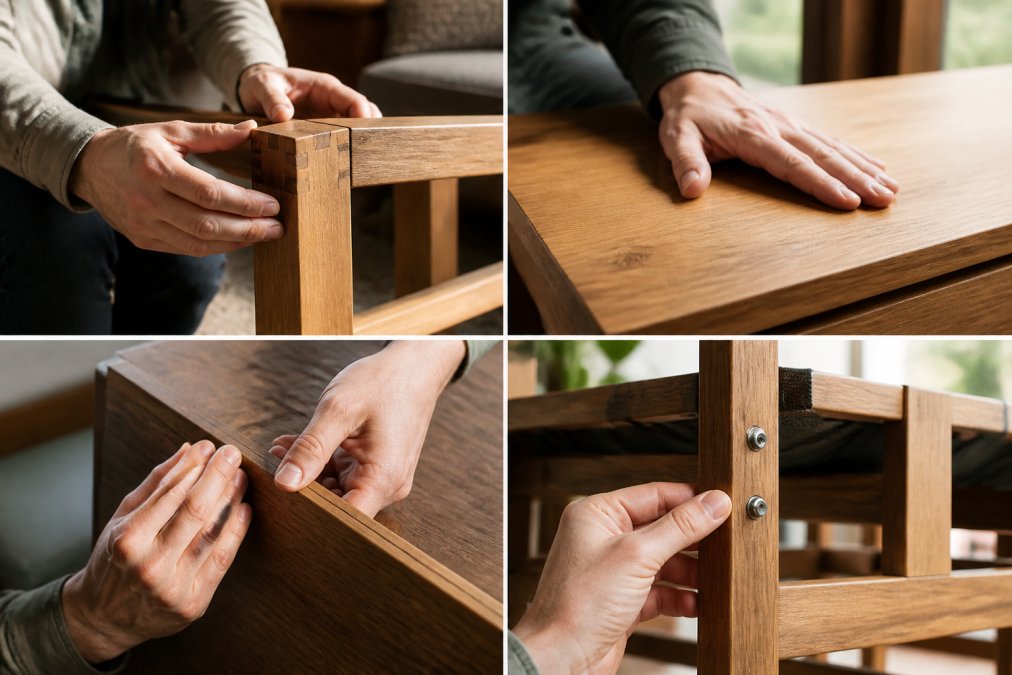
Product descriptions saying "solid wood" mean visible parts are real wood. Descriptions saying "wood" or "wooden" might mean veneer or particleboard. If wood type isn't specified, assume particleboard.
Red flags in descriptions:
- "Wood-grain laminate" = not real wood
- "Engineered wood" = particleboard or MDF core
- "Veneered over plywood" = veneer (cheaper than solid)
- No wood type mentioned = assume particleboard
Solid wood pieces specify the wood type: oak, walnut, cherry, maple. Quality retailers are transparent about construction; if they're not, look elsewhere.
Assessing Upholstery and Fabric Durability
A beautiful fabric photo looks identical whether it's silk (delicate, expensive) or polyester (durable, cheap). The description must tell you what you're getting.
Look for fabric content percentages. Natural fibers, cotton, linen, wool, feel better and age gracefully but cost more and require more care. Synthetics like polyester and acrylic are durable and stain-resistant. An 80% cotton, 20% polyester blend offers natural feel with practical durability.
Check fabric weight in ounces per yard. Lightweight (under 5 oz) wrinkles easily and shows wear faster. Medium-weight (5-10 oz) is standard. Heavy-weight (over 10 oz) suits high-traffic spaces and lasts longer.
Red flags:
- No fiber content listed
- "Microfiber" without specifications
- "Suede-like" or "faux suede" (wears badly)
- No care instructions
Checking Hardware, Joinery, and Structural Integrity
Hardware, hinges, handles, bolts, brackets, reveals cheap manufacturing immediately. Quality hardware is heavy, fits precisely, and doesn't rattle. In photos, zoom in on visible hardware. It should look solid and well-finished.
Look for these joinery terms:
- "Mortise and tenon" = traditional, strong, expensive
- "Doweled" = reliable, mid-range
- "Stapled" = cheap, temporary
- "Glued only" = weak under stress
Quality furniture has corner blocks, cross-bracing, and reinforcement where stress concentrates. Check descriptions for reinforcement mentions and look in photos for visible bracing under chairs, inside cabinets, or along couch backs.
How to Identify Quality Furniture Online Through Photos and Specs
Photos are your primary inspection tool. Most are optimized for beauty, not clarity. Learn what to look for and use zoom features aggressively.
Reading Product Descriptions for Hidden Quality Clues
Honest descriptions are specific. They name materials, construction methods, and dimensions. They mention limitations and include care instructions and warranty details.
Vague descriptions use adjectives instead of facts: "Premium materials" without naming them, "Expertly crafted" without explaining how.
Quality signals:
- Named materials (oak, not "wood"; linen, not "fabric")
- Construction method (mortise and tenon, not "sturdy joinery")
- Dimensions and weight
- Warranty length
- Made-in information
- Care instructions
Using High-Resolution Images and Zoom Features
Use zoom features aggressively. Start wide to assess proportions, then zoom in on seams, fabric surface, finish, joints, hardware, and legs. Take screenshots of details you're examining and compare them side by side when deciding between pieces.
Spotting Signs of Mass-Produced vs. Artisanal Goods
Artisanal pieces show variation. Hand-finished surfaces have subtle irregularities. Wood grain is unique per piece. Stitching may have slight tension variations, these prove craftsmanship, not flaws.
Mass-produced pieces show uniformity. Every surface is identical, every stitch the same, every seam perfectly straight. This uniformity reflects precision manufacturing, which can be high or low quality depending on standards.
Quality exists in both categories. Caltucky Creations offers a curated selection of fresh and stylish home essentials, including both mass-produced pieces with excellent design and artisanal items from independent makers.
Durable Home Decor Materials Guide
Materials determine longevity. Quality materials outlast cheap ones, even with equal construction.
Textiles and Fabrics That Last
Natural fibers age beautifully. Cotton and linen soften with washing. Wool resists staining and wear. Silk is delicate but luxurious. Synthetics like polyester and acrylic are practical, resist stains and fading, and are easier to clean.
Best textiles blend both: 70% cotton, 30% polyester gives natural comfort with synthetic durability.
Weave matters as much as fiber. Tight weaves resist pilling and snagging. Twill weaves are durable. Canvas is nearly indestructible.
For high-traffic pieces, look for heavy-weight fabrics (over 10 oz per yard), tight weaves (twill, canvas, jacquard), and stain-resistant treatments.
Identifying Sustainable and Ethical Manufacturing
Sustainability and ethics matter for durability. Items made with care tend to be better-made.
Look for:
- Certifications: FSC for wood, OEKO-TEX for textiles, Fair Trade for labor
- Transparency: Brand discloses where and how items are made
- Longevity focus: Brand emphasizes durability and repairability
- Local production: Made domestically or in countries with strong labor standards
Transparent retailers tend to have higher standards.
Best Online Stores for Home Decor: What Sets Quality Retailers Apart
The best retailers make quality verification easy. They provide detailed information, clear photos, honest descriptions, and strong guarantees.
Return Policies and Shipping Guarantees
A good return policy signals confidence. Look for 30+ day return windows, free returns, no restocking fees, and damage guarantees. Shipping damage is common with furniture. Quality retailers replace items without argument.
Customer Reviews and Reputation Verification
Customer reviews are your most reliable real-world feedback source.
Red flags:
- All 5-star reviews with generic praise
- Reviews sounding like marketing copy
- Multiple 1-star reviews about the same problem
Good patterns:
- Mix of 4-5 star and 3-4 star reviews (realistic)
- Specific feedback
- Mentions of longevity
- Customer photos
Read at least 10 reviews. Look for patterns. Third-party sites like Trustpilot and Sitejabber aggregate reviews across platforms and are harder to fake.
Digital Inspection Techniques for Online Shopping
Technology provides inspection tools unavailable years ago. High-resolution images, zoom features, and video tours let you examine pieces in detail from home.

Request all available images. Quality retailers provide multiple angles and close-ups. Use zoom aggressively on seams, joints, finishes, and fabric surfaces. Watch video tours at full resolution and pause on details. 360-degree views let you rotate pieces and inspect all angles.
Red Flags to Avoid When Shopping for Home Goods
Vague descriptions: Short descriptions using only adjectives and avoiding specific materials or construction details signal the brand is hiding something.
Blurry or limited photos: If you can't see details clearly or there are only 2-3 photos from one angle, you can't properly inspect.
No return policy or restrictive returns: Retailers unwilling to accept returns or charging restocking fees don't stand behind products.
Prices that seem too low: Significantly lower prices than comparable items warrant investigation.
No customer reviews or only new reviews: Only recent 5-star reviews might be fake.
Discrepancies between description and photos: If description says "solid wood" but photos show grain patterns that don't match real wood, that's a red flag.
Hidden shipping costs: Some retailers show low prices then add huge shipping fees at checkout.
No contact information or customer service: If you can't reach the retailer with questions, you're on your own if something goes wrong.
Pressure to buy: Fake scarcity or aggressive language are red flags.
Conclusion: Build Your Home with Confidence
Spotting quality home goods online takes practice, but fundamentals are learnable. Know your materials. Read descriptions critically. Use zoom features to inspect details. Check return policies and reviews. Trust your instincts when something feels off.
Most importantly, shop from retailers prioritizing transparency. When a brand is open about materials, construction, manufacturing, and returns, they're confident in their products. Caltucky Creations applies these standards across our curated collection. We provide detailed descriptions, high-resolution photos, and straightforward return policies because we stand behind what we sell.
Supporting Resources
For more information on evaluating home goods and building cohesive spaces:
Consumer Reports furniture buying guide provides independent testing data on furniture durability and construction standards.
The Textile Exchange sustainability standards for home textiles outlines certification criteria for ethical and sustainable fabric production.
Better Business Bureau tips for online shopping safety covers verification techniques for retailer reputation and return policy evaluation.
| Material Type | Durability | Maintenance | Best For |
|---|---|---|---|
| Solid wood | 10+ years | Regular dusting | Furniture pieces you'll keep long-term |
| Veneer | 5-8 years | Regular dusting | Budget-conscious pieces, temporary use |
| Particleboard | 2-5 years | Minimal | Temporary pieces, low-traffic use |
| Cotton upholstery | 5-7 years | Regular vacuuming | Comfort-focused pieces, lighter use |
| Polyester blend | 7-10 years | Stain treatment | High-traffic furniture |
| Wool textiles | 10+ years | Professional cleaning | Investment pieces, formal spaces |
Frequently Asked Questions
What materials indicate long-lasting home goods?
Solid wood, high-grade upholstery fabrics like linen and wool, and quality hardware are hallmarks of durability. Look for descriptions mentioning mortise-and-tenon joinery, hardwood frames, and natural finishes. Avoid particleboard and low-denier synthetic fabrics, which deteriorate quickly. Check product specifications for material percentages and manufacturing standards that indicate longevity.
How can I tell if furniture is high quality from online photos?
Examine high-resolution images for visible seams, joints, and hardware details. Quality furniture shows even stitching, flush-fitting joints, and substantial legs or base construction. Look for close-up shots of fabric texture and wood grain. Artisanal pieces often display natural variation, while mass-produced items show uniformity. Zoom features and multiple angles reveal craftsmanship that photos alone cannot hide.
What should I look for in product descriptions when buying home decor online?
Search for specific material names, wood types, and construction methods rather than vague terms. Quality descriptions mention joinery techniques, upholstery weight, finish types, and hardware specifications. Avoid descriptions using only adjectives like 'nice' or 'beautiful' without substance. Reputable retailers provide dimensions, weight capacity, care instructions, and manufacturing origin details that signal transparency and durability.
How do I verify the reputation of an online home decor store?
Check customer reviews on independent platforms for patterns in feedback about durability and shipping accuracy. Look for return policies that allow inspections after arrival and transparent shipping guarantees. Research whether the retailer curates products or simply lists mass-produced items. Established stores provide clear contact information, detailed product sourcing, and responsive customer service, all indicators of accountability.
What are the red flags to avoid when shopping for home goods online?
Avoid listings with no close-up photos, vague material descriptions, or suspiciously low prices. Skip stores with poor return policies or no shipping damage protection. Watch for inconsistent product quality across similar items and avoid retailers with overwhelmingly negative reviews mentioning durability issues. Be wary of images that appear heavily edited or don't match customer photos, this suggests misrepresentation of actual product quality.
How do I interpret customer reviews for home decor items?
Focus on reviews mentioning specific durability concerns or longevity rather than general opinions. Look for patterns: if multiple reviews mention the same issue, it's likely real. Prioritize detailed reviews with before-and-after photos showing items after months of use. Verify review authenticity by checking reviewer history. Balance positive and negative feedback, and trust reviews that acknowledge both strengths and weaknesses over uniformly glowing or negative reviews.
This article was written using GrandRanker