

Table of Contents
- Why Independent Home Decor Brands Matter
- Quality Craftsmanship vs. Mass-Produced Furniture
- Sustainable Home Decor Brands and Ethical Sourcing
- Best Online Stores for Home Decor: Finding Hidden Gems
- How to Style Independent Decor Pieces Into a Cohesive Look
- Supporting Local Economies and Small Business Artisans
- Price Transparency and Real Value
- Logistics and Shipping Realities for Independent Shops
Last Updated: August 26, 2026
Why Independent Home Decor Brands Matter
Shopping for home decor from independent brands fundamentally changes how your space feels. When you choose artisanal pieces over mass-produced furniture, you're investing in authenticity, craftsmanship, and the story behind what you bring into your home. Independent home decor brands offer curated, handcrafted items that transform ordinary rooms into spaces that reflect who you actually are.
Independent home decor brands operate from a philosophy of thoughtful consumption. Each piece exists because someone designed it with care, not because an algorithm predicted it would sell in volume. Most people furnishing their first apartment assume they're choosing between trendy fast-furniture or museum-quality pieces that cost thousands. The reality is far more interesting: a thriving ecosystem of independent retailers, artisan makers, and small-batch producers exists in the middle, offering unique aesthetic appeal without guilt or sticker shock.
The pieces you'll find from independent makers carry something mass-produced items simply cannot: design integrity. When a small business stakes its reputation on every product it releases, quality becomes non-negotiable.
Quality Craftsmanship vs. Mass-Produced Furniture
Handcrafted pieces built by independent artisans operate under completely different constraints than mass-manufactured goods. A small-batch producer can't afford to cut corners because their survival depends on reputation, not volume.
Mass-produced furniture prioritizes speed and cost reduction. Materials get sourced for cheapness, not durability. Joints are engineered to be "good enough" for a five-year lifespan. The entire supply chain is optimized for moving units, not creating things that last.
Independent artisans work from the opposite constraint. They can't compete on price, so they compete on quality. A handcrafted pillow cover uses natural fibers and construction methods that improve with age. A custom cutting board is made from tempered glass with rubber feet that won't slip, details that matter in daily use but cost more to implement.
Caltucky Creations offers pieces like the Spun Polyester Square Pillowcase with double-sided printing and concealed zippers at $20.99. The tempered glass cutting boards come with four rubber stabilizing feet, a feature that prevents slipping during use but requires more careful manufacturing than a flat surface.


When a maker knows their name is on the product, they design for real-world use. They anticipate how you'll actually interact with the piece, not how a focus group said people should use it.
Sustainable Home Decor Brands and Ethical Sourcing
The sustainability argument for independent home decor brands is systemic. When you buy from a sustainable brand, you're disrupting the supply chain that generates waste at every stage.
Mass production creates waste through sheer scale. A factory producing 50,000 units generates enormous offcuts, defects, and overstock. Packaging is designed for shelf impact, not efficiency. Independent makers produce in quantities that match actual demand, 200 units of a design, not 50,000. Offcuts get repurposed or minimized through careful planning. Packaging is functional, not theatrical.
Ethical sourcing in independent brands means something concrete. When a maker sources materials, they can actually know their suppliers. They can verify that the cotton in their pillowcase comes from farms using responsible practices. Large manufacturers source through layers of distributors, making true verification nearly impossible.
The commitment runs deeper because the stakes are personal. An independent artisan whose brand is built on ethical production can't suddenly switch to cheaper suppliers without destroying their reputation.
| Aspect | Mass-Produced | Independent Artisan |
|---|---|---|
| Production Volume | 10,000+ units | 100-500 units |
| Supply Chain Transparency | Multiple layers | Direct relationships |
| Waste Management | Accepted as cost | Minimized by design |
| Material Sourcing | Price-driven | Values-driven |
| Accountability | Diffused | Personal |
Best Online Stores for Home Decor: Finding Hidden Gems
The real challenge isn't finding independent home decor brands, it's learning to evaluate them. Start by looking for makers who explain their process. Legitimate independent producers share details about materials, production methods, and sourcing decisions. When you see a product page that actually describes the tempered glass used or the natural soy wax blend in a candle, you're looking at someone who cares about transparency.
Check for consistency across their catalog. Real independent makers have a coherent aesthetic and philosophy. Their work feels intentional, not like they're chasing trends.
Look at customer reviews for specific feedback. Observations like "the pillow cover faded after three washes" or "the cutting board is heavier than expected but feels solid" tell you the reviewer actually owns and uses the item. Caltucky Creations customers often mention specific features like the double-sided print on pillowcases or how the cutting boards stay stable during use.

Verify that what you're seeing is actually from an independent maker, not a reseller. Look for direct-to-consumer sites where the maker sells their own work. Real independent brands are proud of where they're from.
Finally, test with a small purchase first. One small order tells you more about a maker's standards than a hundred marketing claims.
How to Style Independent Decor Pieces Into a Cohesive Look
The fear most people have about shopping independent is that they'll end up with beautiful items that don't actually work together. This fear is solvable. The difference between a curated home and a chaotic one is about intentional composition.
Start with a Color Palette
Before you buy anything, establish your color foundation. Choose three to five colors that will anchor your space. These become your decision filter. When you find an independent piece you love, ask: does this fit my palette?
The palette approach works because it creates coherence without monotony. A room with navy, cream, terracotta, and sage feels intentional even though those colors come from different makers.
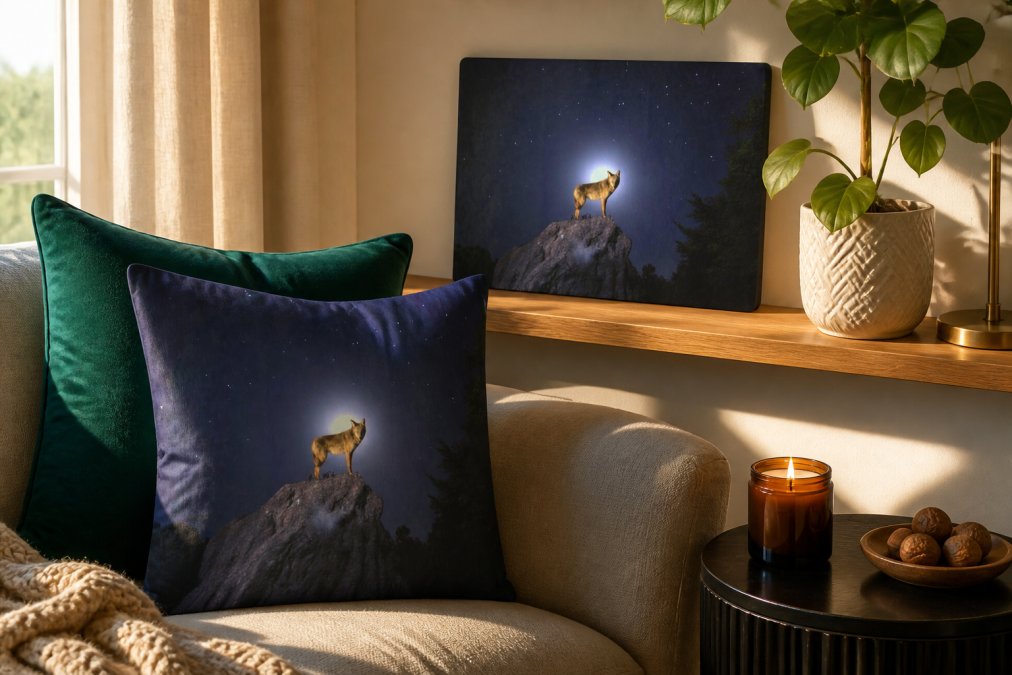
Caltucky Creations pieces work well in this framework because they're designed with specific color stories. The Daffodil Scented Candle brings warm, inviting tones. The cutting boards come in designs like the Dolphin Sunset Cutting Board with teal and gold, or the Owl Family Winter Cutting Board in cool forest tones.
Mix Scales and Textures Intentionally
Independent pieces often vary in size and material because they're not part of a coordinated collection. Use this to your advantage. Pair a large statement piece with smaller accents. If your main sofa is your anchor, build around it with smaller independent finds, a pillow cover from one maker, a cutting board from another, a candle from a third.
Texture variation prevents visual monotony. Glass cutting boards bring reflective, cool surfaces. Fabric pillowcases add softness. Candles in glass jars create warm glow. When these different textures exist together intentionally, the room feels sophisticated rather than mismatched.
Anchor with Neutral Basics
The secret to making eclectic pieces work is having a neutral foundation. Your walls, larger furniture pieces, and basic textiles should be relatively neutral, whites, grays, beiges, soft blacks. This foundation lets your independent pieces shine without competing with each other.
Think of it as a gallery wall approach. A white wall lets art stand out. Neutral basics create the space where independent pieces can actually be seen and appreciated.
Supporting Local Economies and Small Business Artisans
There's an economic argument for shopping independent that goes beyond aesthetics. When you buy from a small business artisan, the money moves differently through the economy.
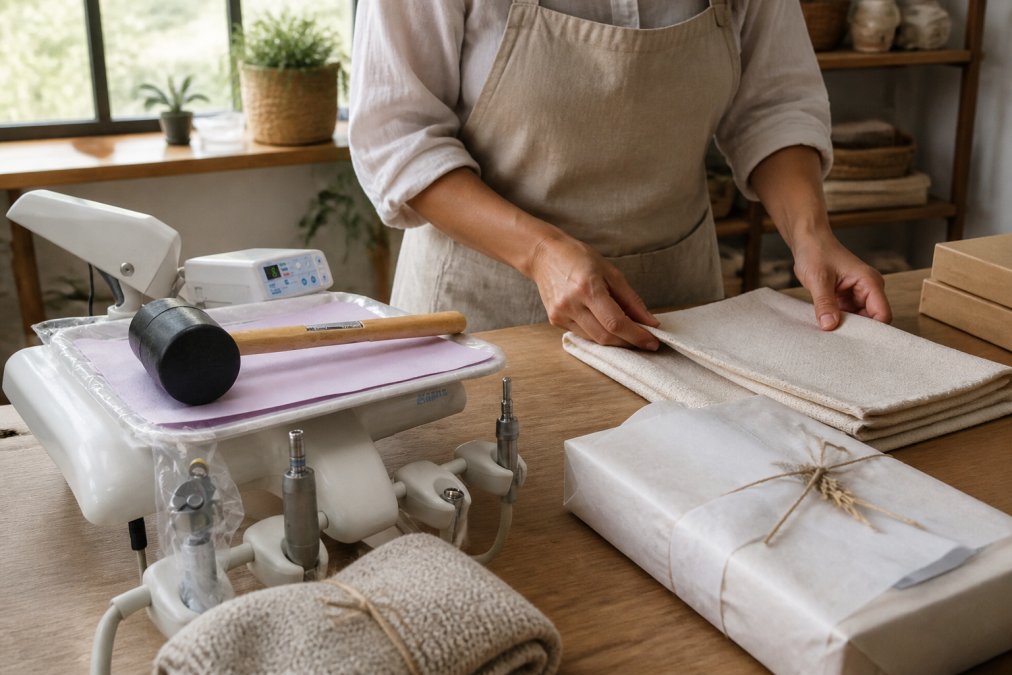
A typical big-box retailer takes 40-50% of the retail price as their margin (the FTC). From what's left, the manufacturer pays for materials, labor, and overhead. The actual maker often sees less than 10% of what you paid.
Independent makers keep a much larger percentage of what you pay. More of your money stays with the person who actually made the thing. That money funds their ability to keep making, invest in better materials, and hire apprentices. It's the difference between supporting a person and supporting a system.
When independent makers thrive, they buy materials from local suppliers, rent studio space, hire help, and spend their income locally. The multiplier effect of money spent at independent businesses is significantly higher than money spent at corporations.
There's also the knowledge preservation angle. Artisanal skills and design traditions only survive if there are makers practicing them. When you buy from someone using traditional methods, you're directly supporting the continuation of those skills.
Price Transparency and Real Value
The objection that independent pieces cost more than mass-produced alternatives is technically true and completely misleading. Comparing the price directly is like comparing a hand-tailored suit to a fast-fashion blazer. You're not comparing like things.
Real value analysis requires looking at what you're actually paying for. When you buy a cutting board from Caltucky Creations for $20-40, you're paying for tempered glass that won't scratch easily, rubber feet that keep it stable, and a design that's actually appealing enough to display on your counter. You're not paying for packaging you'll throw away or marketing that convinced you to buy something you didn't need.
The durability math works in independent makers' favor. If you buy a cheap cutting board for $8 and replace it every two years, you're spending $16 every two years (peer-reviewed research). A quality board at $30 that lasts eight years is $3.75 per year (the EPA). The independent piece is cheaper over time.
A pillow cover at $20.99 with double-sided printing and a concealed zipper will hold up to washing far longer than a $5 fast-fashion alternative. A scented candle made from natural soy wax will burn cleaner and smell better than a paraffin version.
Independent makers can tell you exactly why their piece costs what it does. They're not hiding a 40% retailer margin. You're paying for the actual thing.
Logistics and Shipping Realities for Independent Shops
Small makers typically ship slower than Amazon. They're not sitting in warehouses with inventory ready to dispatch. Most make items to order or from small batches. A cutting board order might take 5-10 business days to produce before it even ships. This means you're getting something fresh, not something that's been sitting in a warehouse for months.
Shipping costs are often higher from independent makers. They can't negotiate the volume discounts that big retailers get. Factor shipping into your price comparison, not as a surprise at checkout.
Returns and exchanges work differently too. Many independent shops have more restrictive return policies because they can't absorb return costs like corporations can. Read the policy before you buy. Most makers are reasonable because they want happy customers.
Packaging is often minimal. Independent makers aren't using elaborate unboxing experiences. Your items might arrive in simple packaging, which is actually better for the environment.
The upside is that you're dealing directly with the maker or a small team. If something goes wrong, you're not navigating a customer service phone tree. You're talking to a person who cares about your satisfaction because their reputation depends on it.
Shopping for independent home decor brands requires slightly more effort than clicking "buy now" on a mass-market site. But that effort buys you pieces that actually reflect your taste, quality that lasts, and the knowledge that your money supported an actual maker instead of a corporate supply chain. Caltucky Creations brings together handcrafted home essentials designed to transform your space into something genuinely yours. Explore the collection and start building a home that feels intentional rather than assembled.
Frequently Asked Questions
Q: What are the benefits of buying from independent home decor brands?
A: Independent home decor brands offer unique aesthetic choices you won't find in mass-market retailers, quality craftsmanship from artisans who care about their work, and transparency about sourcing and materials. Shopping with independent creators supports small businesses, strengthens local economies, and often means lower environmental impact through smaller production runs and ethical practices. You're investing in pieces designed with intention, not manufactured for maximum profit margins.
Q: How do I verify ethical claims from sustainable home decor brands?
A: Look for specific details: material sourcing information, production location transparency, and certifications from recognized bodies. Ask direct questions about their supply chain. Legitimate sustainable brands provide documentation about their materials, manufacturing processes, and labor practices. Check customer reviews. Red flags include vague claims like 'eco-friendly' without specifics, or refusal to answer questions about production methods or material origins.
Q: How can I find high-quality independent home decor brands online?
A: Search for curated marketplaces that vet sellers, read customer reviews carefully, and look for detailed product photography and descriptions. Visit independent brand websites directly and check their return policies, material specifications, and customer testimonials. Social media often showcases independent creators' work authentically. Start with smaller purchases to test quality, then expand. Look for brands that show their production process or share their story, which signals confidence in their craftsmanship and values.
Q: Why are independent home decor pieces sometimes more expensive than big-box alternatives?
A: Independent brands typically use higher-quality materials, pay fair wages to artisans, produce in smaller batches (no economy-of-scale pricing), and invest in sustainable practices. You're paying for durability, design integrity, and ethical production rather than mass-market markups. A $40 handcrafted cutting board from an independent maker lasts longer and performs better than a $15 disposable version. The price reflects actual value: better materials, thoughtful design, and responsible business practices.
This article was written using GrandRanker