

Table of Contents
- Why Meal Prep Beats the Dining Hall Lottery
- Budget Meal Prep for College Students: The Starter Kit
- Dorm Room Meal Prep Tools You Actually Need
- 5 Easy Healthy Meal Prep Ideas for a Full Week
- Healthy Study Snacks for Finals Week (and Every Week)
- The Time-Block Method: Prepping in 2 Hours Flat
- Food Safety 101: Keeping Your Fridge Meals Fresh
- Common Meal Prep Mistakes (And How to Avoid Them)
- Frequently Asked Questions
Last Updated: September 5, 2026
Eating between a 9 AM lecture and a library shift can feel like a gamble. Healthy meal prep ideas for students are the difference between balanced meals and sad gas station sandwiches. This guide breaks down how to prep smart meals that fit your schedule, budget, and dorm room's limited outlets.
Stop thinking about cooking daily and start thinking about assembly. Spend two hours on Sunday chopping, mixing, and portioning, and you can set up days of food that keep your energy up and your spending down. Below are the tools, recipes, and time-blocking method you need.
Why Meal Prep Beats the Dining Hall Lottery
The dining hall is a roll of the dice, decent pasta one day, a mystery casserole the next. Meal prep removes the uncertainty and puts you in control.
Prepping your own meals is also a money move. Buying in bulk and cooking at home costs less than daily campus meals.
Budget Meal Prep for College Students: The Starter Kit
Eating well on a student budget comes down to choosing the right staples. Focus on cheap, shelf-stable basics you can use in multiple recipes: rice, oats, canned beans, eggs, frozen vegetables, and peanut butter.
A common mistake is buying fresh produce that goes bad before you eat it. Stick to frozen fruits and veggies for smoothies and stir-fries, and buy only a few pieces of fresh produce you'll use within a few days.
Dorm Room Meal Prep Tools You Actually Need
Most meal prep guides assume a full kitchen. Your reality is a 10x10 room with a communal bathroom and a mini-fridge that frosts over if you look at it wrong. Here's the gear that works within those constraints.
The Non-Negotiables (Under $30 Total)
You can build a surprisingly functional prep station with just a few items that fit in a backpack:
- A chef's knife (6-8 inch), A sharp one. Dull knives cause more kitchen injuries than any other tool because they slip. If your school's RA allows it, a basic Victorinox Fibrox is the dorm-dweller's best friend.
- A plastic or bamboo cutting board, Get one that's dishwasher-safe if you have access to a communal kitchen. If not, wash it in the sink with hot soapy water after every use.
- Two large mixing bowls, One for salads, one for macro bowls. Stackable ones save space.
- A set of measuring cups and spoons, You'll need these for overnight oats and sauce recipes.
- A vegetable peeler, Carrots, cucumbers, and zucchini become infinitely more edible when peeled.
The Dorm-Approved Appliances That Earn Their Keep
Your dorm's rules probably limit you to appliances with enclosed heating elements. Here's what passes inspection and actually helps:
Electric kettle (under $30), The unsung hero of dorm cooking. It boils water in under two minutes for instant oats, ramen (upgrade with an egg and frozen veggies), hard-boiled eggs (leave in hot water for 12 minutes), and even quinoa.
Microwave (if allowed), Most dorms provide one in a common area. If you have one in your room, you can steam vegetables in a microwave-safe bowl with a damp paper towel over the top and cook scrambled eggs in a mug (30-second bursts, stirring in between).
Rice cooker (3-cup size), The most versatile appliance you're allowed to have. It cooks rice, steams vegetables, makes oatmeal without stirring, and can even cook a simple chili or soup. Buy one with a non-stick inner pot so cleanup takes 30 seconds.
Air fryer (check your dorm's rules first), Many schools allow them because they're enclosed. If yours does, you can roast chickpeas, crisp frozen veggies, and "bake" a small sweet potato in 25 minutes.
What NOT to Buy (Save Your Money and Space)
-
A full-size blender, Unless you're making smoothies for a team, a single-serve bullet blender takes up less space and is easier to clean. Or skip it entirely and use a mason jar with a tight lid, shake vigorously for 30 seconds for a lumpy but drinkable result.
-
A toaster oven, It's a space hog, and most dorms ban them because they're a fire hazard. The air fryer does the same job better.
-
A slow cooker, Great for batch cooking, but it takes up counter space and requires planning 6-8 hours ahead. A rice cooker does 80% of what a slow cooker does in a fraction of the time.
The Storage Reality Check
Your mini-fridge is roughly the size of a large backpack. The hard truth: you can't store a week's worth of prepped meals in there. Plan for 3-4 days max.
For carrying your meals to class or the library, you need something that keeps containers upright and doesn't scream "I'm carrying leftovers in a plastic bag." A sturdy lunch bag with structure, like the MAINE COON CAT Two-tier Bento Box, keeps your main and sides separate and prevents the dreaded "everything tastes like everything else" problem. It's also a conversation starter, which is more than you can say for a brown paper bag.

5 Easy Healthy Meal Prep Ideas for a Full Week
These five ideas cover breakfast, lunch, and dinner. Each is prepped ahead, stored in the fridge, and eaten over a few days. They're flexible, with swap lists for vegan, gluten-free, and dairy-free students.
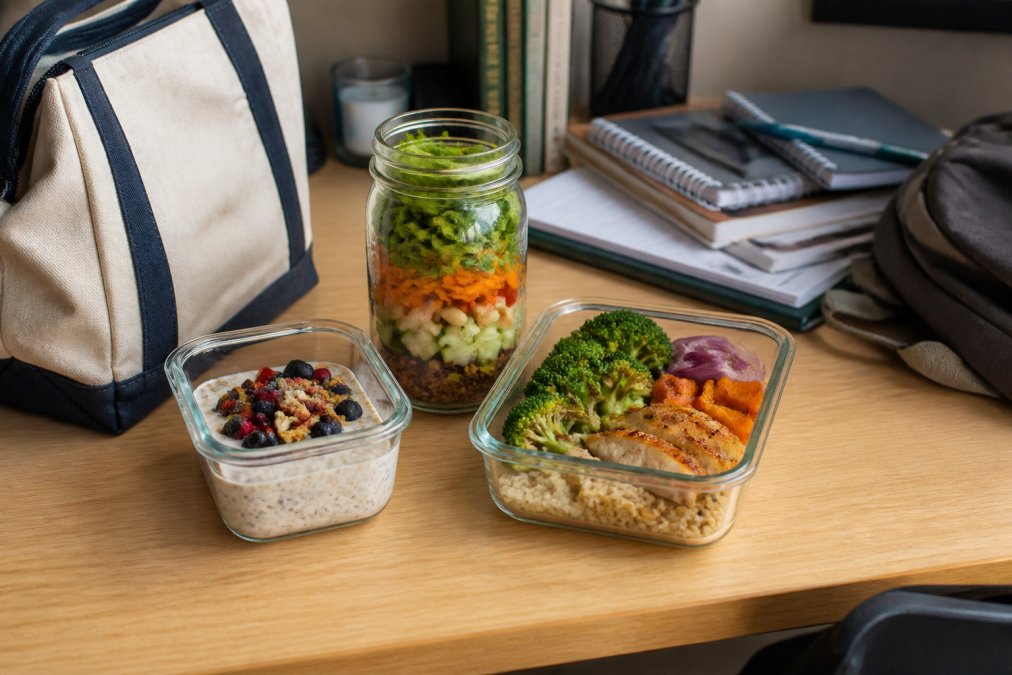
Overnight Oats: The No-Cook Champion
Overnight oats are the ultimate prep-ahead breakfast. Combine rolled oats, milk or yogurt, and mix-ins in a jar, let it sit overnight, and grab a creamy meal in the morning.
The beauty is the variety, peanut butter and banana one day, apple cinnamon the next. Mason jar meals are easy to portion and transport.
The Swap List:
- Vegan: Use oat milk or almond milk instead of dairy milk. Swap Greek yogurt for coconut yogurt. Add a scoop of plant-based protein powder if you want extra staying power.
- Gluten-free: Use certified gluten-free rolled oats. Regular oats are often cross-contaminated with wheat during processing.
- Nut allergy: Skip the peanut butter and use sunflower seed butter (sun butter) instead. It has a similar texture and protein content.
- High-protein: Stir in a scoop of vanilla or chocolate protein powder. You'll need to add a splash more liquid to keep the texture right.
Pro tip: Make five jars on Sunday night. Each one takes 3 minutes. That's 15 minutes for five breakfasts you don't have to think about.
Mason Jar Salads That Don't Get Soggy
The secret to a salad that survives the week is layering: dressing at the bottom, hearty veggies next, then protein, and leafy greens on top.
This keeps greens crisp for days. Add grilled chicken, chickpeas, or hard-boiled eggs to make it a filling meal.
The Swap List:
- Vegan: Use chickpeas, marinated tofu, or edamame instead of chicken. A tahini-lemon dressing adds creaminess without dairy.
- Gluten-free: Most salad ingredients are naturally GF, but check your dressing, many bottled dressings contain wheat-derived thickeners. Make your own with olive oil, vinegar, and Dijon mustard.
- Dairy-free: Skip the feta or cheddar crumbles. Avocado adds creaminess and healthy fats.
- Nut allergy: Avoid pesto-based dressings and candied nuts. Stick to simple vinaigrettes.
The layering order that works:
- Dressing (2 tablespoons max)
- Hard veggies: carrots, bell peppers, cucumbers, cherry tomatoes
- Protein: chicken, chickpeas, tofu, eggs
- Soft veggies: corn, avocado (add this the morning of, not during prep)
- Greens: spinach, romaine, or mixed greens
Macro Bowls for Post-Class Fuel
Macro bowls are the easiest dinner, just a combination of parts. Start with rice or quinoa, add a protein like beans or tofu, pile on veggies, and finish with a sauce. Batch cook the grains and proteins, then mix and match.
This assembly approach means you're never eating the same thing twice. It keeps you full through long evening study sessions.
The Swap List:
- Vegan: Use black beans, lentils, or marinated baked tofu. A cashew-based sauce or simple salsa adds flavor without dairy.
- Gluten-free: Rice and quinoa are naturally GF. Just check your soy sauce, use tamari or coconut aminos instead.
- Dairy-free: Skip the cheese and sour cream. Guacamole or a drizzle of olive oil adds richness.
- Nut allergy: Be careful with peanut sauces. Use a sunflower seed butter-based sauce or a simple sesame-ginger vinaigrette.
The formula that never fails:
- 1/2 cup cooked grain (rice, quinoa, farro)
- 1/2 cup protein (beans, chicken, tofu)
- 1 cup veggies (roasted or raw)
- 1-2 tablespoons sauce
- Optional: 1/4 avocado or a sprinkle of seeds
The "Study Snack" Jar (Bonus Idea)
This isn't a full meal, but it's a lifesaver during finals. Layer nuts, seeds, dried fruit, and a few dark chocolate chips in small jars or reusable bags. Portion them out on Sunday so you're not mindlessly eating from a giant bag while studying.
The Swap List:
- Nut allergy: Use roasted pumpkin seeds, sunflower seeds, and dried cranberries. Skip the peanuts and almonds entirely.
- Vegan: Most trail mixes are naturally vegan. Just check for milk chocolate or yogurt-covered pretzels.
- Gluten-free: Most nuts and seeds are GF. Watch out for seasoned mixes that might contain wheat-based flavorings.
The "Prep Once, Eat Three Ways" Strategy
Instead of making five different meals, make three base components and mix them:
- Base grain: Cook 2 cups of dry rice or quinoa on Sunday. That's about 6 cups cooked.
- Protein: Cook 1 pound of chicken, tofu, or beans.
- Roasted veggies: Chop and roast a sheet pan of whatever's on sale, broccoli, sweet potatoes, bell peppers.
Then you can have:
- Monday: Grain bowl with chicken and veggies + teriyaki sauce
- Tuesday: Wrap with the same components + hummus
- Wednesday: Salad with the same components + vinaigrette
Three different meals, one prep session. That's the kind of efficiency that leaves you time for the important stuff, like napping.
Healthy Study Snacks for Finals Week (and Every Week)
Your brain burns through energy fast. Healthy study snacks combine protein, fat, and fiber to keep blood sugar steady.
Great options include apple slices with peanut butter, Greek yogurt with berries, trail mix, hummus with carrot sticks, or a hard-boiled egg. These beat chips and candy, which cause a quick spike and quicker crash.
The Time-Block Method: Prepping in 2 Hours Flat
You don't need an entire afternoon to meal prep. Set a timer for two hours and follow this order.
- Start the rice cooker or oven for your grains and roasted veggies. These take the longest.
- While those cook, wash and chop your fresh produce.
- Make your sauces and dressings in a small jar.
- Assemble your overnight oats and mason jar salads.
- Portion out your snacks into bags or containers.
- When the grains and veggies are done, build your macro bowls.
This system ensures everything is ready at the same time. Once you've done it a few times, you'll find your rhythm and might even finish faster.
Food Safety 101: Keeping Your Fridge Meals Fresh
The USDA recommends refrigerating perishable foods within two hours (the FDA). Keep your fridge at 40°F or below (foodsafety.gov).
Don't prep for seven days when you have a mini-fridge. Cooked meals last three to four days, so plan for that window (usda.gov). To prep longer, freeze individual portions and thaw overnight.
Common Meal Prep Mistakes (And How to Avoid Them)
The biggest mistake is making five complicated meals, you'll burn out by Tuesday. Pick one or two base recipes and vary toppings.
Another pitfall is forgetting portion control, you're prepping for your appetite, not a family of four. Use containers that match your hunger levels. Write a grocery list before shopping to avoid impulse buys.
| Mistake | The Fix | Why It Works |
|---|---|---|
| Prepping 5 complex meals | Pick 1-2 bases, vary toppings | Prevents burnout, saves time |
| Cooking for a family of 4 | Use portion-sized containers | Controls portions, reduces waste |
| Shopping without a list | Write a grocery list first | Keeps you budget-friendly and on track |
Meal prep is a habit, not a one-time event. Start small, find recipes you love, and build from there.
Speaking of carrying your culinary masterpieces, don't let them travel in a plastic bag that's seen better days. A lunch bag with some personality makes the whole routine more fun. Check out the funny canvas lunch bags at Caltucky Creations, like the Nothing Solves Being Overworked Canvas Lunch Bag, to carry your prepped meals in style.

Frequently Asked Questions
How long do meal-prepped meals last in a dorm fridge?
Most cooked meals stay safe for 3 to 4 days when refrigerated at 40°F or below. If you prep on Sunday, eat those meals by Wednesday or Thursday. For the rest of the week, freeze portions in airtight containers or mason jars. Label everything with dates so you don't play fridge roulette. When reheating, make sure food hits 165°F. If your dorm fridge runs warm or frosts everything, grab a small thermometer to keep it in the safe zone.
What dorm room meal prep tools are essential for a beginner?
Start small: a microwave-safe container set, a cutting board, a good knife, measuring cups, and a can opener. Add a two-tier bento box for carrying lunch and a canvas lunch bag to keep it cool on the walk to class. You don't need a full kitchen setup. If you have a mini-fridge with a tiny freezer, use it for frozen meals and protein. Skip bulky appliances until you know you'll use them regularly.
What are cheap healthy meal prep ingredients for students?
Stick to shelf-stable staples that go far: rice, oats, canned beans, lentils, eggs, frozen vegetables, and peanut butter. Buy fresh produce that lasts, like carrots, cabbage, and apples. Rotisserie chicken costs more upfront but gives you several meals. Batch cooking grains and beans at the start of the week lets you mix and match without getting bored. Shop sales and use your student discount at local grocers to stretch your budget further.
How do I keep my healthy meal prep interesting so I don't get bored?
Prep components, not just full meals. Cook a batch of rice, roast some veggies, and grill chicken, then mix them with different sauces throughout the week. Change the flavor profile with soy sauce, salsa, or curry powder. Keep a few toppings on hand like nuts, seeds, or hot sauce for texture. The 5-4-3-2-1 method works well: 5 containers of fruit, 4 of veggies, 3 of protein, 2 of carbs, and 1 sauce or dressing.
Eating well as a student isn't about having a gourmet kitchen or a bottomless budget. It's about planning ahead and using the tools you have. With these healthy meal prep ideas for students, you can fuel your brain, save your cash, and avoid the dining hall roulette. Get started with Caltucky Creations and make your lunch break the best part of your day.
This article was written using GrandRanker