

Table of Contents
- Start With Your Lease Agreement and Landlord Approval
- Renter-Friendly Wall Decor Ideas That Protect Your Security Deposit
- Damage-Free Hanging Methods for Art and Shelving
- How to Style a Small Apartment on a Budget
- Lighting Layers and Plug-In Fixtures
- Hardware Swaps and Window Treatments
- Adding Greenery and Creating Aesthetic Cohesion
- Conclusion
Last Updated: August 25, 2026
Decorating a rental apartment comes with unique constraints that homeowners never face. You can't paint walls, drill into studs, or make permanent changes. But that doesn't mean your space has to look temporary or bland. The key is understanding what your lease allows, then building a cohesive design within those boundaries using renter-friendly solutions.
This guide from Caltucky Creations covers practical strategies for transforming a rental into a space that feels genuinely yours. Whether you're furnishing your first apartment on a budget or refreshing a space you've outgrown, these tips for decorating a rental apartment will help you maximize style without sacrificing your security deposit.
Start With Your Lease Agreement and Landlord Approval
Before you hang a single picture or swap a light fixture, read your lease carefully. This document determines what you can and cannot do. Many leases prohibit wall modifications, but some allow specific damage-free methods. Others restrict window treatments or furniture placement. A few landlords are surprisingly flexible if you ask first.
Contact your landlord or property manager in writing (email works) and ask explicitly what's permitted. Mention specific items: adhesive hooks, tension rods, removable wallpaper, light switch plate replacements. Getting written approval protects you later and often reveals that your landlord is more flexible than the lease suggests. Some landlords appreciate tenants who ask rather than apologize later.
Document everything. Keep screenshots of email approvals. Take photos of the apartment's original condition before you move in. This becomes your proof if there's ever a dispute about damage when you move out. Many security deposit conflicts stem from unclear initial conditions, not from decoration choices.
Understanding your lease agreement upfront prevents expensive mistakes. A $50 adhesive hook is fine; a $1,000 security deposit claim because you hung something you weren't allowed to is not.
Renter-Friendly Wall Decor Ideas That Protect Your Security Deposit
Your walls are the largest blank canvas in your apartment. The trick is creating visual interest without permanent damage. Renter-friendly wall decor ideas range from temporary solutions to surprisingly sophisticated options.
Temporary Wallpaper and Wall Decals
Temporary wallpaper has evolved far beyond the thin, plasticky versions of a decade ago. Modern peel-and-stick wallpaper comes in textured finishes, geometric patterns, and solid colors that rival permanent paint. The best temporary wallpaper adheres cleanly to drywall and peels off without residue or damage.
Apply temporary wallpaper to a single accent wall rather than the entire room. This creates visual impact without overwhelming the space. An accent wall behind your bed or sofa anchors the room and makes a small apartment feel intentional rather than bare.
Wall decals work similarly but offer more flexibility. Use them to create a gallery effect, frame a window, or add geometric shapes above furniture. Decals are removable, affordable, and come in hundreds of designs. The downside: they can look juvenile if you choose poorly. Stick with minimalist designs, botanical prints, or abstract patterns rather than cartoon characters or overly trendy graphics.
Gallery Walls Using Damage-Free Methods
A gallery wall transforms bare walls into a focal point that reflects your personality. The key is using damage-free hanging methods so you can remove everything cleanly when you move.
Adhesive hooks and command-style solutions make gallery walls possible in rentals. Arrange prints, photos, and small shelves on the wall using a template or by laying everything on the floor first. This planning step prevents the "crooked gallery wall" problem that forces you to patch holes later.
Mix frame sizes and styles for visual interest. Combine 8x10 prints with 5x7 photos, add a small floating shelf for a plant or object, and include a few unframed prints in simple mats. This variety feels curated rather than random. Gallery walls work best when they tell a story about your taste, whether that's travel photography, botanical prints, or abstract art.
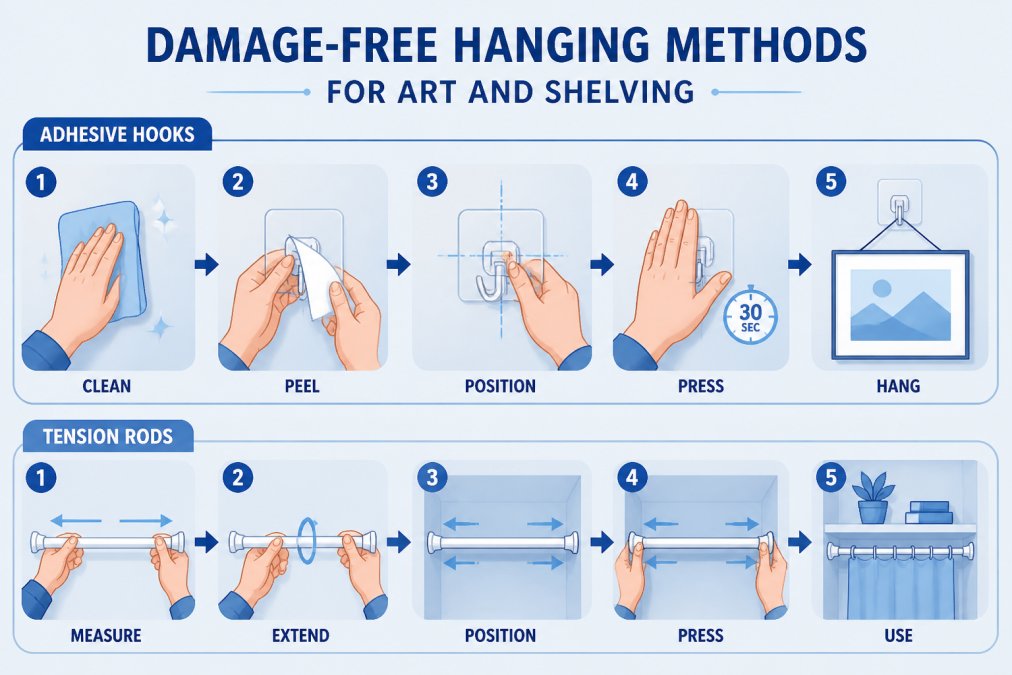
Damage-Free Hanging Methods for Art and Shelving
Hanging artwork and shelves without drilling into walls requires strategic choices. Several damage-free methods exist, each with specific strengths.
Adhesive Hooks and Command-Style Solutions
Adhesive hooks are the foundation of renter-friendly decorating. Command strips and similar products use a special adhesive that bonds to paint without tearing it off when removed. They hold surprisingly well, command strips rated for 16 pounds can support a framed print, small shelf, or decorative mirror.
The critical step is surface preparation. Clean the wall with a magic eraser to remove dust and residue (clorox.com). Let it dry completely. Apply the adhesive strip to the hook (not the wall), press firmly for 30 seconds, and wait a full hour before hanging anything. Rushing this step is the main reason adhesive solutions fail.
For heavier items, use multiple hooks. A floating shelf holding books and plants might need three or four adhesive hooks spaced evenly. Distribute weight rather than relying on a single point of attachment.
When removing adhesive hooks, pull straight down slowly. If you rush or pull at an angle, you risk taking paint with you. Heat from a hair dryer softens the adhesive, making removal easier on finicky walls.
Tension Rods and Over-the-Door Options
Tension rods create hanging solutions without any wall attachment. Use them to hang lightweight artwork, fabric panels, or even small shelves between two walls in a corner. They work in closets, above doorways, and in tight spaces where traditional shelving won't fit.
Over-the-door hooks hang on the top of any door frame without tools or adhesive. They're perfect for hanging lightweight items, storing bags, or creating a small gallery above a doorway. The weight limit is lower than adhesive solutions, but they're completely removable.
Leaning shelves and ladder shelves offer vertical storage without wall mounting. These freestanding pieces work in corners or against walls, creating display space for plants, books, and decorative items. They're portable, so you can take them with you when you move.
How to Style a Small Apartment on a Budget
Small apartments demand intentional choices. Every piece should serve a purpose or add genuine visual value. This prevents the cluttered, chaotic feeling that kills a small space's potential.
Multi-Functional Furniture and Vertical Storage
Multi-functional furniture is essential in small spaces. A storage ottoman serves as seating, a footrest, and hidden storage for blankets or seasonal items. A desk with shelving above provides workspace and display area. A bed with drawers underneath maximizes the bedroom's utility.
Vertical storage draws the eye upward, making ceilings feel higher. Wall-mounted shelves hold books, plants, and decorative objects without consuming floor space. Tall, narrow bookcases fit in corners and create visual interest at different heights. Hanging organizers on closet doors or walls store items that would otherwise clutter surfaces.
The rule is simple: if something can go vertical instead of horizontal, do it. This approach multiplies your usable space without requiring renovation.
Area Rugs and Soft Furnishings for Zoning
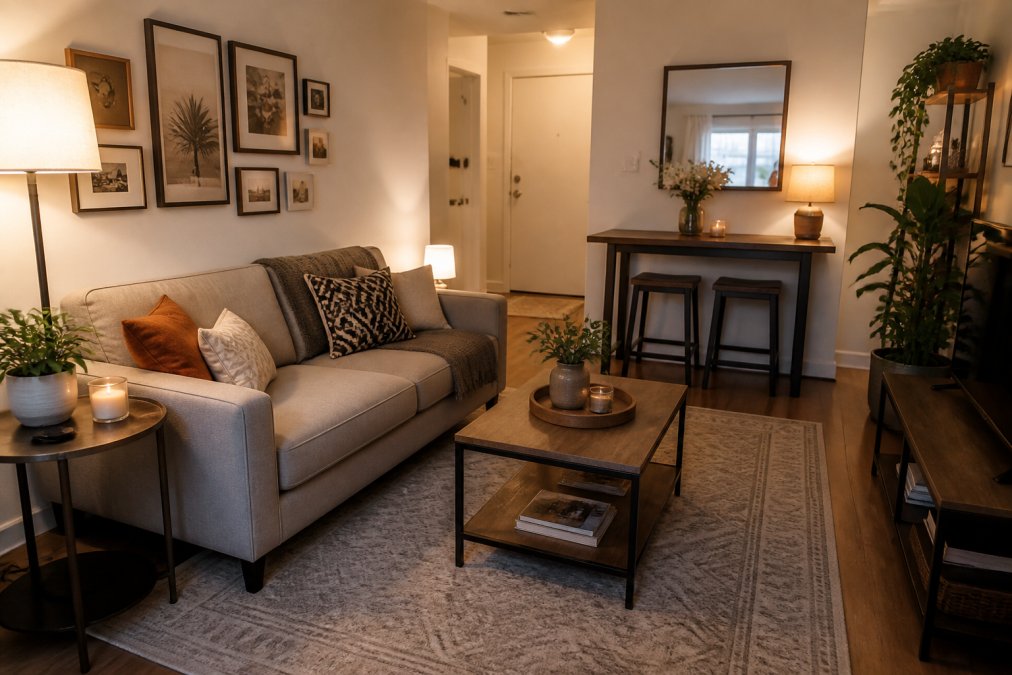
Area rugs define spaces in open-plan apartments. A rug under your sofa and coffee table creates a distinct living area even if the bedroom is visible from the kitchen. Rugs add warmth, reduce noise, and make small spaces feel intentional rather than cramped.
Soft furnishings, throw pillows, blankets, curtains, add personality and comfort without taking up space. Layered textures create depth: a smooth linen pillow next to a chunky knit throw next to a velvet cushion feels more sophisticated than matching sets. These elements also soften hard apartment finishes like laminate counters and tile floors.
Caltucky Creations offers curated soft furnishings that work together visually, making it easier to achieve cohesion without overthinking combinations.
Lighting Layers and Plug-In Fixtures
Apartment lighting is often terrible, a single overhead fixture that's either too bright or inadequate. Layering multiple light sources transforms the space and is completely renter-friendly since everything plugs in.
Use three types of lighting: ambient (overall room light), task (focused light for reading or working), and accent (highlighting decorative elements). A floor lamp in the corner provides ambient light. A desk lamp offers task lighting. String lights or LED strips behind shelves create accent lighting that draws attention to your decor.
Plug-in fixtures mean you can adjust lighting seasonally or when you move. Dimmer switches that work without rewiring let you control brightness. Smart bulbs let you change color temperature throughout the day, supporting better sleep at night and focus during the day.
Good lighting makes small apartments feel larger and more welcoming. It's one of the highest-impact changes you can make, and it requires zero landlord approval.
Hardware Swaps and Window Treatments
Small changes to hardware and windows create disproportionate visual impact. These updates feel intentional and polished without being permanent.
Light Switch Plates and Outlet Covers
Swapping generic white switch plates and outlet covers for something more interesting instantly upgrades your apartment's aesthetic. Brass, matte black, or patterned covers cost just a few dollars but transform the look of every room.
This is one of the easiest updates possible. Remove the old cover (usually two screws), install the new one, and you're done. Keep the originals in a box so you can reinstall them when you move. Most landlords don't object to this swap since you're restoring the original hardware when you leave.
Curtain Rods and Removable Window Solutions
Window treatments dramatically affect how a space feels. Heavy curtains make rooms feel cozy and intimate. Sheer curtains soften harsh light and create a romantic atmosphere. Roller shades offer clean lines and modern aesthetics.
Tension rods hold curtains without drilling into window frames. They work in most windows and are completely removable. Magnetic curtain rods stick to metal window frames if you have them. For renters, these options beat permanent installation every time.
Layer window treatments for flexibility. Sheer curtains filter light during the day while roller shades provide privacy and darkness at night. This combination works in any space and creates a polished, intentional look.
Adding Greenery and Creating Aesthetic Cohesion
Plants transform apartments by adding life, improving air quality, and creating focal points. They're also forgiving, even low-light apartments support pothos, snake plants, or ZZ plants.
Use plants to create visual flow. A tall plant in a corner draws the eye upward. Trailing plants on shelves add softness to hard edges. Clustered plants on a windowsill create a mini garden feel. Plants also soften the "corporate rental" feeling that comes from bare walls and generic furniture (peer-reviewed research).
Aesthetic cohesion ties everything together. Choose a color palette (neutrals with one accent color works well in small spaces), stick to it across furniture and decor, and avoid too many competing styles. This doesn't mean everything matches, it means intentional choices that feel coordinated rather than random.
Caltucky Creations' curated collections help achieve this cohesion. Pieces are selected to work together visually, reducing the risk of buying items that clash.
Decorating a rental apartment is about working within constraints creatively. Your lease and landlord approval set the boundaries, but within those limits, you have surprising freedom. Damage-free hanging methods, temporary wallpaper, multi-functional furniture, and thoughtful lighting create spaces that feel genuinely yours without jeopardizing your security deposit.
The difference between a bare rental and a styled apartment comes down to intentionality. Every piece should either serve a practical purpose or add visual value. This discipline prevents clutter and makes small spaces feel larger and more welcoming.
Start with your lease agreement, plan your layout on paper, and build gradually. You don't need to buy everything at once. Caltucky Creations' fresh and stylish home essentials give you curated options that work together, making it easier to create a cohesive space without expensive mistakes. Continue shopping to explore pieces that match your aesthetic and transform your apartment into a home that reflects who you are.
Frequently Asked Questions
Q: What damage-free hanging methods work best for rental apartments?
A: Adhesive hooks, command strips, and tension rods are your best options for hanging art and shelves without damaging walls. These methods leave no holes or residue when removed properly. Adhesive hooks support lightweight frames and mirrors, while tension rods work for curtains and room dividers. Always test a small area first and follow removal instructions carefully to protect your security deposit.
Q: How can I decorate my rental apartment walls without breaking my lease?
A: Check your lease agreement first, most landlords allow temporary wallpaper, wall decals, and removable adhesive solutions. Avoid paint, permanent fixtures, and wall damage. Use renter-friendly wall decor like peel-and-stick wallpaper, canvas prints on easels, or gallery walls with adhesive hooks. Get landlord approval in writing before making major changes. This protects both your security deposit and your rental relationship.
Q: What's the best way to make a small rental apartment look bigger and more stylish?
A: Use vertical storage to draw eyes upward, add layered lighting to create depth, and choose multi-functional furniture that serves dual purposes. Area rugs define spaces without permanent changes, while mirrors reflect light and expand the visual footprint. Keep your color palette cohesive, limit to 3-4 main colors, and use soft furnishings like throw pillows and blankets to add personality. These techniques maximize style while staying lease-compliant.
Q: Can I swap out hardware like light switch plates and curtain rods in my rental?
A: Yes, hardware swaps are usually allowed and are among the easiest temporary upgrades. Replace light switch plates, outlet covers, and curtain rods with styles that match your decor, then save the originals. Most landlords welcome these swaps since they're completely reversible. Just keep the original hardware so you can reinstall it when you move. This is a quick way to add personality without violating your lease.
This article was written using GrandRanker